
How to forecast demand for custom press on nails lines?
- 1) How can I validate customer sizing ranges before investing in multiple press-on nail sizes and molds?
- 2) What low-cost prototyping and material testing process ensures durability and adhesive performance for custom press-on nails?
- 3) How to calculate MOQ and unit economics for small-batch custom press-on nail lines to avoid cashflow traps?
- 4) Which channels and metrics should I use to forecast seasonal demand for custom press-on nail collections?
- 5) How to plan SKUs and color variants to minimize dead stock while satisfying personalization trends?
- 6) What lead-time buffers and supplier strategies reduce stockouts for private-label press-on nails when partnering with overseas manufacturers?
1) How can I validate customer sizing ranges before investing in multiple press-on nail sizes and molds?
Answer:Start with low-cost, high-signal tests to avoid large upfront tooling and inventory costs. Build a nail sizing kit (10–14 sample sizes per hand) printed or molded in inexpensive resin or cured acetates and distribute through: influencer reviews, in-person pop-ups, and a low-cost insert with online orders. Collect three data points per tester: exact finger measurements (or photo with a sizing card), preferred fit (tight/loose), and wear feedback after 3–7 days.
Why this works: sizing is both a product and marketing signal. Aggregating 200–500 testers gives statistically useful segmentation for most DTC starts—identify the 3–4 sizes that cover ~80% of buyers in your target demo. Use that to prioritize size SKUs and avoid stocking a full 12-size matrix per design.
Implementation tips:
- Use a digital measurement tool or downloadable printable sizing card to standardize submissions.
- Offer incentives: discount on first purchase or entry into a giveaway to increase response rates.
- Cross-reference returns and reorders: a design with low returns and high reorders validates your size matrix.
Embedded terms: nail sizing kit, press-on nail manufacturers, private label press-on nails.
2) What low-cost prototyping and material testing process ensures durability and adhesive performance for custom press-on nails?
Answer:Design and material failures are expensive. Use a staged test plan: 1) Rapid prototypes (3–5 designs) in standard ABS/acrylic using desktop 3D printers or low-cost molds to validate shape and curvature; 2) Small-run production samples from your intended manufacturer to test real materials (gel finish press-on, acrylic, or ABS); 3) Adhesive and wear-testing with a standardized protocol.
Suggested testing protocol (repeatable):
- Adhesive test: apply the nail with your intended adhesive method (tabs, glue, reusable adhesives). Wear for 7 days while tracking detachment events and time-to-failure.
- Flex and impact test: simulate everyday knocks (door, keyboard) and record cracks/chips.
- Finish wear test: daily tasks and mild chemicals (soap, sanitizer) to monitor topcoat abrasion and color fade.
Collect quantitative metrics: % of nails detached by day 3 & day 7, % with visible chipping, and customer subjective comfort score. For early-stage brands, aim for >80% retention at day 3 and >60% at day 7 as a baseline target to iterate from.
Embedded terms: gel finish press-on, press molds, press-on nail manufacturers.
3) How to calculate MOQ and unit economics for small-batch custom press-on nail lines to avoid cashflow traps?
Answer:Unit economics for private-label press-on nails depend on BOM (nail blanks, art application, adhesives, packaging), labor, freight, duties, and storage. To avoid cashflow traps, build a simple per-unit P&L:
- Direct unit costs: blanks + finish + adhesive + packaging.
- Variable overhead: fulfillment, returns, payment fees.
- Fixed allocation: design, tooling amortized across MOQ.
Example approach (process, not fabricated numbers):
- Request manufacturer quotes at several MOQ tiers (e.g., 200, 500, 1,000 units/design). Many overseas suppliers listed on B2B platforms provide tiered pricing. 2. Amortize your design or custom mold cost across each MOQ to see breakeven. 3. Calculate landed cost (unit price + freight + duty + import handling). 4. Calculate target retail price by applying your desired margin and expected discounting. 5. Model cashflow timing: initial deposit (often 30–50% on order), balance on shipping; consider a 4–8 week production window plus freight.
Decision rule for beginners: if 2–3 months of projected gross sales at launch channel (Instagram shop, Etsy) do not cover the landed cost of your initial MOQ, reduce your MOQ or use print-on-demand/fulfillment partners until you validate demand.
Embedded terms: MOQ, private label press-on nails, landed cost, nail supply chain lead times.
4) Which channels and metrics should I use to forecast seasonal demand for custom press-on nail collections?
Answer:Forecasting is about signals: historical sell-through (if available), search trends, social listening, and channel conversion rates. For brand-new lines use leading indicators:
Channels and signal types:
- Search & Google Trends: monitor keyword spikes for seasonal themes (e.g., Halloween press on nails) 6–10 weeks before the holiday.
- Social listening: Instagram reels, TikTok trends, and hashtags can show emerging styles—track engagement velocity (likes + shares per day) rather than absolute counts.
- Paid test ads: run small creative tests with audience splits; use CTR and add-to-cart rates to extrapolate demand.
- Pre-orders and waitlists: the single most reliable early-demand tool. Convert waitlist sign-ups into reservation pre-orders with refundable deposits.
Metrics to use:
- Conversion from views to add-to-cart (ad-level) to estimate purchase intent.
- Waitlist-to-order conversion (pre-order conversion) to forecast production quantities.
- Sell-through rate: aim for 30–50% initial sell-through in your first 30 days as a sign of healthy pricing/fit for new designs; adjust production for reorders.
Seasonal planning: plan production 8–12 weeks ahead for overseas manufacturers (typical), and build a pre-order window 4–6 weeks before production to refine quantities. Use small limited-edition runs for high-risk seasonal designs to reduce dead stock.
Embedded terms: seasonal demand forecasting, pre-order strategy, digital demand signals.
5) How to plan SKUs and color variants to minimize dead stock while satisfying personalization trends?
Answer:Avoid endless one-to-one SKUs by using a modular SKU matrix: base shapes × size groups × finish (matte/gel) × limited color family drops.
SKU rationalization steps:
- Start with 3 base shapes (square, almond, coffin) and 3 size groups (small/medium/large) to cover ~80% of demand from early sizing tests.
- Offer permanent core finishes (2–3 colors) plus rotating seasonal/limited editions produced in smaller MOQs or via on-demand art application.
- Track SKU-level metrics: days of supply, sell-through %, and velocity. Phase out SKUs with <0.5 turns per month after 90 days unless strategic (influencer-driven or margin-rich).
Personalization strategy: use decals, stamping, and transfer art kits that can be applied to a core blank—this reduces the number of unique blanks required while meeting personalization demand.
Embedded terms: SKU forecasting, inventory turnover, private label press-on nails.
6) What lead-time buffers and supplier strategies reduce stockouts for private-label press-on nails when partnering with overseas manufacturers?
Answer:Mitigate risk with a multi-layered supplier strategy and conservative lead-time planning. Typical overseas production lead times are 4–10 weeks depending on capacity, plus freight (air vs sea). To reduce stockouts:
Tactics:
- Dual sourcing: Have two vetted manufacturers (primary + backup) for your core SKUs.
- Safety stock: calculate safety stock as a function of lead time and demand variability. If you lack historical demand, start with a 30–60 day buffer of your average weekly sales estimate.
- Use air freight for replenishment of fast sellers and sea for planned seasonal buys to balance cost vs speed.
- Negotiate partial shipments and stage production so you receive an initial tranche to support launch, and the rest after sell-through validation.
- Communicate clear production windows and penalties in contracts for capacity guarantees during seasonal peaks.
Operational tip: maintain a rolling 12-week production plan updated weekly with actuals from sales, pre-orders, and ad performance; this reduces surprises and aligns cashflow.
Embedded terms: nail supply chain, lead times, press-on nail manufacturers.
Conclusion:Custom press-on nail lines give brands rapid trend responsiveness, higher perceived value via personalization, and lower return friction compared with some beauty SKUs. By validating sizing with low-cost kits, running structured prototype tests, modeling MOQs and landed costs conservatively, using digital demand signals and pre-orders for forecasting, rationalizing SKUs into modular matrices, and building supplier buffers (dual sourcing and safety stock), you minimize cashflow risk and dead stock while preserving margin and speed to market.
Contact us for a quote. Visit www.xianxingbeauty.com or email [email protected] for private-label or OEM press-on nail production inquiries.
7 Red Flags to Avoid When Selecting a Wholesale Press On Nails Manufacturer
Quality Control: What to Expect from a Top-Tier Wholesale Press On Nails Manufacturer
The Ultimate Guide to Choosing the Best Wholesale Press On Nails Manufacturer in 2026
How to Scale Your Beauty Brand: Why Private Label Press On Nails Are the Highest-Margin Entry Point in 2026
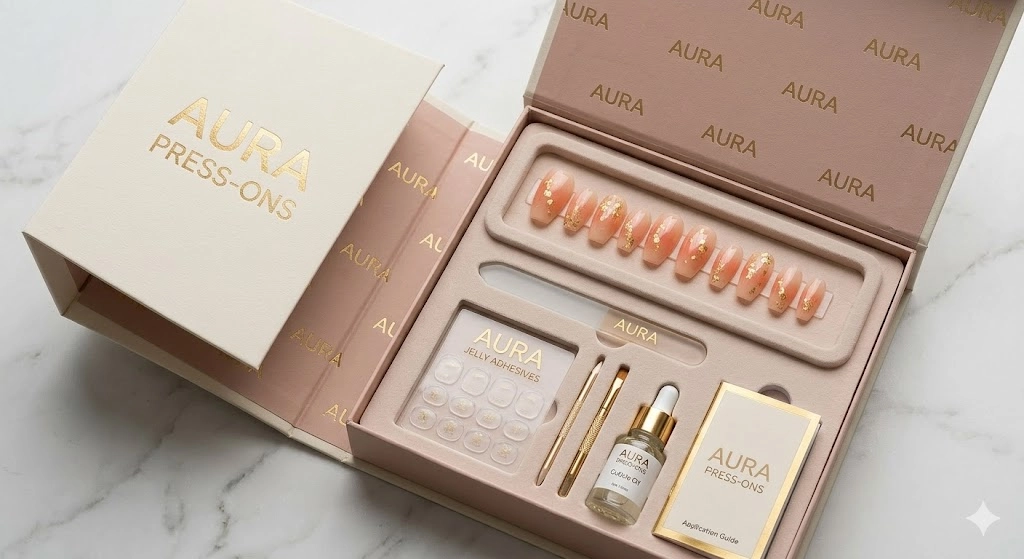
Why Partnering with Professional Press On Nails Manufacturers Boosts Your Brand Growth
Crystal spike
Can I use Crystal Point Sticks and Wooden Sticks for both fingernails and toenails?
Yes! Both types of sticks are versatile and can be used for both fingernails and toenails. The tasks (like pushing back cuticles or cleaning under the nails) remain the same for both, though a wooden stick might be a bit bulkier for detailed work on smaller fingernails.
Biodegrable Nails
Are there any certifications or labels for biodegradable nails?
Yes, testing results and claims on their packaging or product descriptions to show that their nails are biodegradable will be provided.
About Christmas Nails
How do I apply them for the longest wear?
For a glue application that lasts through all the holiday festivities:
* Prep: Push back your cuticles and gently buff the surface of your natural nails with a file to remove shine. This creates texture for the glue to adhere to.
* Clean: Wipe each nail with an alcohol prep pad or nail dehydrator to remove all dust and oils. This is a crucial step!
* Size: Select the correct press-on size for each nail. It's better to file a slightly larger one down to fit perfectly than to use one that's too small.
* Glue: Apply a small bead of nail glue to your natural nail anda thin layer on the back of the press-on.
* Apply: Hold the press-on at a 45-degree angle against your cuticle, press down firmly, and hold for at least 30 seconds. Apply pressure to squeeze out any air bubbles.
Customization
How long does customized service take?
The time for customized services depends on your specific needs and order volume. Generally speaking, we will provide you with customized solutions as soon as possible.
Nail file
What is the best type of nail file for my nails?
It depends on your nail type and personal preference. For example:
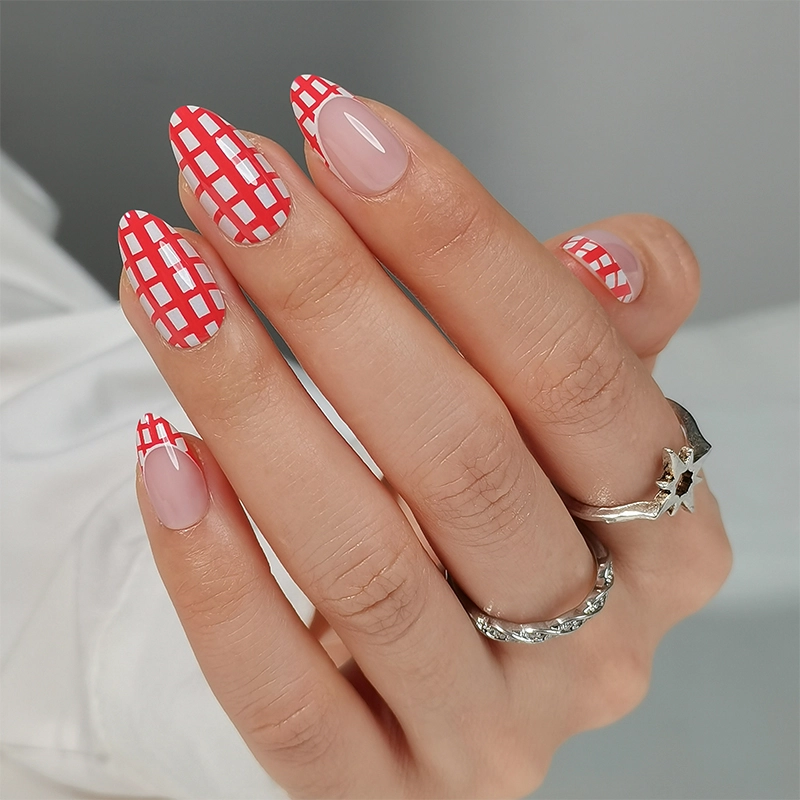
Wholesales Red French Nails Tips Checkered Soft Gel Nail Tips 32 Piece Set
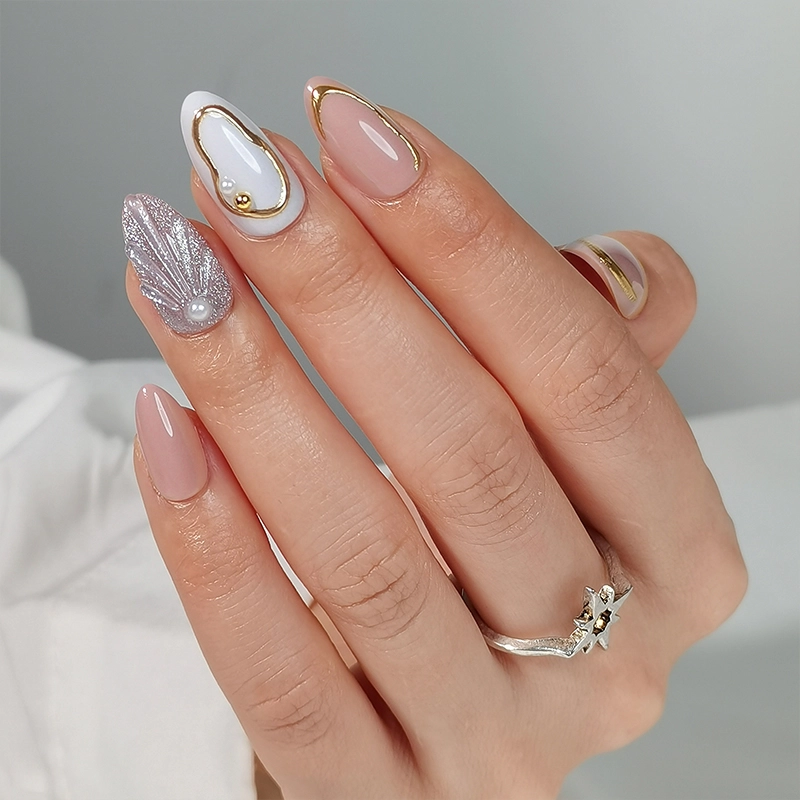
Wholesales Elegant Shell Inspired Soft Gel Wearable Nails for Seasonal Celebrations
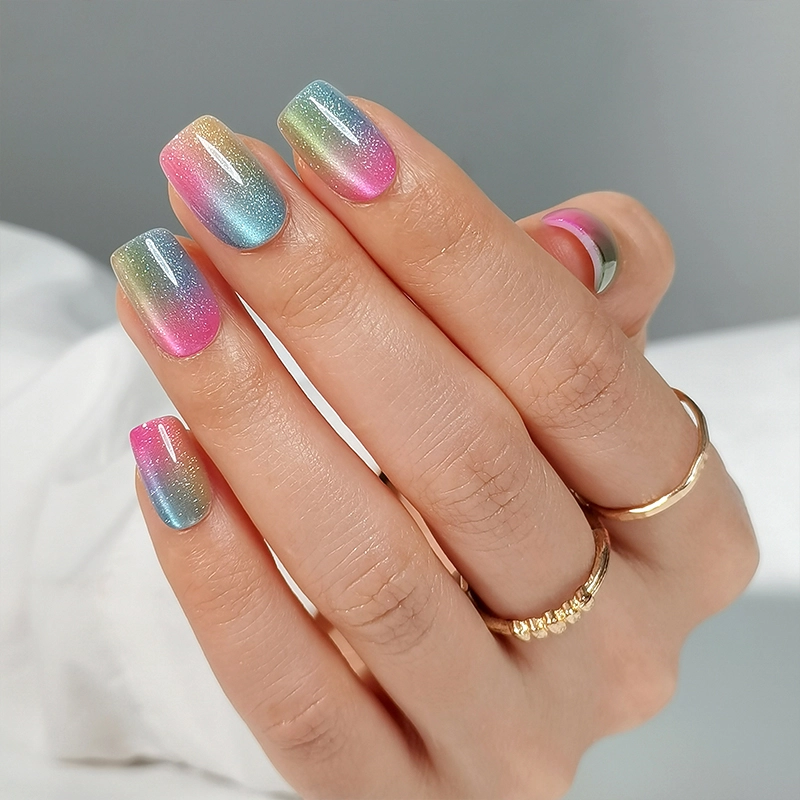
Custom Wholesale Gradient Cat Eye Soft Gel Wearable Fake Nails
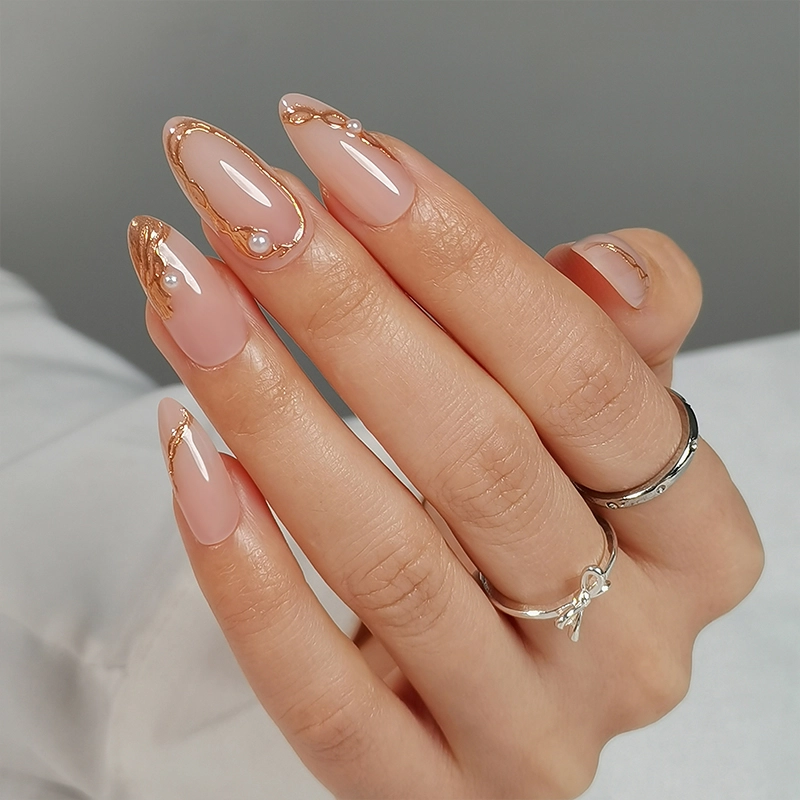
Wholesales Luxury Rhinestone Handmade Private Label Press On Nails Art Tips
Contact us
If you have press on nails products or customization needs, please feel free to contact from
below or via the contact information provided, we'll get back to you promptly within 24 hours.
By clicking 'Send Inquiry Now' I agree to XIANXING BEAUTY processing my personal data.
To see how to withdraw your consent, how to control your personal data and how we process it, please see our Privacy Policy and Terms of use.
Copyright © 2025 - XIANXING BEAUTY All Rights Reserved. Sitemap
Facebook
YouTube
Instagram
LinkedIn