
How much does custom press on nails cost to produce?
- How to start Custom Press‑on Nails — step‑by‑step for founders and buyers
- How much does custom press‑on nails cost to produce?
- What drives the unit cost — materials, tooling, and process explained
- What are typical MOQs (minimum order quantities) and lead times?
- How to choose materials and manufacturing processes for durability and look
- Packaging, branding, and legal considerations when importing or selling
- How to price for retail and expected margins
- Quality control, testing and returns — practical checklists
- Scaling up: production, inventory strategy and channel mix
- Xianxing Beauty — why choose this brand for private label and custom press‑ons
- References and data sources
How to start Custom Press‑on Nails — step‑by‑step for founders and buyers
Launching a custom press‑on nail business or sourcing private‑label sets requires understanding design, manufacturing, quality control and margins. Below is a practical, experience‑based checklist you can follow to move from idea to production and retail.
- Validate demand: test 3–5 capsule designs on social channels (TikTok, Instagram) or Etsy/Amazon listings. Track conversion and CPL (cost‑per‑lead) before committing to inventory.
- Create tech specs: specify sizes (full set usually 10–12 pieces), base material (ABS/thermoplastic or acrylic), thickness (mm), curvature (C‑curve), finish (gloss/matte), adhesives included, and print/embellishment methods (hydroprint, UV gel, chrome, rhinestones, decals).
- Prototype and fit: order 1–3 physical prototypes (sample sets) to test wearability and sizing across typical nail sizes (XS–XL). Use samples to evaluate print fidelity, adhesion, and surface finishing.
- Select a production model: small runs via boutique manufacturers (hand‑finished) versus mass production (molded + automated printing). Consider domestic ODMs for faster iterations and overseas factories for lower per‑unit costs at scale.
- Define packaging & regulatory needs: include instructions, warnings (allergy/advice), UPC/barcode, and branded box/inserts. Packaging decisions materially affect perceived value and shipping costs.
- Plan fulfillment: options are self‑fulfillment, 3PL, or print‑on‑demand style suppliers. Factor in returns policy and hygienic restocking rules (most sellers do not accept returns on used nail sets for hygiene reasons).
- Marketing & pricing: aim for a keystone or 2–3x markup from landed cost to retail. Use influencer seeding and unboxing content for early traction.
How much does custom press‑on nails cost to produce?
Production cost depends on design complexity, materials, finishing and order quantity. Based on marketplace supplier listings and manufacturer pricing patterns, typical landed production costs (factory unit cost + basic packaging) fall into these ranges:
- Simple moulded ABS press‑on set (basic print, no embellishments): approximately $0.50–$2.00 per set at higher MOQs.
- Mid‑range sets (UV gel coating, printed designs, small rhinestone/foil accents): approximately $1.50–$4.50 per set.
- High Quality/hand‑finished or highly embellished sets (3D art, crystals, custom shapes): $3.50–$10+ per set depending on labor intensity.
These ranges reflect supplier price points for typical MOQs and do not include tooling/setup fees, shipping, import duty, local packaging upgrades, or fulfillment costs. Retail prices in most markets commonly range from $10–$35 per set for branded products; High Quality artisan sets can sell for $40–$100+ depending on rarity and handwork. Your margin targets and customer positioning determine exact pricing.
What drives the unit cost — materials, tooling, and process explained
Major cost drivers:
- Tooling & mold setup: initial one‑time tooling or master mold fees (if you require a custom mold shape) — can be $100–$1,000+ depending on factory and customization. For made‑to‑order without custom metal tooling, this cost can be avoided using standard form sheets or thermoform masters.
- Material choice: ABS/thermoplastic sheets are cheapest; acrylic or custom gel coatings add cost. Thicker or reinforced sets use more material.
- Finishing and decoration: digital printing or hydrographics are low incremental cost at scale; hand appliqués, crystals and multi‑step gel finishes require labor and raise unit cost substantially.
- Labor & QC: hand finishing and inspection increase per‑unit labor. Factories that perform assembly, adhesive inclusion, and packing will charge more than drop‑ship style suppliers.
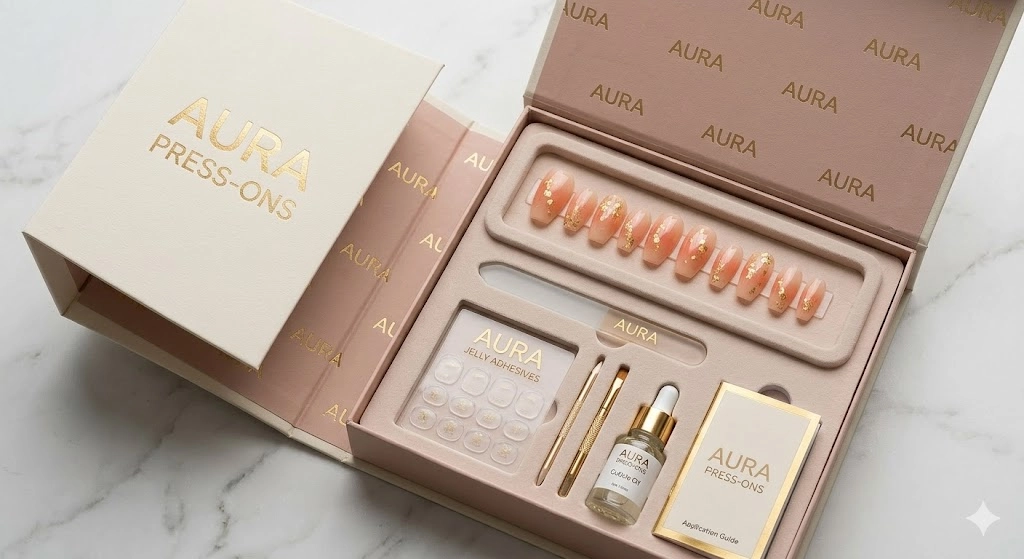
- Packing & inserts: branded boxes, instruction cards, glue, and cushioning increase landed cost and are key to perceived value.
What are typical MOQs (minimum order quantities) and lead times?
Common patterns found among global suppliers:
- MOQ for custom decoration or private label: often 100–500 sets per design. Some suppliers accept smaller sample MOQs (10–50) at higher per‑unit cost.
- Lead time: samples 7–21 days; production runs 10–45 days depending on complexity and factory backlog; shipping adds another 7–30 days depending on freight mode.
- Small batch/on‑demand suppliers: some studios and domestic providers offer low MOQs (10–50) with faster turnaround (3–14 days) but higher unit costs.
How to choose materials and manufacturing processes for durability and look
Recommendations:
- For reusable, salon‑grade feel: thicker ABS or acrylic bases with a gel clear coat (UV cured) are preferred.
- For fast fashion and low cost: thermoformed thin ABS with printed graphics and a glossy lacquer is acceptable for single‑wear or short‑term consumer use.
- Adhesives: include quality dual‑sided nail tabs and single‑use glue sachets. Test adhesive strength across skin types and oils.
- Testing: perform wear tests (7–14 day simulated wear, check lifting, chipping, and color integrity under water/soap/acetone exposure) and record failure modes for QC improvement.
Packaging, branding, and legal considerations when importing or selling
Key points for compliance and brand protection:
- Labeling & warnings: include ingredients for products that contain chemicals (eg. nail glue components), safety/warning statements and contact information if selling in regulated markets.
- Barcodes & customs: include EAN/UPC if you plan to sell on Amazon or retail; prepare HS codes for customs clearance (commonly in the cosmetic/accessory category depending on classification).
- Hygiene and returns policy: clearly state non‑returnable policy for used/installed nails; provide sanitary packaging for customer trust.
- IP & design protection: register distinctive logos and consider design patents or copyright for unique art; draft supplier NDAs for proprietary designs.
How to price for retail and expected margins
Simple pricing framework:
- Landed cost = factory unit cost + per‑unit share of tooling/setup + packaging + shipping/import duty + fulfillment cost.
- Wholesale price often = landed cost × 1.5–2.0 (to allow for distributor/retailer margin).
- Retail price often = landed cost × 2.5–4.0 depending on brand positioning. High‑value, limited edition or artisan sets support higher multiples.
Example: if landed cost is $3.00 per set, a common DTC retail range would be $12–$20 to sustain paid ads, influencer seeding, and retail margins.
Quality control, testing and returns — practical checklists
QC checklist to reduce defects and consumer complaints:
- Visual inspection: print alignment, color consistency, surface finish.
- Fit & size accuracy: random sampling across size range for curvature and base fit.
- Adhesion tests: sample sets tested for glue/tab performance over time and moisture exposure.
- Durability: simulate wear (manual tasks, typing, dishwashing) and report average days to first failure.
- Packing integrity: ensure boxes protect art during transit and include instructions for safe removal to avoid nail damage.
Scaling up: production, inventory strategy and channel mix
Scaling considerations:
- Start with limited SKUs and bestsellers; expand via limited drops to reduce deadstock risk.
- Use a mix of domestic small runs for trend response and overseas production for evergreen SKUs to balance cost and speed.
- Automate order fulfillment or partner with a 3PL when monthly orders exceed your capacity to maintain fast shipping times.
Xianxing Beauty — why choose this brand for private label and custom press‑ons
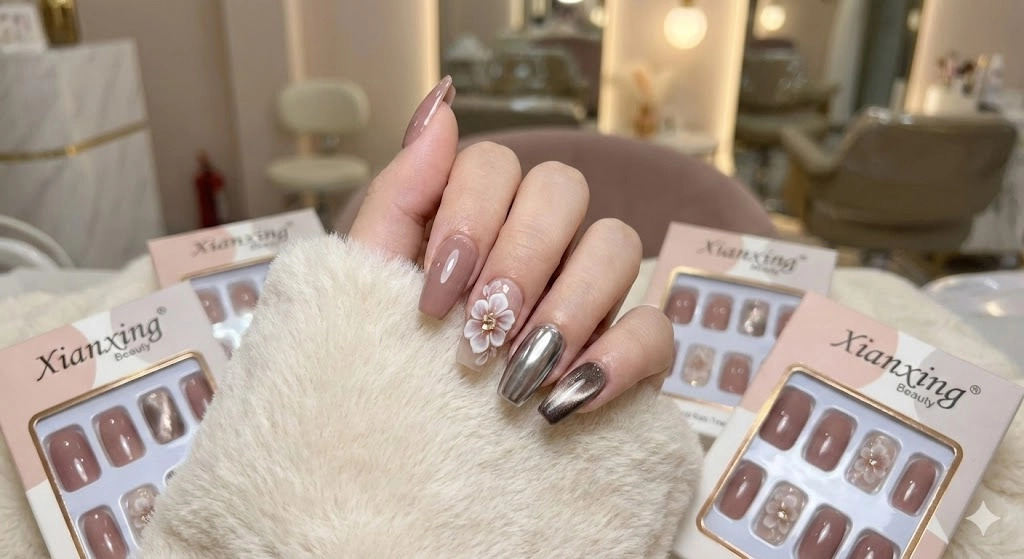
Xianxing Beauty combines experience in small‑batch customization and scaled overseas manufacture. Their strengths include transparent MOQ options, sample policy for fit testing, in‑house printing options (digital, hydrographics, chrome), and quality checks targeting wear performance. Xianxing works with brands to optimize packaging for retail and DTC channels and supports compliance documentation for major export markets.
References and data sources
- Alibaba — Supplier listings and MOQ/price ranges for custom press‑on nails. Accessed 2024‑01‑10: https://www.alibaba.com/showroom/custom-press-on-nails.
- Amazon product listings for branded press‑on nails (price comparisons and retail positioning). Accessed 2024‑01‑12: https://www.amazon.com/s?k=press+on+nails
- Grand View Research — Nail care products market overview (industry sizing and trends). Report page. Accessed 2024‑01‑15: https://www.grandviewresearch.com/industry-analysis/nail-care-products-market
- Allure / Beauty press coverage — articles on the rise of press‑on nails and brand case studies. Example reportage on press‑on trend. Accessed 2023‑11‑08: https://www.allure.com/ (search: press-on nails)
- Shopify / Commerce guides — independent seller guides for beauty and accessories (pricing, DTC setup). Accessed 2023‑12‑05: https://www.shopify.com/ (search: how to start a beauty brand)
7 Red Flags to Avoid When Selecting a Wholesale Press On Nails Manufacturer
The Ultimate Guide to Choosing the Best Wholesale Press On Nails Manufacturer in 2026
How to Scale Your Beauty Brand: Why Private Label Press On Nails Are the Highest-Margin Entry Point in 2026
Why Partnering with Professional Press On Nails Manufacturers Boosts Your Brand Growth
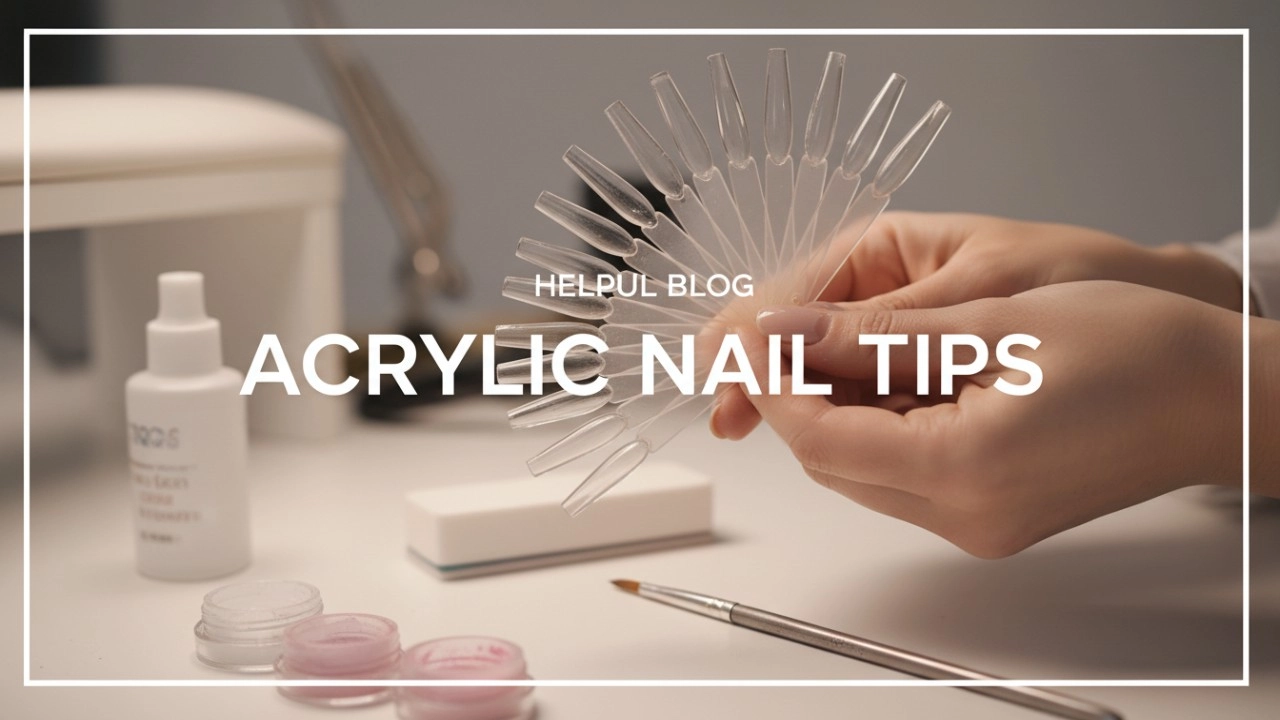
Acrylic Nail Tips vs. Soft Gel: Which is Best for Your Private Label Brand? (2026 Guide)
Nail file
How do I file my nails properly?
Always file in one direction to avoid weakening your nails.
Avoid using a back-and-forth motion, as this can cause nails to split.
File nails when they are dry, as wet nails are more prone to damage.
If your nails are long, start at the tip and work toward the sides.
About Kid Nails
Do they come in different sizes?
Yes! Press-on nails for kids come in various sizes to fit different nail shapes and lengths.
Remove armor
How should I store remover liquid?
Store it in a cool, dry place away from direct sunlight and heat sources. Always check the product's expiration date for safety.
About Cooperation Process
How long does the collaboration process take?
The timeline depends on your specific needs for the manicure set and order size. Typically, it takes a few weeks to several months from demand confirmation to product delivery.
Startup Client
Do you provide global delivery services?
Yes, we offer global logistics services to ensure products are delivered on time to destinations worldwide, helping you quickly enter the market.
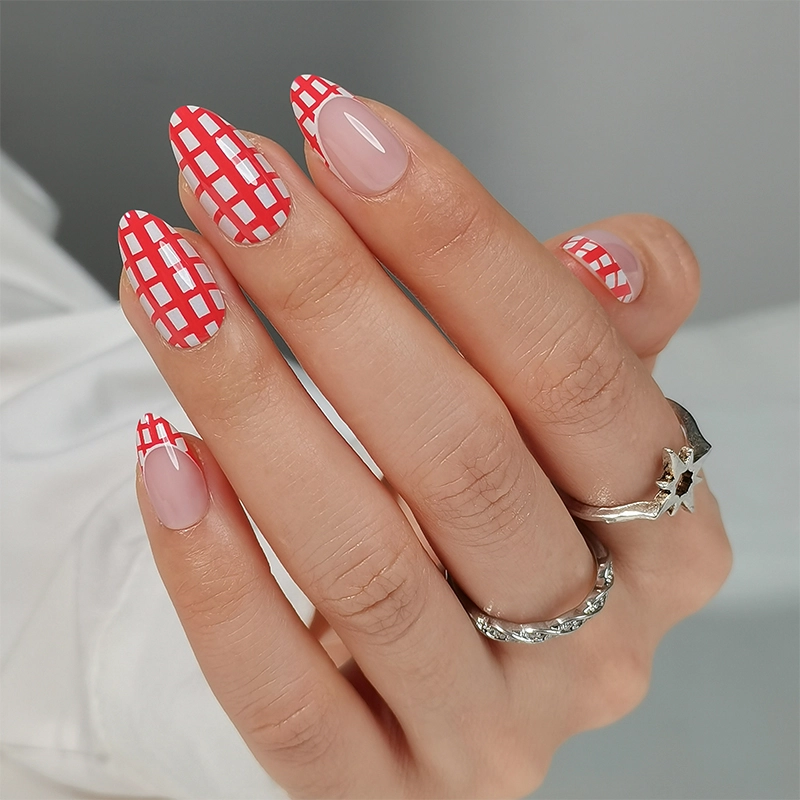
Wholesales Red French Nails Tips Checkered Soft Gel Nail Tips 32 Piece Set
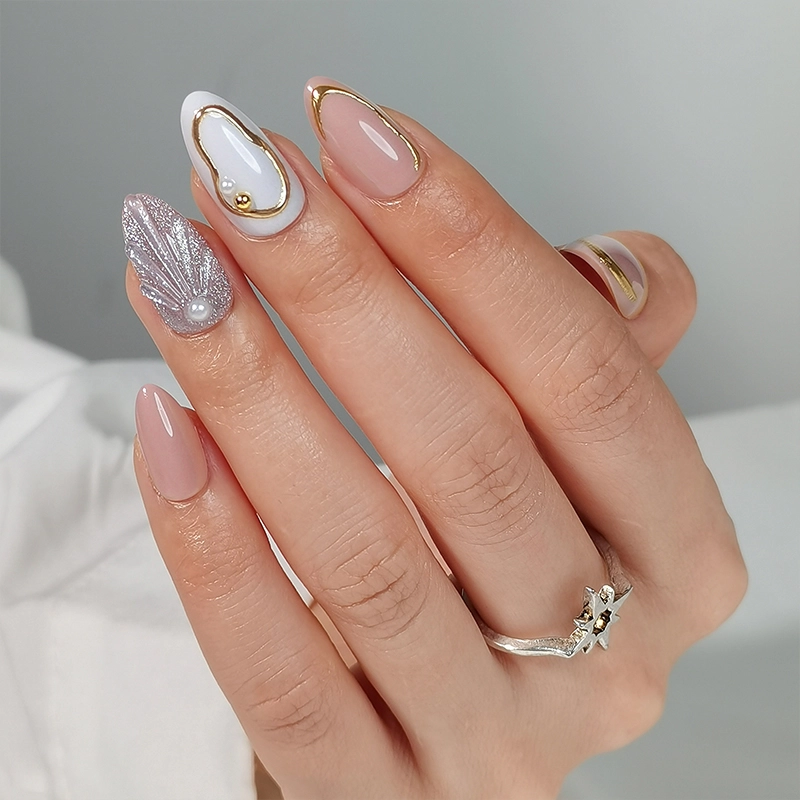
Wholesales Elegant Shell Inspired Soft Gel Wearable Nails for Seasonal Celebrations
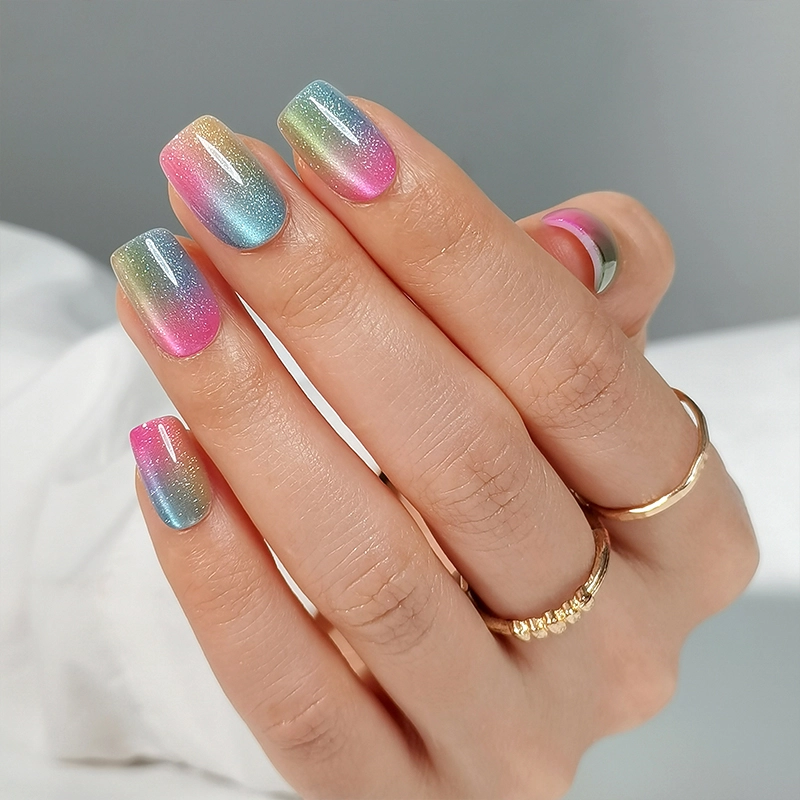
Custom Wholesale Gradient Cat Eye Soft Gel Wearable Fake Nails
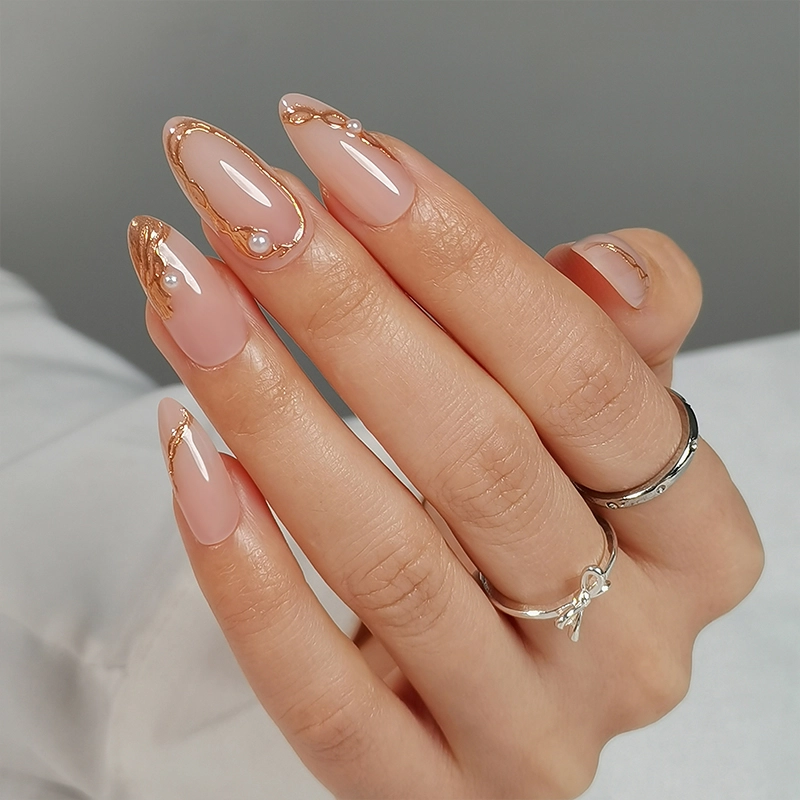
Wholesales Luxury Rhinestone Handmade Private Label Press On Nails Art Tips
Contact us
If you have press on nails products or customization needs, please feel free to contact from
below or via the contact information provided, we'll get back to you promptly within 24 hours.
By clicking 'Send Inquiry Now' I agree to XIANXING BEAUTY processing my personal data.
To see how to withdraw your consent, how to control your personal data and how we process it, please see our Privacy Policy and Terms of use.
Copyright © 2025 - XIANXING BEAUTY All Rights Reserved. Sitemap
Facebook
YouTube
Instagram
LinkedIn