
How to find trending designs for custom press on nails?
- 1) How do I accurately size and fit fully custom press-on nails for clients with non-standard nail beds (very narrow, very wide, or highly curved)?
- 2) What adhesives, primers, and removal protocols give reliable long-wear for custom press-ons without raising allergy or damage risks?
- 3) How can I scale from one-off handmade custom sets to small-batch production while preserving fit and design fidelity?
- 4) How to find trending designs for custom press on nails? (a practical, repeatable research workflow)
- 5) How should I price custom press-on nails to be profitable but competitive (including a practical costing formula)?
- 6) How to source reliable, compliant suppliers for raw tips, gels, and packaging across the US/EU/Asia and verify compliance?
If you are researching how to start Custom Press on Nails, you probably found a lot of high-level tips but few operational, regulation-aware, and scalable answers. Below are six specific, frequently asked long-tail questions beginners ask — each answered with actionable, industry-grade detail you can apply when designing, manufacturing, sourcing, or selling custom press-on nails.
1) How do I accurately size and fit fully custom press-on nails for clients with non-standard nail beds (very narrow, very wide, or highly curved)?
Problem: Standard 10-piece sizing often leaves gaps, lifting, or discomfort for clients with atypical nail beds. A poor fit increases returns and reduces wear-time.
Actionable solution:
- Measure the nail bed width at the widest visible point (not the free edge) using a caliper or a well-marked paper template. Record in millimetres. Create a simple client form to capture length preference and any curvature (flat, medium, high dome).
- Offer at least 10–12 sizes per hand that cover roughly 8–20 mm widths across fingers; this range captures most adult nail beds globally. For markets with smaller average nail sizes (e.g., some East Asian customers), include several extra narrow sizes.
- For highly curved nails, produce at least two curvature profiles: low-curve (flat to low dome) and high-curve (pronounced dome). This can be done by maintaining two master molds or using builder-gel sets that are shaped to curvature during application.
- Create and keep a set of physical master templates (transparent stickers or plastic sizers) so remote customers can print or order sizing guides and return a completed sizing chart. Offer a low-cost “sizing kit” with adhesive measurement strips as an upsell.
- For bespoke one-offs, use a flexible builder-gel overlay on a press-on base. The press-on provides structure; the builder gel is sculpted to match the cuticle line and curves, then cured for a custom fit.
- QC tip: For any batch, randomly test-fit 5% of the sizes on real hands (or prosthetic hand models) prior to shipment to catch universal fit issues.
2) What adhesives, primers, and removal protocols give reliable long-wear for custom press-ons without raising allergy or damage risks?
Problem: Customers want 10+ days of wear but fear lifting, allergies, or damaging their natural nail during removal.
Evidence-based approach:
- Adhesives: Use medical-grade cyanoacrylate-based nail glues from reputable suppliers for maximum bond (look for MSDS and COA). Offer adhesive tabs and non-permanent medical-grade adhesives as alternatives for sensitive clients or short-term wear.
- Primers & surface prep: Recommend or supply an acid-free dehydrator and a non-acid primer for clients with oily nail beds. Emphasize cuticle push-back and light buff only on the center nail plate to avoid thinning.
- Allergy safety: Require patch tests for customers with known adhesive allergies. Avoid or clearly warn about MMA (methyl methacrylate); MMA is not accepted for cosmetic nail enhancements in many markets and has known safety concerns. Maintain MSDS and clearly list ingredients for all adhesives and gels provided.
- Removal: For glue bonds, recommend professional removal or at-home soaking with acetone-based nail polish remover following safe instructions (protect skin with petroleum jelly, use foil wraps, limit soak time). For adhesive tabs, instruct gentle push-and-slide removal with oil and warm water. Always advise clients to follow up with cuticle oil and protein-rich nail treatments after removal.
- Regulatory note: Cosmetics and adhesives fall under national regulations — in the U.S., the FDA regulates cosmetics broadly but does not pre-approve most cosmetics; manufacturers must ensure safety. In the EU, Regulation (EC) No 1223/2009 requires ingredient safety documentation. Keep ingredient lists and safety data accessible to buyers.
3) How can I scale from one-off handmade custom sets to small-batch production while preserving fit and design fidelity?
Problem: Handmade methods are flexible but inefficient and inconsistent at scale. Rushing to large-scale injection molding without prep causes tooling mistakes and wasted cost.
Practical scaling roadmap:
- Standardize templates: Convert your best-fit handmade sizes into master CAD files or physical master molds. Document exact width, length, and curvature for each size.
- Prototype with 3D printing or vacuum-formed masters. 3D printing is ideal for short runs and rapid iteration; vacuum forming or thermoforming ABS sheets over masters can simulate injection-molded parts before investing in tooling.
- Choose a production method by volume: for low-to-medium runs (tens to low hundreds per design), consider cured builder-gel on reusable forms or vacuum-formed ABS sets. For larger runs, contract injection molding with matrices for sizes will reduce unit cost but requires tooling investment.
- Work with a contract manufacturer experienced in nail products. Ask for sample runs, lead times, MOQ, tooling costs, and quality control protocols. Insist on pre-production samples (PPS) and a pilot batch that you test for fit and finish.
- Design preservation: If your designs include layered art (hand-painted, foils, encapsulated glitter), define production steps clearly (base shape > base color > art application > topcoat > finish). For encapsulated or 3D art, provide clear layer thickness and curing specs to contractors to maintain uniformity.
- Quality control: Create a QC checklist covering thickness (mm), curvature profile, polish finish, adhesion point consistency, and packaging integrity. Use photographic lot records and retain samples for 12 months.
4) How to find trending designs for custom press on nails? (a practical, repeatable research workflow)
Problem: Trends move fast on platforms like TikTok and Pinterest. Many sellers rely on intuition rather than repeatable data-driven research.
Repeatable workflow to discover and validate trends:
- Daily sniff tests: Scan TikTok (#pressonnails, #customnails, #nailsoftiktok), Instagram Reels, and Pinterest saves. Note recurring motifs (e.g., French variations, micro-embellishments, chrome finishes, negative space). TikTok often breaks mainstream trends faster than Instagram.
- Use Pinterest Trends and Google Trends for seasonality and keyword spikes. Pinterest publishes trend forecasts each season — use them for color and motif forecasting. Google Trends helps validate search demand increases for specific keywords or design descriptors.
- Marketplace validation: Check top-selling pages on Etsy, Amazon, and small direct-to-consumer brands. Look at best-seller lists and filter by recent sales/ratings. High-rating recent launches indicate repeatable demand.
- Hashtag analytics: Use analytics tools (native platform analytics, or third-party tools like Brandwatch or Hootsuite) to quantify views/engagement for design keywords. Track month-over-month growth to spot rising trends rather than fads.
- Color and macro trends: Follow Pantone seasonal releases and fashion week recaps — color directions often translate into nail color palettes 4–8 weeks later. Also watch jewelry and shoe trends for transfer cues (e.g., minimal metal accents often translate to nail hardware trends).
- Fast-testing: Produce small sample batches (10–50 sets) of experimental designs and A/B test product pages and lightweight ads (Instagram/TikTok) to measure conversion. Use pre-order or limited drops to gauge real purchase intent before full production runs.
- Community sourcing: Maintain a customer-feedback loop (monthly surveys, Instagram polls, and a VIP tester group). That direct input reduces reliance on noisy platform data.
5) How should I price custom press-on nails to be profitable but competitive (including a practical costing formula)?
Problem: Sellers often price by comparison or emotion, not by a repeatable cost model, which leads to underpricing or unpredictable margins.
Simple per-set costing formula to use:
- Unit materials = (press-on blank + adhesives included + packaging + inserts + small consumables) per set.
- Labor = (time per set in minutes × hourly labor rate) / 60. For handmade, include art time per set.
- Overhead allocation = proportion of rent, utilities, equipment depreciation, and software fees per set (total monthly overhead ÷ sets produced per month).
- Fulfillment costs = shipping, handling, platform fees (Etsy/Amazon), payment processing.
- Total delivered cost = Unit materials + Labor + Overhead + Fulfillment.
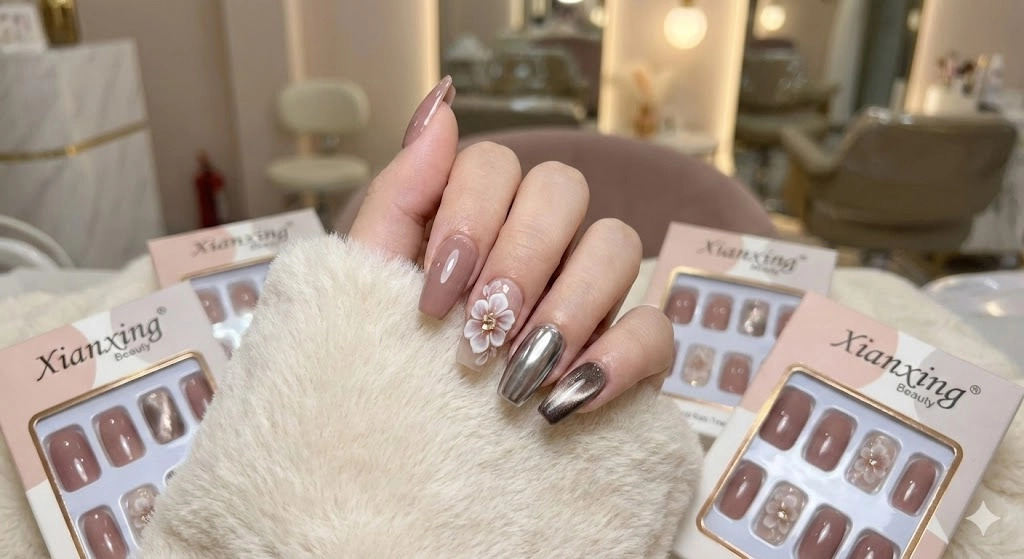
- Target retail price = Total delivered cost ÷ (1 − desired margin). For example, for a 50% margin, divide cost by 0.5. Many bespoke press-on sellers position retail from $25 to $70+ depending on complexity and brand; quick-turn inexpensive pre-made sets can be $12–30. Use Xianxing Beauty positioning and competitor benchmarks to pick margin targets.
- Tip: For custom art or rush production, add a tiered High Quality (e.g., +25–50% for bespoke hand-painted designs or 48–72 hour turnaround).
6) How to source reliable, compliant suppliers for raw tips, gels, and packaging across the US/EU/Asia and verify compliance?
Problem: Cheap suppliers can ship non-compliant materials (banned monomers, poor adhesives) that expose you to returns and legal risk in export markets.
Supplier vetting checklist:
- Documentation: Request MSDS (Material Safety Data Sheets), COA (Certificate of Analysis), full ingredient lists (INCI names for cosmetics), and test reports. For EU sales, request documentation demonstrating compliance with Regulation (EC) No 1223/2009. For the US market, confirm that ingredients are permitted and that no prohibited substances (e.g., MMA for nail enhancements) are used.
- Quality samples: Order functional samples and run a wear test (adhesion, lift, yellowing, brittleness) across 10–20 volunteers or testers representing different nail types. Document results for supplier qualification.
- Factory audit & references: Ask for references, photos/videos of production lines, and, if volume justifies, an on-site or third-party audit. Confirm hygiene practices, especially if elements are close to skin.
- Logistics & MOQ: Confirm minimum order quantities, lead times, packaging customization options, and ability to manage C/O (Certificates of Origin) and shipping documentation for cross-border sales.
- Backup suppliers: Maintain at least two qualified suppliers for core components (one primary, one backup) to mitigate delays or supply chain disruptions.
Putting it together: combine small-sample testing, regulatory checks, and documented QC acceptance criteria before moving to any larger order. Maintain records of supplier credentials, lab tests, and batch photos for 2–3 years — this helps with returns investigations and regulatory queries.
Summary: The key to launching and scaling a successful custom press-on nail business is pairing craft-level design processes with standardized operational systems: precise sizing tools, safe adhesive protocols, reproducible production templates, trend validation workflows, clear costing formulas, and rigorous supplier qualification. Using these steps reduces returns, increases customer satisfaction, and protects you from regulatory and safety risks.
Why choose Xianxing Beauty: Xianxing Beauty has deep experience supplying press-on nail components and custom manufacturing services with documented MSDS/COA for adhesives and gels, ISO-aligned QC processes, flexible MOQ options, and design support that helps bridge creative concepts to production-ready tooling. We provide fit templates, pilot runs, and compliance documentation to get Xianxing Beauty to market faster and safer. Visit www.xianxingbeauty.com or email [email protected] to request a tailored quote and start your custom press-on journey.
7 Red Flags to Avoid When Selecting a Wholesale Press On Nails Manufacturer
Quality Control: What to Expect from a Top-Tier Wholesale Press On Nails Manufacturer
The Ultimate Guide to Choosing the Best Wholesale Press On Nails Manufacturer in 2026
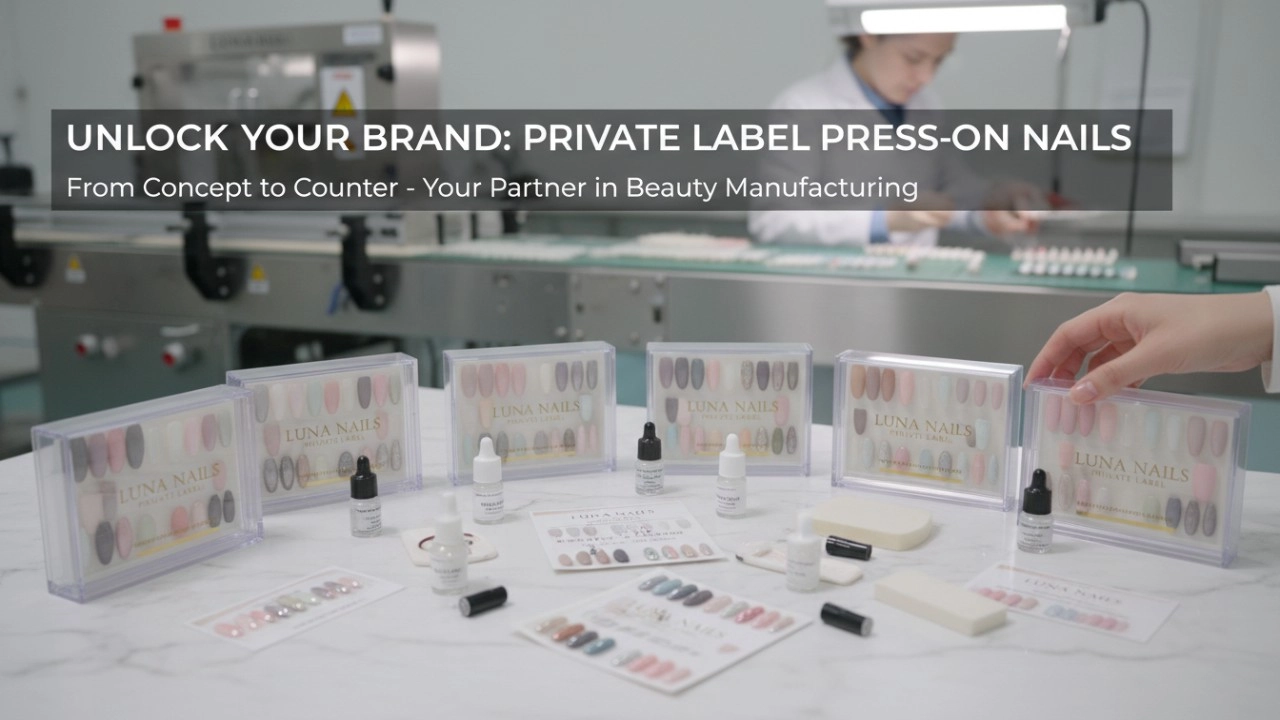
How to Scale Your Beauty Brand: Why Private Label Press On Nails Are the Highest-Margin Entry Point in 2026
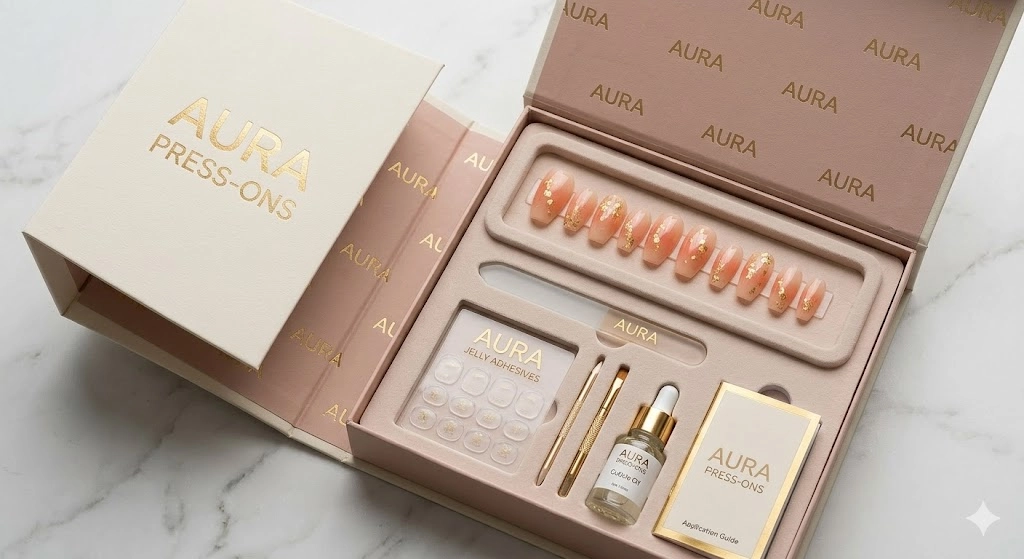
Why Partnering with Professional Press On Nails Manufacturers Boosts Your Brand Growth
Nail file
How do I file my nails properly?
Always file in one direction to avoid weakening your nails.
Avoid using a back-and-forth motion, as this can cause nails to split.
File nails when they are dry, as wet nails are more prone to damage.
If your nails are long, start at the tip and work toward the sides.
About French Nails Tips
How can I ensure a more secure application?
Use a nail dehydrator or alcohol pad to remove oils.
Apply a small amount of nail glue even if adhesive tabs are included.
Avoid water exposure for at least 1–2 hours after application.
Nail Dust Removal Brush
Can I use the same brush for my nails and other surfaces?
Ideally, the nail dust cleaning brush should be dedicated to cleaning nails only, especially if you're doing professional nail services. Using the same brush for multiple purposes might transfer dust or debris onto the nails, leading to potential contamination.
Product Customization
What is the minimum order quantity (MOQ) for custom nail styles?
The minimum order quantity is typically 1000-3000 sets per style and color. The exact MOQ depends on the complexity of the design.
Brand Client
Are samples provided free of charge?
To ensure that the product meets your requirements, we provide a sample service. Some samples are free, while some customized samples require payment of costs. Please contact us for specific details.
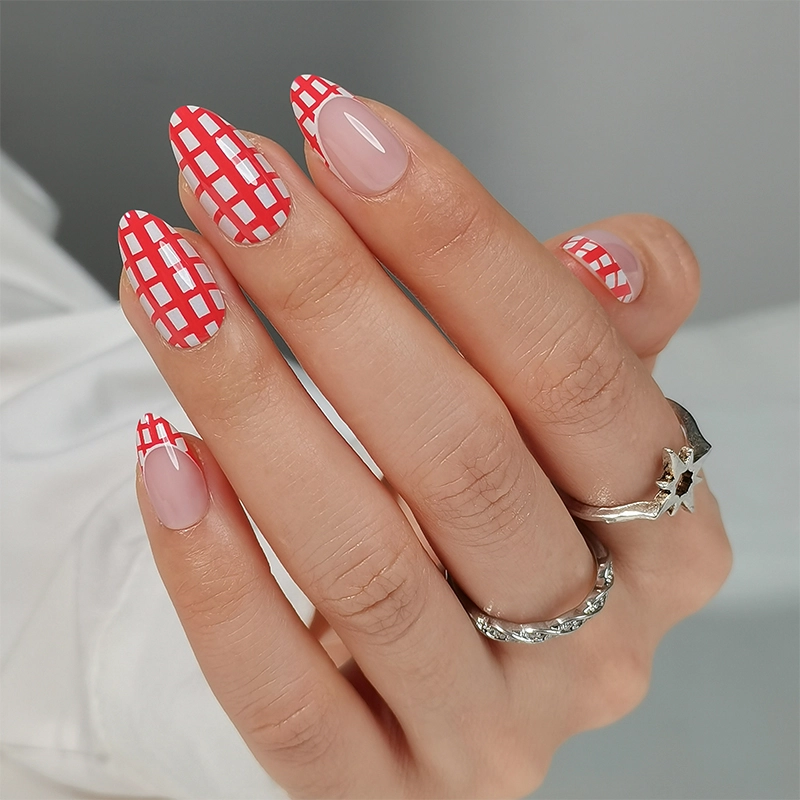
Wholesales Red French Nails Tips Checkered Soft Gel Nail Tips 32 Piece Set
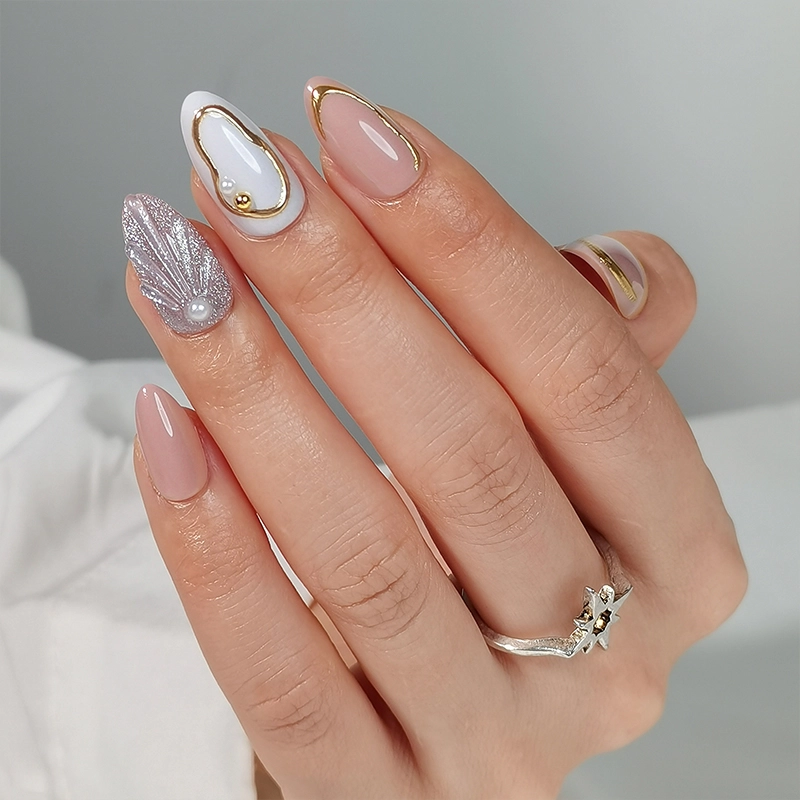
Wholesales Elegant Shell Inspired Soft Gel Wearable Nails for Seasonal Celebrations
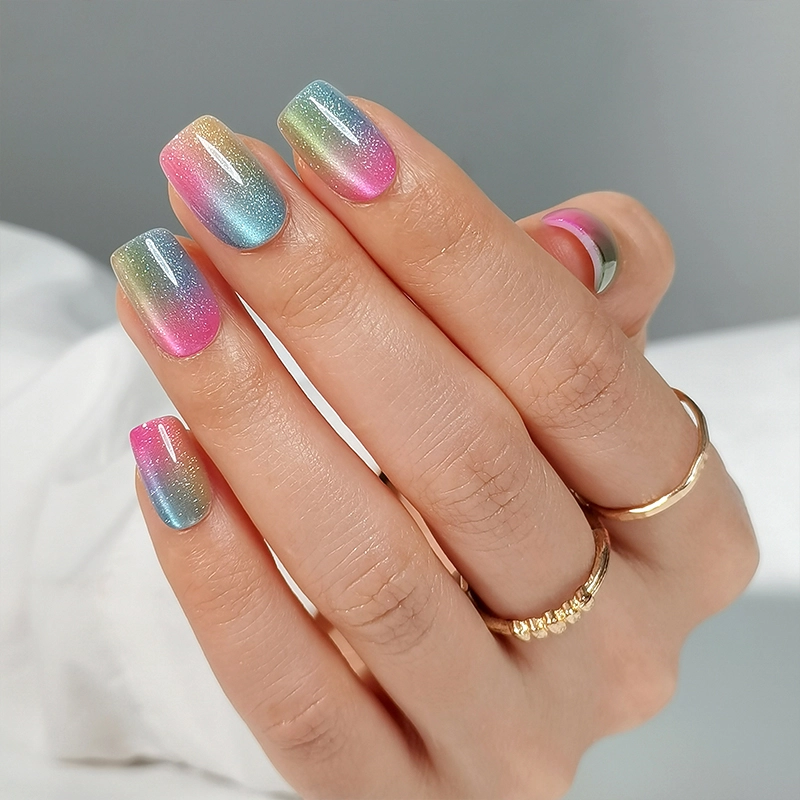
Custom Wholesale Gradient Cat Eye Soft Gel Wearable Fake Nails
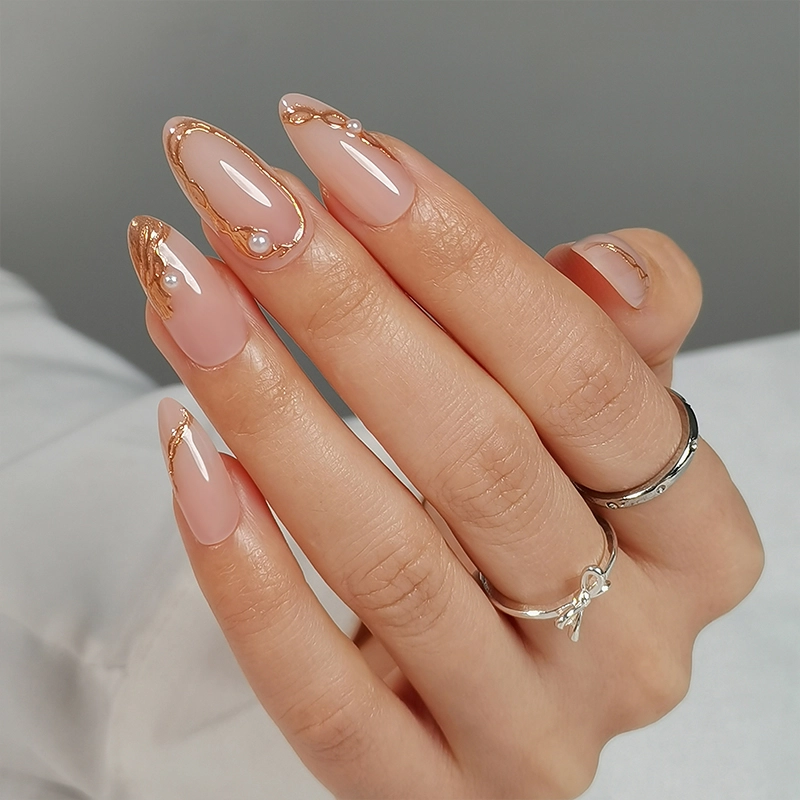
Wholesales Luxury Rhinestone Handmade Private Label Press On Nails Art Tips
Contact us
If you have press on nails products or customization needs, please feel free to contact from
below or via the contact information provided, we'll get back to you promptly within 24 hours.
By clicking 'Send Inquiry Now' I agree to XIANXING BEAUTY processing my personal data.
To see how to withdraw your consent, how to control your personal data and how we process it, please see our Privacy Policy and Terms of use.
Copyright © 2025 - XIANXING BEAUTY All Rights Reserved. Sitemap
Facebook
YouTube
Instagram
LinkedIn