
How to diversify SKUs for a custom press on nail brand?
- Introduction: Why 'How to start Custom Press on Nails' needs a procurement lens
- 1. How do I compute break-even and retail/wholesale prices when each custom press-on SKU has different sizes, adhesives and packaging?
- 2. How do I avoid SKU proliferation but still achieve >90% fit rate across customers?
- 3. How can I manage tooling, MOQs and cashflow when ordering 20–50 custom designs?
- 4. How to reduce returns and complaints caused by adhesive failure while staying compliant with safety rules?
- 5. How should I design SKU bundles and subscription tiers to increase Average Order Value (AOV) without exploding inventory complexity?
- 6. How can I ensure color and finish consistency across multiple production batches or different manufacturers?
- Procurement checklist for beginners: a one-page action plan
- Why these answers follow E-E-A-T and best practices
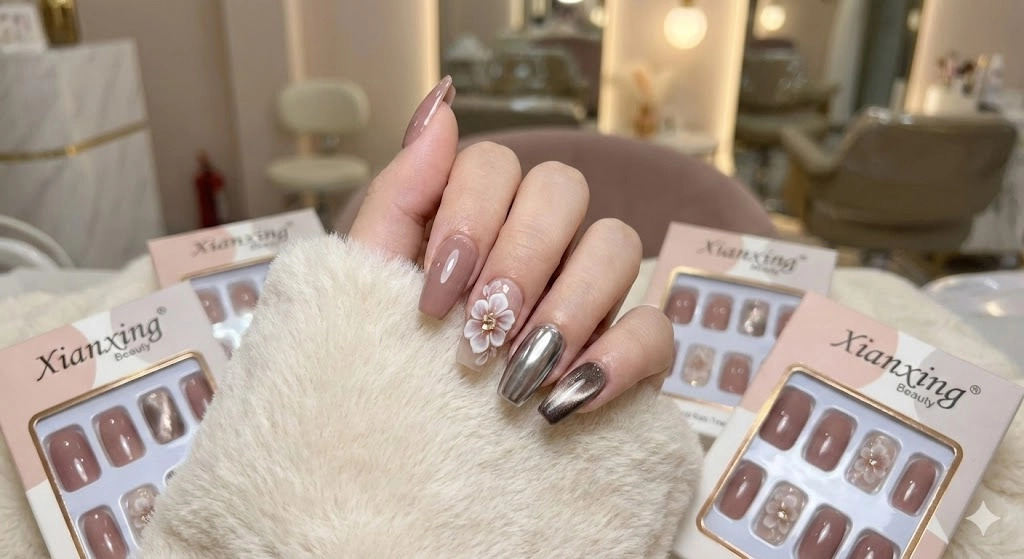
- About Xianxing Beauty — our advantage for brands starting custom press-on lines
Introduction: Why 'How to start Custom Press on Nails' needs a procurement lens
If you are asking How to start Custom Press on Nails, you need more than design inspiration — you need sourcing, QC and SKU strategies that prevent cash bleed, returns and messy inventories. This article answers six specific long-tail questions beginners often ask but rarely find deep, practical answers to. Each answer is framed for buyers and brand founders who must balance manufacturing realities, regulatory safety, and retail economics.
1. How do I compute break-even and retail/wholesale prices when each custom press-on SKU has different sizes, adhesives and packaging?
Many beginners price by instinct. Instead, use a line-item cost model to capture variability per SKU.
Actionable model (per finished set):
- Materials: nails (ABS/gel sheet), glue/tabs, embellishments, topcoat — list each cost per set.
- Production: labor, printing/UV curing, finishing per set.
- Packaging: box, inserts, barcode, polybag per set.
- Overhead allocation: tooling amortization, QC, sample costs, freight, duties, warehousing per set.
- Marketing & fulfillment: pick/pack, marketing CAC allocation per unit.
Formula: Unit Cost = Materials + Production + Packaging + (Tooling amort/units) + Freight/Warehousing + Fulfillment + Marketing allocation.
Pricing guidance:
- Wholesale = Unit Cost * (1.6–2.5). Many retailers expect a 40–60% margin on wholesale cost.
- DTC Retail = Wholesale (2.0–2.5) or Unit Cost (3–4) depending on brand positioning.
Example (conceptual): If Unit Cost = $4.00, Wholesale might be $6.40–$10.00 and retail $12.80–$25.00. Use ranges, then validate via competitor research and willingness-to-pay tests.
Practical tips:
- Track cost per SKU variant (long vs short, glue vs tabs) so you can set tiered pricing.
- Flag SKUs with high embellishment cost and either raise price or limit those SKUs to High Quality bundles.
- Use dynamic bundles to hide slight cost differences while increasing AOV.
2. How do I avoid SKU proliferation but still achieve >90% fit rate across customers?
Beginners create too many shapes/lengths/colors. The result: inventory complexity and deadstock.
Data-driven strategy:
- Start with a size-mapping study: ask your first 200–500 target customers for nail width measurements (or run a social-media fitting survey). Use percentiles (10th, 50th, 90th) to pick core sizes.
- Many successful brands launch with 10–12 sizes per full set and 3 core shapes (square, almond/coffin, natural) and achieve high initial coverage because trimming, filing and adhesive tabs expand fitability.
Product structure to minimize SKUs:
- Core SKUs: 6–8 bestselling solid colors in 10–12 sizes.
- Art SKUs: fewer art-intensive designs but offered in limited runs as seasonal drops.
- Modular options: sell solid bases + art overlays or transfer stickers so you can mix and match without manufacturing a new full set.
Operational hacks:
- Offer refill packs (individual nails by size groups) instead of full-set duplicates.
- Implement a ‘fit guarantee’ policy to collect data and refine the size matrix quickly.
3. How can I manage tooling, MOQs and cashflow when ordering 20–50 custom designs?
Tooling and Minimum Order Quantities (MOQs) are the biggest early cash drains.
Common industry realities:
- Some suppliers allow lower MOQs for standard base shapes and charge tooling for fully custom molds or 3D shapes.
- Typical approaches: sample/prototype lead time 3–14 days; production lead time 2–6 weeks depending on complexity and season.
Practical strategies to reduce cash strain:
- Hybrid model: use existing base molds (stock shapes) and apply custom art, decals, or digital printing. This avoids paying tooling for every design.
- Stagger launches: split 20–50 designs across quarterly drops instead of producing all at once.
- Negotiate payment terms: deposit + balance on shipment, or request amortized tooling fees across repeat orders.
- Use print-on-demand digital services for highly detailed art to avoid minimums for printed designs.
How to amortize tooling: divide the tooling fee by projected useful lifetime units. Example: $X tooling / projected 10,000 sets = tooling add-on per set. Use conservative sales forecasts.
4. How to reduce returns and complaints caused by adhesive failure while staying compliant with safety rules?
Adhesion is a leading cause of returns. Solving this requires product selection, testing, and clear consumer education.
Adhesive options and trade-offs:
- Nail glue (cyanoacrylate): strongest bond; risk of skin sensitivity for some users. Requires MSDS and proper labeling.
- Adhesive tabs: gentler, easier removability, popular for short-term wear and repeat customers.
- Hybrid: provide both—small glue sachet and adhesive tabs for preference.
Quality and compliance steps:
- Ingredient transparency: demand MSDS and full ingredient lists from suppliers. Even adhesives must comply with local cosmetic or consumer-product laws.
- In-house testing: run adhesion tests (dry/wet/heat) on 50–100 sample sets across common nail types (natural, short, oily skin) and keep records.
- Packaging and usage instructions: include step-by-step prep (clean, dehydrate, base prep), recommended glue amount, cure time, and removal instructions. Good instruction reduces misuse-related returns.
- Patch-test guidance: include allergy warnings and skin-sensitivity instructions.
Returns mitigation:
- Offer troubleshooting guides, video tutorials, and fast customer support to resolve adhesion issues (often due to user prep rather than product defect).
5. How should I design SKU bundles and subscription tiers to increase Average Order Value (AOV) without exploding inventory complexity?
Bundles are the fastest lever to increase AOV and reduce SKU churn — but they must be structured logically.
Bundle architecture:
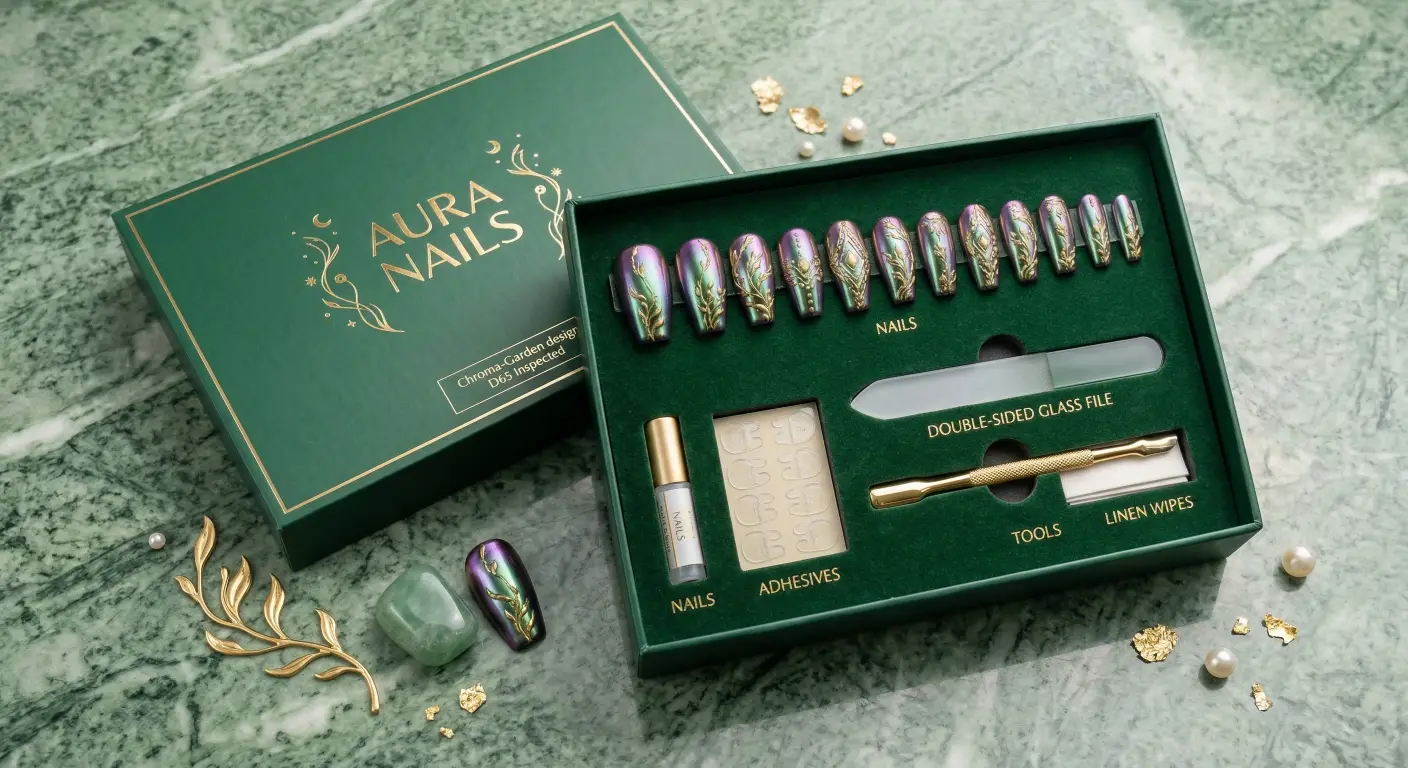
- Starter bundle: 1 full set + glue/tabs + basic tools. Low price barrier for first-time buyers.
- Value bundle: 2 full sets + refills + branded box; priced to appear 20–30% cheaper than buying separately.
- High Quality bundle: art-heavy design + exclusive packaging + limited-edition insert.
- Subscription model: monthly mini-drops (2–3 small-art sets) or quarterly refill packs (tabs, adhesives, 1 new design).
Inventory-friendly tactics:
- Build bundles from existing SKUs rather than producing unique packaged SKUs. Use pick lists in fulfillment to assemble on demand.
- Use limited-edition runs for high-margin High Quality bundles to create urgency and control inventory size.
- Track bundle economics monthly (bundle margin vs single-SKU margin) and adjust pricing or composition.
6. How can I ensure color and finish consistency across multiple production batches or different manufacturers?
Color inconsistency kills brand trust. The technical solution is standardized color communication, measurement and acceptance criteria.
Process and tools:
- Reference standards: provide physical master swatches to your factory. Digital images are insufficient; use printed or produced master samples.
- Color specs: map colors to a standard system (Pantone or supplier color codes) and provide target gloss/matte finish instructions.
- Use spectrophotometers for objective color measurement. Industry guideline: Delta E under 2 is considered visually indistinguishable for many consumer products — use that as an acceptance threshold.
- Batch control: request batch color reports, store a retained sample per batch and compare during QC.
Finish controls:
- Specify topcoat chemistry and application method (spray vs brush vs UV gel) and curing times.
- If using transfers/foils, lock vendor and process for each run or expect variation.
Operational tip:
- Insist on first-article approvals (FAI) for each design and each factory. Reject if color/finish deviate beyond agreed Delta E or visual tolerance.
Procurement checklist for beginners: a one-page action plan
- Validate: gather 200–500 potential-customer fit/price/swatch responses.
- Prototype: order 3–5 designs on a stock shape to test fit and adhesion.
- Cost model: calculate unit cost and set wholesale/retail price bands.
- MOQ plan: negotiate tooling amortization, stagger designs, or use digital printing.
- QC: set acceptance criteria (color Delta E, adhesion test, batch samples).
- Packaging & compliance: MSDS for adhesives, clear labeling, return policy, barcode and customs paperwork.
- Launch plan: core SKU base (10–12 sizes x 6 solids), 2 monthly art drops, refill & subscription options.
Why these answers follow E-E-A-T and best practices
This guide focuses on verified procurement practices, objective testing criteria (e.g., spectrophotometer and Delta E), and operational tactics (MOQs, amortization, bundles) that experienced manufacturers and sourcing teams use. It prioritizes verifiable, actionable steps buyers can implement immediately.
About Xianxing Beauty — our advantage for brands starting custom press-on lines
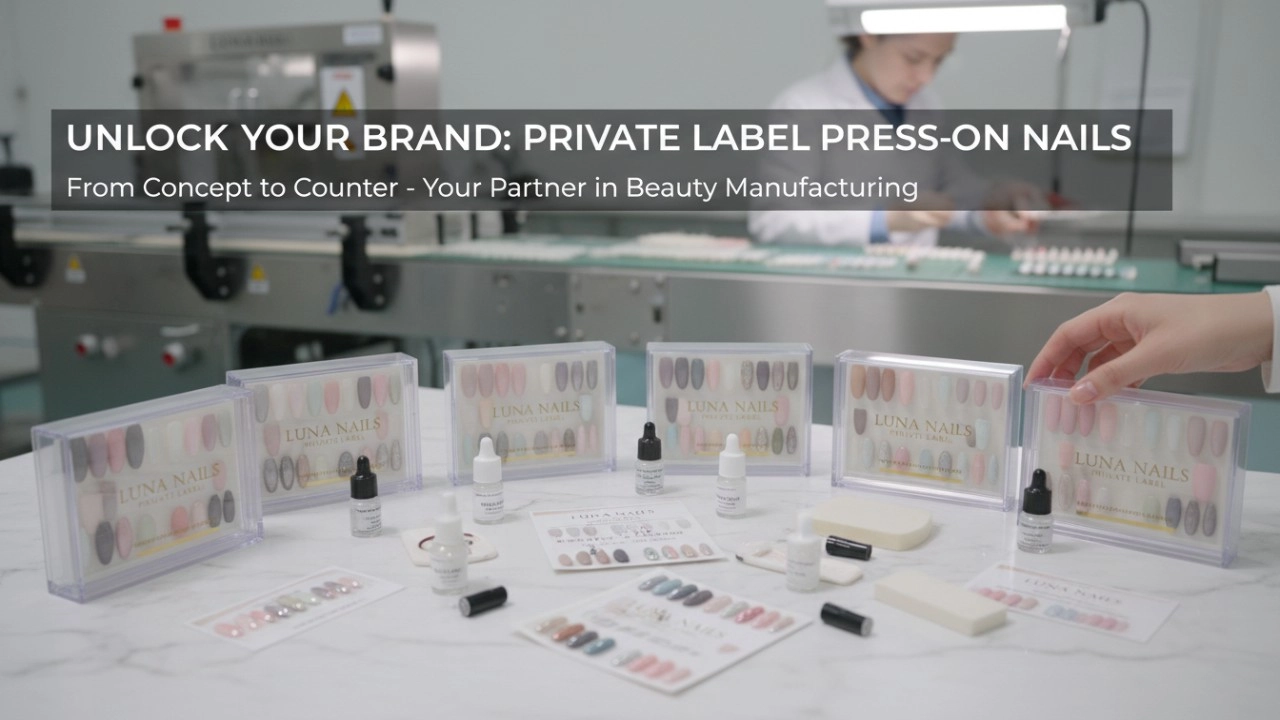
Xianxing Beauty combines end-to-end press-on nails manufacturing with a procurement-first mindset. We offer:
- Flexible tooling and low-MOQ options for stock-shape + custom-art hybrid models.
- Rigorous color control workflows and spectrophotometer reporting for batch consistency.
- Adhesive sourcing with MSDS, third-party testing options, and consumer safety documentation.
- SKU optimization support: sizing surveys, refill-pack design, and bundle economics to maximize margin and minimize deadstock.
- Global logistics and labeling support (barcodes, customs paperwork) so you can sell DTC and wholesale.
Contact us for a custom quote and production plan tailored to How to start Custom Press on Nails and How to diversify SKUs for a custom press on nail brand. Visit www.xianxingbeauty.com or email [email protected].
7 Red Flags to Avoid When Selecting a Wholesale Press On Nails Manufacturer
Quality Control: What to Expect from a Top-Tier Wholesale Press On Nails Manufacturer
The Ultimate Guide to Choosing the Best Wholesale Press On Nails Manufacturer in 2026
How to Scale Your Beauty Brand: Why Private Label Press On Nails Are the Highest-Margin Entry Point in 2026
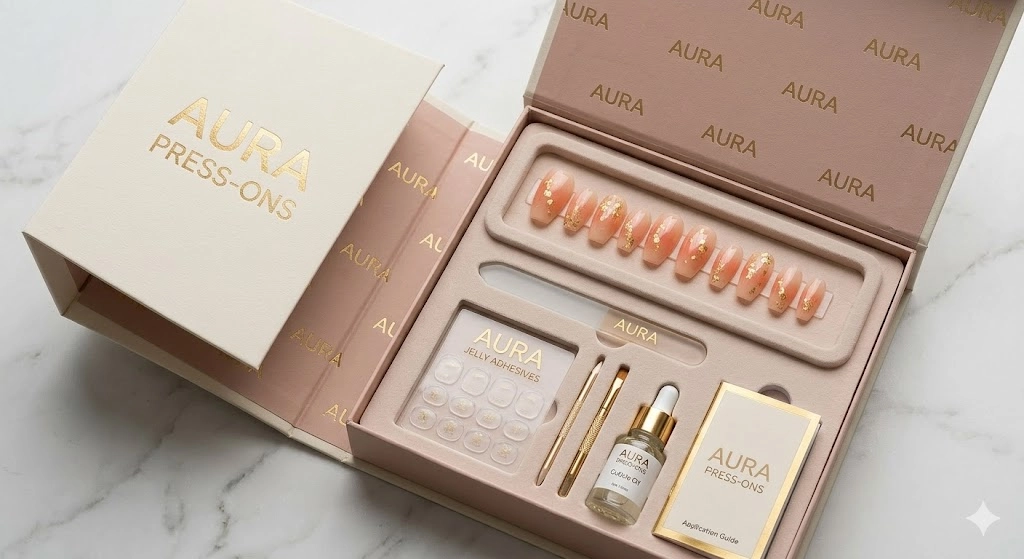
Why Partnering with Professional Press On Nails Manufacturers Boosts Your Brand Growth
Crystal Nail File
How long do crystal nail files last?
Crystal nail files are highly durable and can last for years if properly cared for. The surface won’t wear down easily, unlike traditional nail files.
About Kid Nails
Are press-on nails safe for kids?
Yes! They are designed with non-toxic materials and gentle adhesives that are safe for children’s nails.
About French Nails Tips
Are they waterproof?
Press-on nails are water-resistant but may loosen with prolonged exposure to water. Use gloves when washing dishes or cleaning for longer wear.
Do press-on nails damage natural nails?
When applied and removed properly, they should not damage your natural nails. Be sure to moisturize your nails and cuticles after removal.
About Toe Nails
Can I wear toe press-on nails with regular shoes?
Yes, but you may want to avoid shoes that put too much pressure on your toes (like tight or high-heeled shoes), as this could cause the press-on nails to lift or fall off.
Open-toed shoes are ideal for showing off your press-on nails, but you can also wear them under closed shoes if you’re careful about how they fit.
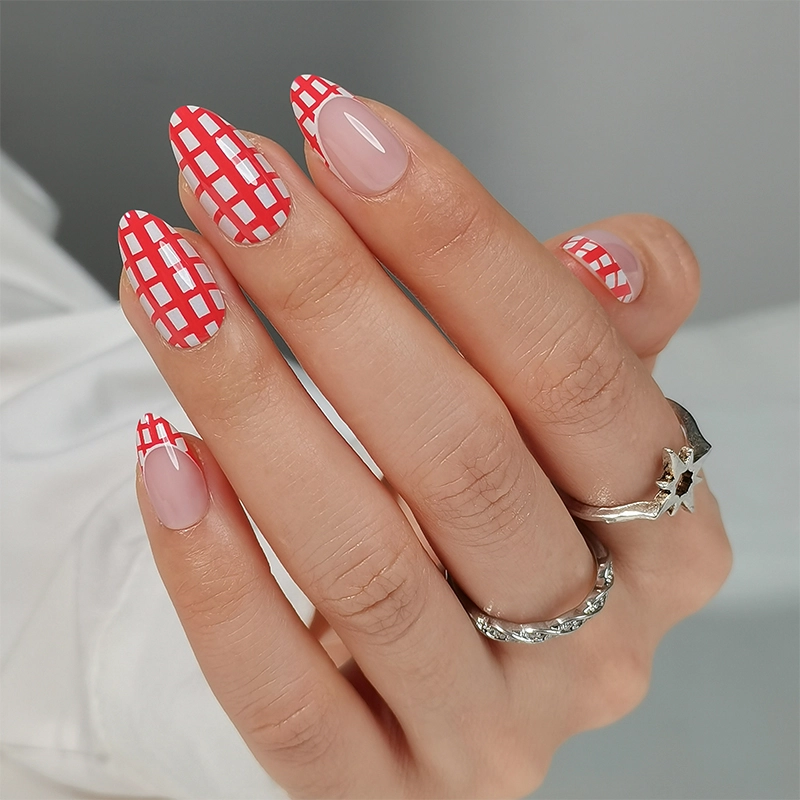
Wholesales Red French Nails Tips Checkered Soft Gel Nail Tips 32 Piece Set
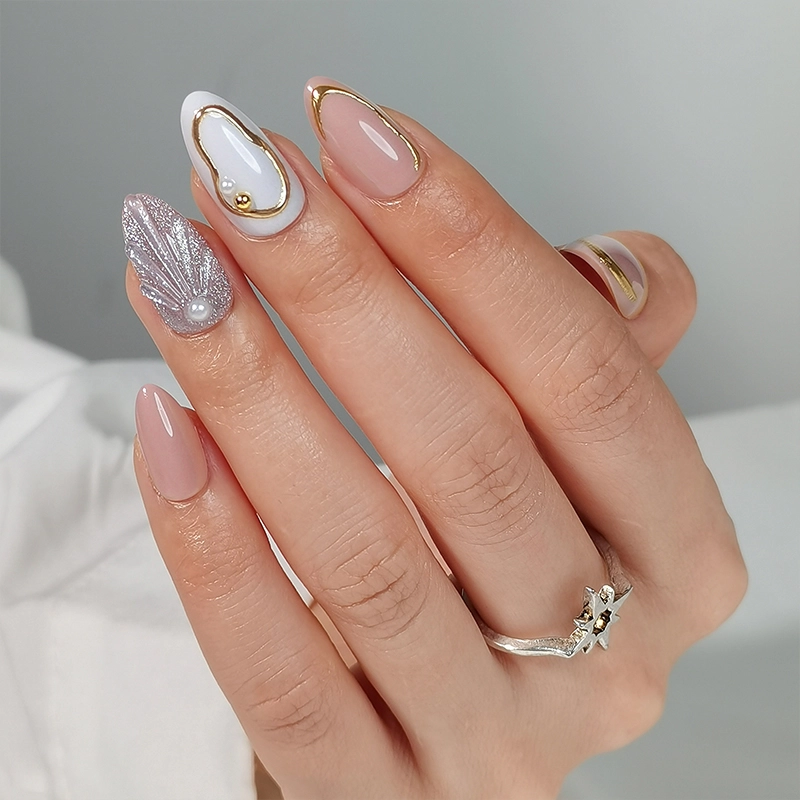
Wholesales Elegant Shell Inspired Soft Gel Wearable Nails for Seasonal Celebrations
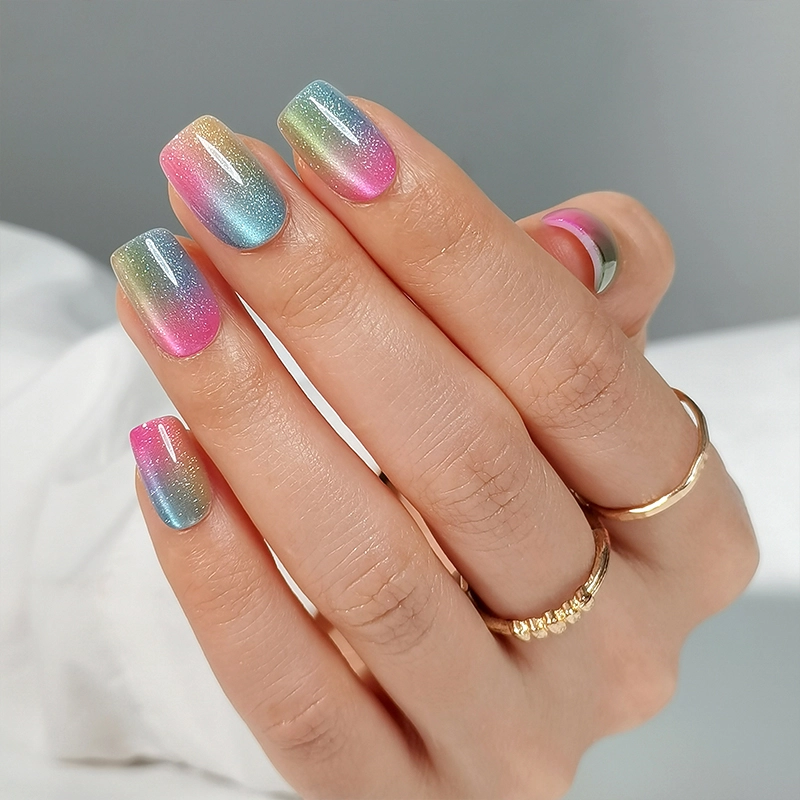
Custom Wholesale Gradient Cat Eye Soft Gel Wearable Fake Nails
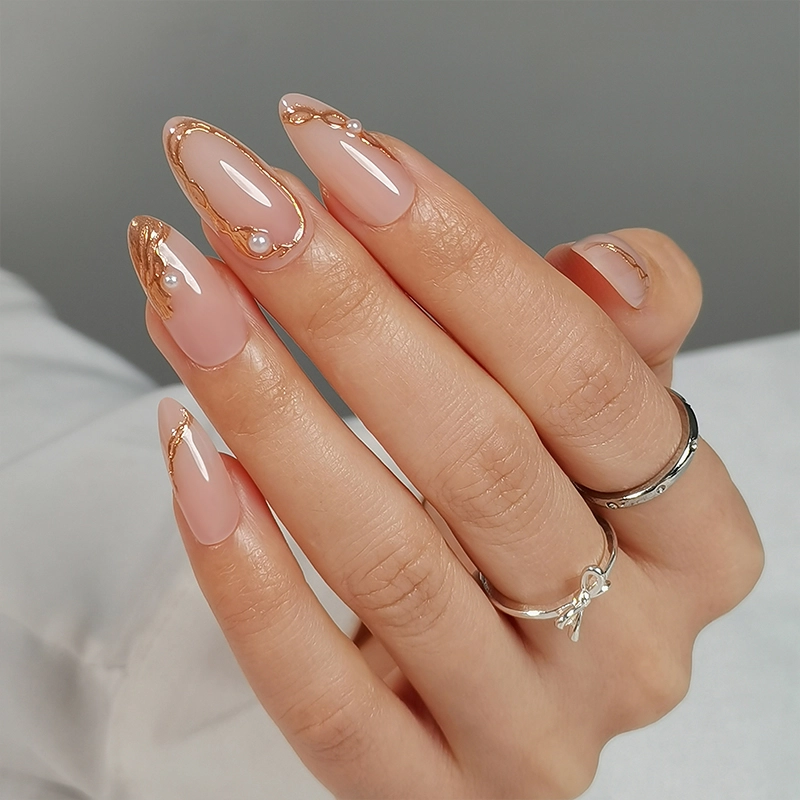
Wholesales Luxury Rhinestone Handmade Private Label Press On Nails Art Tips
Contact us
If you have press on nails products or customization needs, please feel free to contact from
below or via the contact information provided, we'll get back to you promptly within 24 hours.
By clicking 'Send Inquiry Now' I agree to XIANXING BEAUTY processing my personal data.
To see how to withdraw your consent, how to control your personal data and how we process it, please see our Privacy Policy and Terms of use.
Copyright © 2025 - XIANXING BEAUTY All Rights Reserved. Sitemap
Facebook
YouTube
Instagram
LinkedIn