
How to reduce shipping costs for bulk press on nails orders?
- How to start Custom Press on Nails and how to reduce shipping costs for bulk press on nails orders: 8 specific beginner questions answered
- 1) What is a realistic MOQ for custom press-on nails and how can a beginner reduce it without paying huge per-unit High Qualitys?
- 2) How do I calculate the true landed cost per set (including duties, VAT, packaging, returns, and carrier fees) so I don’t lose money?
- 3) What packaging dimensions and materials minimize dimensional-weight (DIM) surcharges for parcel carriers when shipping press-on nails?
- 4) At what point (units/weight/volume) does sea freight (LCL/FCL) become cheaper than parcel carriers for bulk press-on nails?
- 5) How can beginners set up reliable QC (quality control) for overseas factories to avoid expensive rework and returns?
- 6) Which shipping software and fulfillment strategies help reduce international per-unit shipping costs for small bulk orders?
- 7) How can I include small branded inserts or custom boxes without triggering higher customs duties or shipping charges?
- 8) What is the fastest scalable path from launching with ~100 sets to reliably producing 5,000 sets/month while keeping per-unit costs down?
- Final note — How Xianxing Beauty helps beginners bridge these gaps
- References and sources consulted
How to start Custom Press on Nails and how to reduce shipping costs for bulk press on nails orders: 8 specific beginner questions answered
Below are 8 concrete, pain-point–focused long-tail questions that beginners building a custom press-on nails brand frequently ask but find poor or outdated answers for online. Each question is followed by a clear, actionable answer designed for procurement, manufacturing, and logistics decisions.
1) What is a realistic MOQ for custom press-on nails and how can a beginner reduce it without paying huge per-unit High Qualitys?
Why this matters: MOQ drives cash flow and inventory risk. Many suppliers quote 1,000+ sets, which is unaffordable for new brands.
Actionable approach:
- Ask for a broken MOQ: request smaller quantities split across multiple SKUs within a single production run. Example: ask a factory to run 200 sets per design but 5 designs in one mold run = 1,000 total; you get varied SKUs with lower per-SKU counts.
- Offer to pay a slightly higher sample/setup fee but negotiate lower per-unit prices for higher follow-on orders — leverage a written “price ladder” for volumes (e.g., 0–999, 1,000–4,999, 5,000+).
- Use white-label or drop-ship manufacturers that allow private-label on small runs; their templates shorten tooling/setup time and reduce MOQ pressure.
- Propose rolling production: start with a small initial PO and commit to scheduled reorder cadence (e.g., monthly) to spread the supplier’s setup cost and achieve lower long-term rates.
- Leverage local or regional manufacturers for very small runs to reduce lead time; pay a High Quality initially but test SKUs before scaling offshore.
Key negotiation points to include in the contract: lead time penalties, sample approval criteria, acceptable defect rate (AQL), and a clear re-order price ladder.
2) How do I calculate the true landed cost per set (including duties, VAT, packaging, returns, and carrier fees) so I don’t lose money?
Why this matters: Without an accurate landed cost you’ll underprice and erode margins.
Step-by-step formula and checklist:
- Start with Factory FOB unit price.
- Add packaging & labeling per unit (include polybag, box, inserts, product stickers).
- Add shipping: for small parcels use negotiated carrier rates per unit; for ocean/air bulk include freight per unit (see breakpoint guidance below).
- Include customs duties and VAT — determine the HS code for press-on nails (consult customs or your broker). Use your country’s tariff schedule to calculate duties. Add import VAT/GST where applicable.
- Add landing fees: customs broker fee, ISF/manifest filing, port handling, and inland freight to your warehouse.
- Add quality control and testing per unit (amortize inspection costs across the batch).
- Allocate returns & replacement buffer (e.g., 1–5% of unit cost depending on historic return rates).
- Final formula: Landed unit cost = FOB + (packaging) + (freight per unit) + (duties & VAT per unit) + (broker & port fees per unit) + (QC & returns allowance per unit).
Practical tips:
- Work with a customs broker to identify the correct HS code early — misclassification can lead to surprise duties and fines.
- Use a landed-cost calculator or freight forwarder quote to model three scenarios: conservative (slow sea), expedited (air), and hybrid (air for samples + sea for rest).
3) What packaging dimensions and materials minimize dimensional-weight (DIM) surcharges for parcel carriers when shipping press-on nails?
Why this matters: For lightweight but bulky packages (like plated press-on sets with inserts), carriers bill by dimensional weight — poor packaging blows up costs.
Practical packaging strategy:
- Reduce dead space: design snug-fitting retail cards or stackable blister trays so sets nest tightly. Consolidate multiple sets per mailer rather than separate padded envelopes.
- Choose low-profile inner packaging: thin, crush-resistant card backers and low-volume polybags rather than bulky clamshells.
- Switch to mailer classification where possible: bubble mailers and poly mailers are typically smaller and lower DIM penalties than boxes; ensure adequate crush protection for international transit.
- Batch shipments into small boxes that maximize cubic utilization—use cube optimization tools to determine ideal counts per box to minimize DIM weight per unit.
- Test real-package weights and dimensions with each carrier — carriers use different DIM divisors and rules, so compare actual billed weight (not just gross weight).
Tools and steps: create a package matrix (SKU counts per parcel) and run test labels through your carrier portal or multi-carrier ship software to see billed DIM vs actual weight before finalizing packing rules.
4) At what point (units/weight/volume) does sea freight (LCL/FCL) become cheaper than parcel carriers for bulk press-on nails?
Why this matters: Choosing the wrong mode can cost you 20–50% in shipping expenses.
Decision framework (qualitative, actionable):
- Parcel (FedEx/UPS/DHL/USPS): best for low-quantity, high-speed, direct-to-consumer shipments. Works up to a few hundred kg per shipment across multiple packages.
- LCL (Less than Container Load): good when your cargo fills a portion of a container and you want sea savings without full-container commitment. Economical when aggregated volume across customers or SKUs approaches several cubic meters.
- FCL (Full Container Load): becomes the best cost-per-unit once you can reasonably fill (or nearly fill) a 20ft/40ft container — typically when your monthly production reaches several thousand sets depending on packaging density.
How to estimate the breakpoint:
- Calculate the cubic meters (CBM) your monthly order consumes (measure packed-case dimensions and compute CBM = L x W x H in meters).
- Ask freight forwarders for door-to-door rate per CBM for sea LCL and per-container FCL quotes; compare to aggregated parcel cost for the same SKU quantity. Freight forwarders can model exact break-even points.
Practical tip: combine sea freight for inventory replenishment with air/express for urgent restocks. Negotiate consolidation with other brands or use 3PL consolidation to lower LCL rates when you’re not yet at FCL volume.
5) How can beginners set up reliable QC (quality control) for overseas factories to avoid expensive rework and returns?
Why this matters: Poor QC leads to returns, brand damage, and wasted shipping expense.
Minimum QC program for press-on nails:
- Pre-production approval (PPA): approve molds, color proofs, and a full prototype set before mass production.
- During production checks: arrange a mid-production inspection (around 30–50% completion) to catch problems early.
- Pre-shipment inspection (PSI): 100% visual check for critical attributes or statistical AQL sampling (e.g., AQL 2.5/4.0) performed by a third-party inspector.
- Define acceptance criteria in advance (adhesive strength, finish gloss, sizing accuracy, print/color matching tolerances, packaging integrity) and include them in the PO.
- Use trusted third-party inspection providers (e.g., SGS, Bureau Veritas, Intertek) and require photo/video evidence and an inspection certificate before release.
Contractual protections: include hold-and-correct clauses, penalties for out-of-spec shipments, and allowance for replacement or discounts to cover return shipping if defects exceed agreed thresholds.
6) Which shipping software and fulfillment strategies help reduce international per-unit shipping costs for small bulk orders?
Why this matters: Software and multi-carrier strategies let you compare rates and avoid overpaying, especially for cross-border DTC orders.
Recommended stack and tactics:
- Use multi-carrier shipping APIs/platforms (Shippo, EasyPost, ShipStation, ShipEngine) to compare real-time rates and choose the cheapest service that meets delivery-time SLAs.
- Buy postage in bulk or negotiate a commercial account with carriers to get discounted pricing based on monthly volume.
- Consolidate small orders into regional fulfillment hubs (3PL) to reduce cross-border parcel distances and to enable local deliveries at much lower rates.
- Offer flat-rate or zone-based shipping thresholds to encourage larger baskets and reduce per-unit fulfillment cost.
- Use return labels with negotiated rates or RMA portals to reduce reverse logistics cost; routing returns to a regional returns center cuts international return fees.
7) How can I include small branded inserts or custom boxes without triggering higher customs duties or shipping charges?
Why this matters: Branding elements add perceived value but can increase weight, volume, and sometimes change customs classification.
Guidelines:
- Keep inserts lightweight and thin (e.g., printed cardstock <200gsm) and pack them inside the same sealed polybag or inner tray to avoid extra cubic volume.
- Classify customs HS codes based on the product’s primary function (the nails themselves), not the branded insert. Provide detailed commercial invoices to your customs broker to ensure correct classification.
- Where inserts are heavier or substantial (booklets, samples), consider printing regionally (onshore) and inserting during fulfillment to avoid shipping bulk paper weight and potential reclassification.
- If adding boxes increases package dimensions, recalculate DIM weights and consider shipping in bulk in simple cartons, then doing final retail packaging at a domestic 3PL.
8) What is the fastest scalable path from launching with ~100 sets to reliably producing 5,000 sets/month while keeping per-unit costs down?
Why this matters: Many sellers grow faster than their supply chain can handle, causing delays and inflated costs.
Phased scaling plan:
- Validate SKUs: start with 3–5 best-selling designs and gather sell-through and return metrics for 2–3 months.
- Consolidate SKUs: reduce variety and focus on high-turnover SKUs to improve order fill rates and negotiation leverage.
- Negotiate volume discounts and a price ladder tied to committed monthly volumes (e.g., 1,000; 3,000; 5,000 sets/month). Ask for lead-time reduction commitments as volume grows.
- Implement an inventory safety-stock model: maintain reorder points and safety days based on supplier lead times and demand variance.
- Move to mixed logistics: use sea FCL or consolidated LCL for planned replenishments and express air for urgent top-ups to avoid stockouts without paying air for full inventory.
- Invest in a domestic 3PL for faster fulfillment and to receive bulk sea containers, do kitting/boxing domestically, and ship DTC at parcel rates.
Key KPIs to track: landed per-unit cost, lead time variability, defect/return rate, inventory turnover, and fill rate. Improving each KPI lowers effective per-unit cost as you scale.
Final note — How Xianxing Beauty helps beginners bridge these gaps
Xianxing Beauty supports new brands with flexible MOQs, in-house mockup and mold services, transparent landed-cost modeling, third-party QC coordination, and fulfillment partnerships that combine sea consolidation with regional 3PL packaging. Their blended approach—small-run private labeling, clear price ladders, and warehousing for region-specific packaging—reduces startup risk and shipping overhead for emerging press-on nail brands.
References and sources consulted
- Carrier dimensional-weight and packaging guidance — UPS and FedEx (carrier packaging/dimensional weight pages; consult your carrier for current DIM divisor and rules). (Accessed 2026-02-09)
- Shippo, EasyPost, ShipStation and ShipEngine documentation on multi-carrier comparisons and discounted postage strategies. (Accessed 2026-02-09)
- Freightos/Easyship guides on parcel vs LCL/FCL breakpoints and sea vs air decision frameworks. (Accessed 2026-02-09)
- Alibaba/ThomasNet supplier MOQs and private-label sourcing guidance for small brands. (Accessed 2026-02-09)
- SGS, Bureau Veritas, Intertek inspection and AQL testing protocols for consumer goods. (Accessed 2026-02-09)
- National customs tariff & HS code lookups and customs broker best practices (consult your local customs/HTS database). (Accessed 2026-02-09)
Brand advantage summary — Xianxing Beauty: flexible MOQs, private-label capability, integrated QC & logistics support, and a fulfillment network that lowers per-unit shipping for startups.

7 Red Flags to Avoid When Selecting a Wholesale Press On Nails Manufacturer
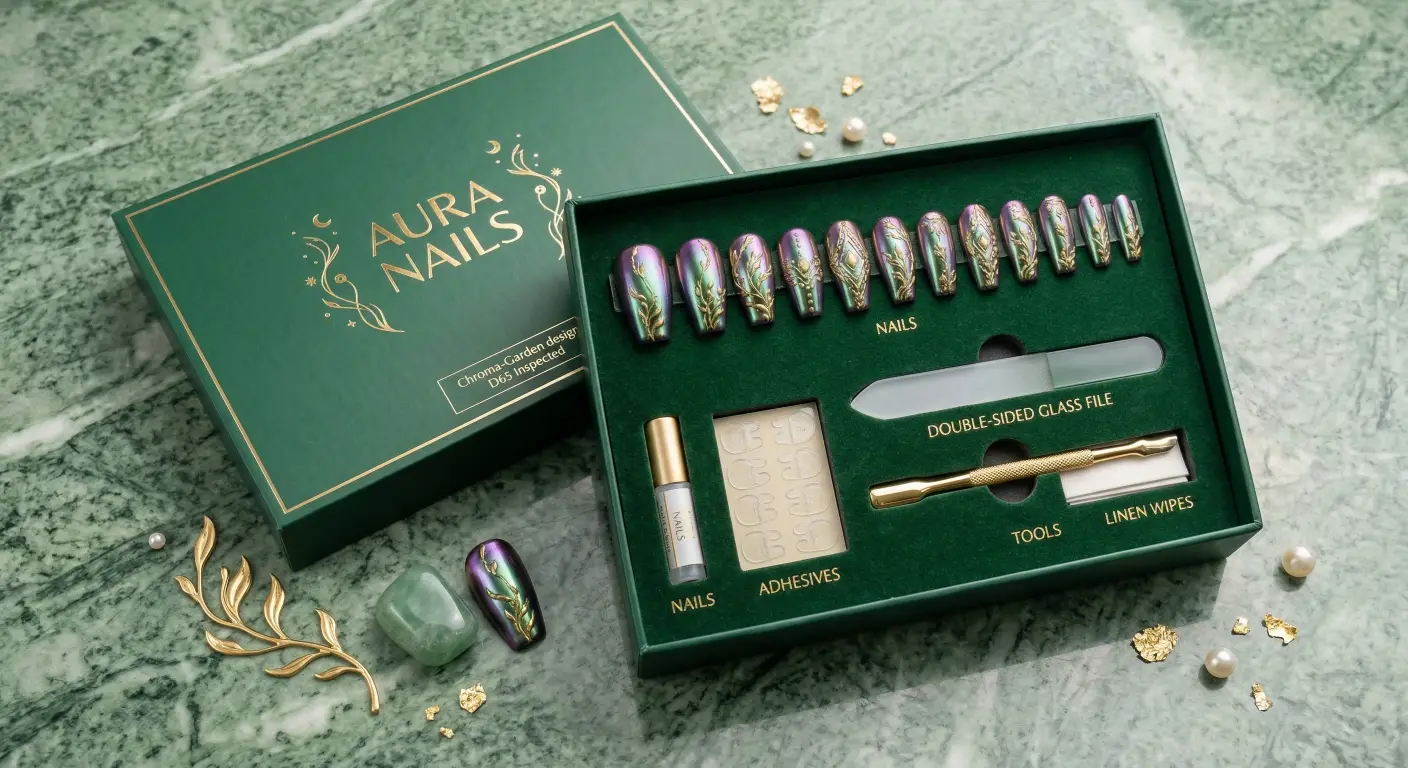
Quality Control: What to Expect from a Top-Tier Wholesale Press On Nails Manufacturer

The Ultimate Guide to Choosing the Best Wholesale Press On Nails Manufacturer in 2026
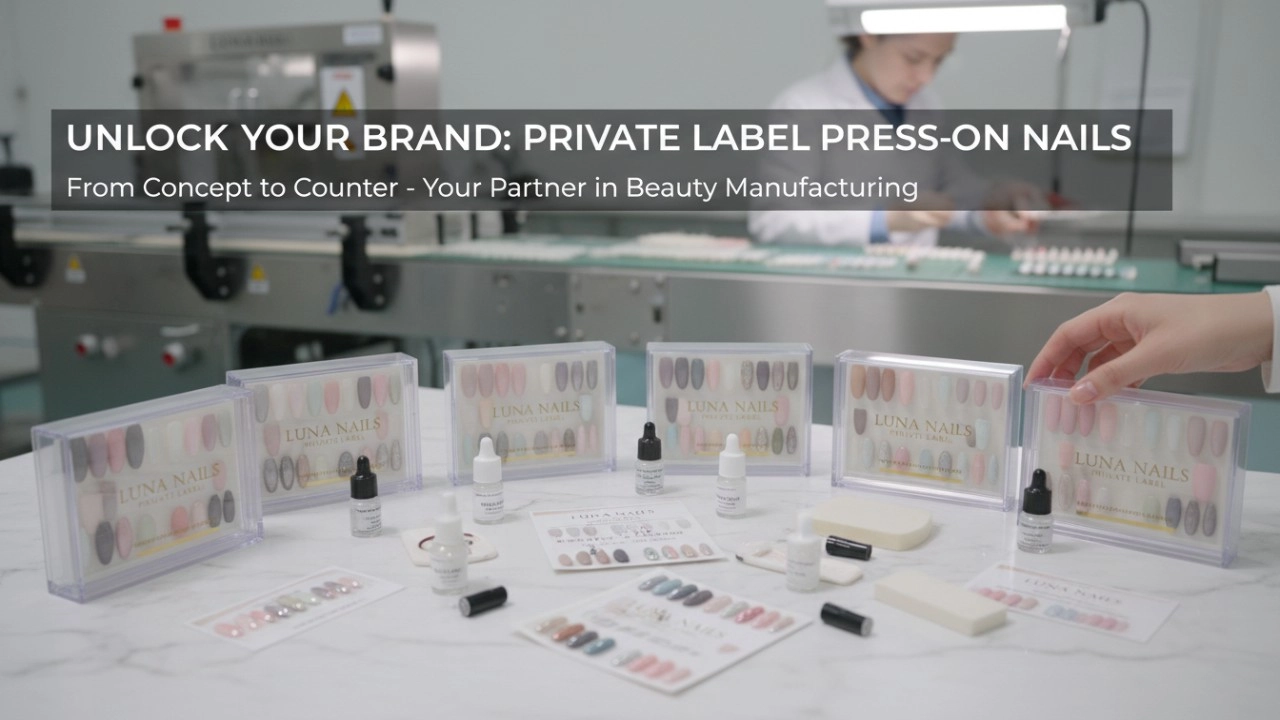
How to Scale Your Beauty Brand: Why Private Label Press On Nails Are the Highest-Margin Entry Point in 2026
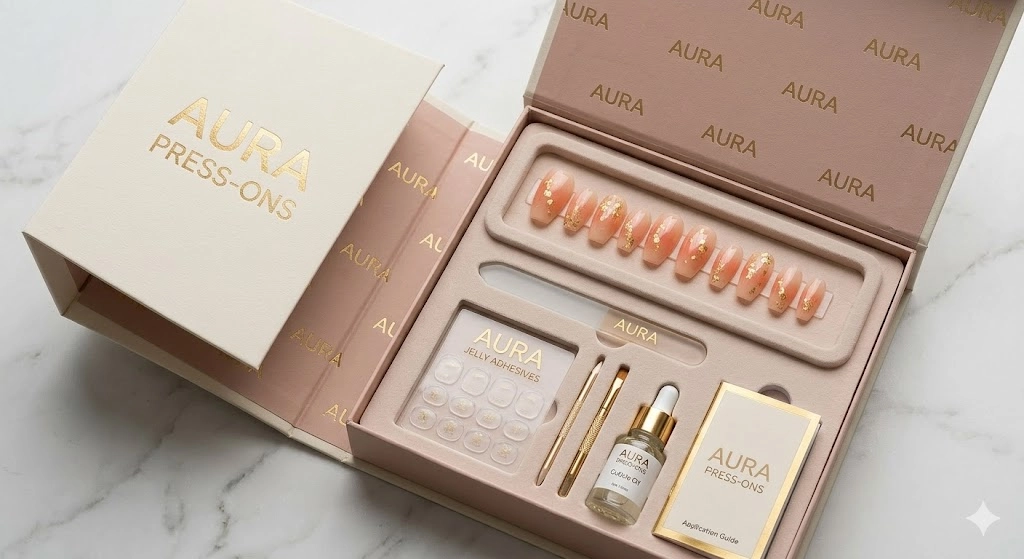
Why Partnering with Professional Press On Nails Manufacturers Boosts Your Brand Growth
About Price and payment
How are your product prices determined?
Our pricing is influenced by several factors, such as the order quantity, customization requirements, and current market trends.
Agent
What are the levels of Xianxing agents?
At present, we have a total of 4 levels, temporary agent, junior agent, senior agent and regional agent.
About chrome Nails
How can I make them last longer?
Clean your nails thoroughly before application to remove oils.
Apply a small amount of nail glue even if adhesive tabs are included.
Avoid excessive exposure to water or chemicals.
About Cooperation Process
How long does the collaboration process take?
The timeline depends on your specific needs for the manicure set and order size. Typically, it takes a few weeks to several months from demand confirmation to product delivery.
About Product
How long is the delivery time?
Usually 30 days after sample confirmation, it depends on customer's detailed requirements.
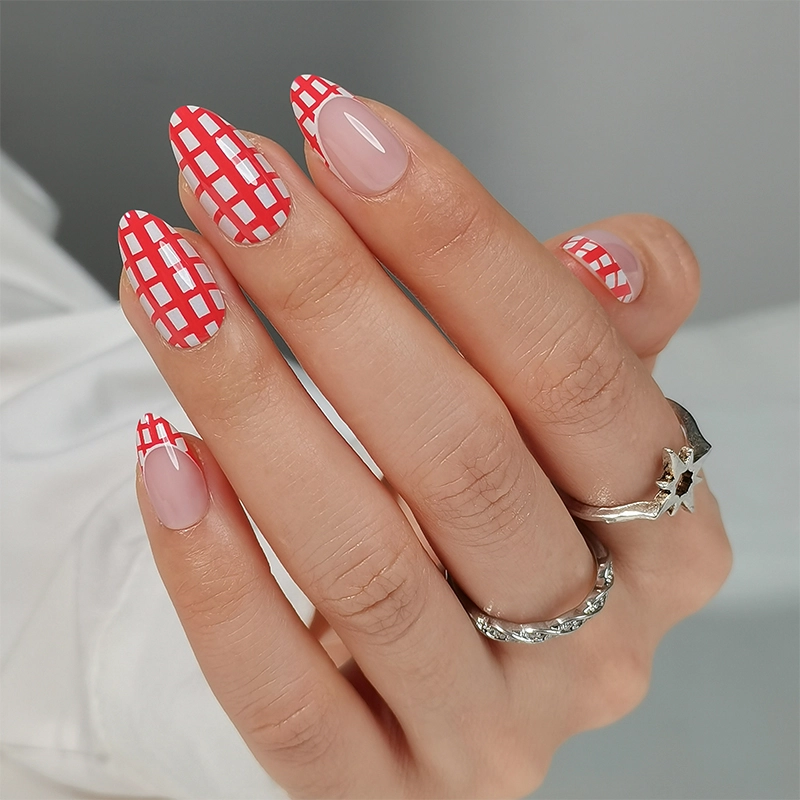
Wholesales Red French Nails Tips Checkered Soft Gel Nail Tips 32 Piece Set

Wholesales Elegant Shell Inspired Soft Gel Wearable Nails for Seasonal Celebrations
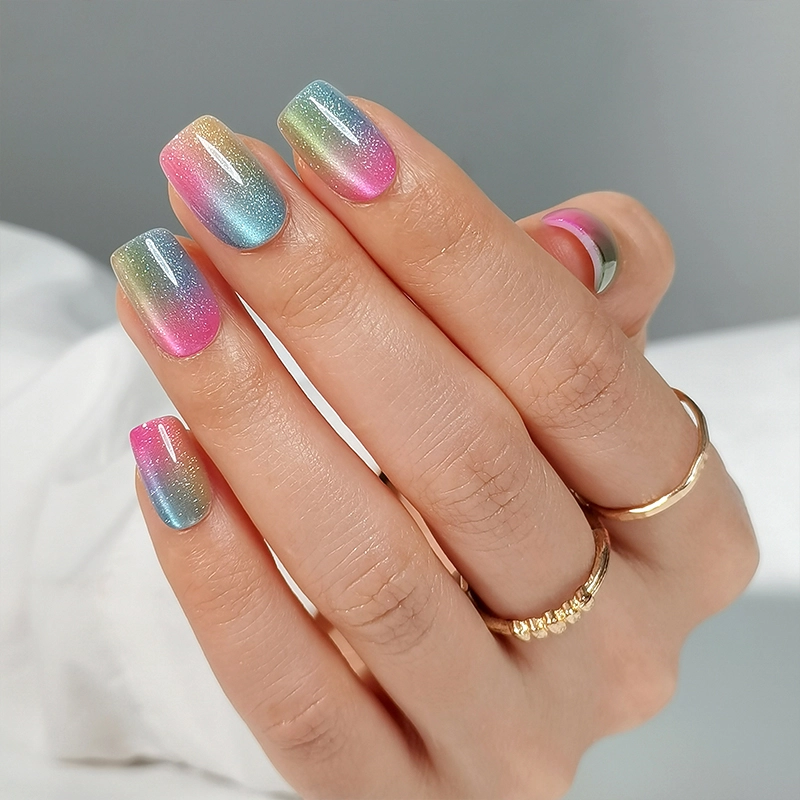
Custom Wholesale Gradient Cat Eye Soft Gel Wearable Fake Nails
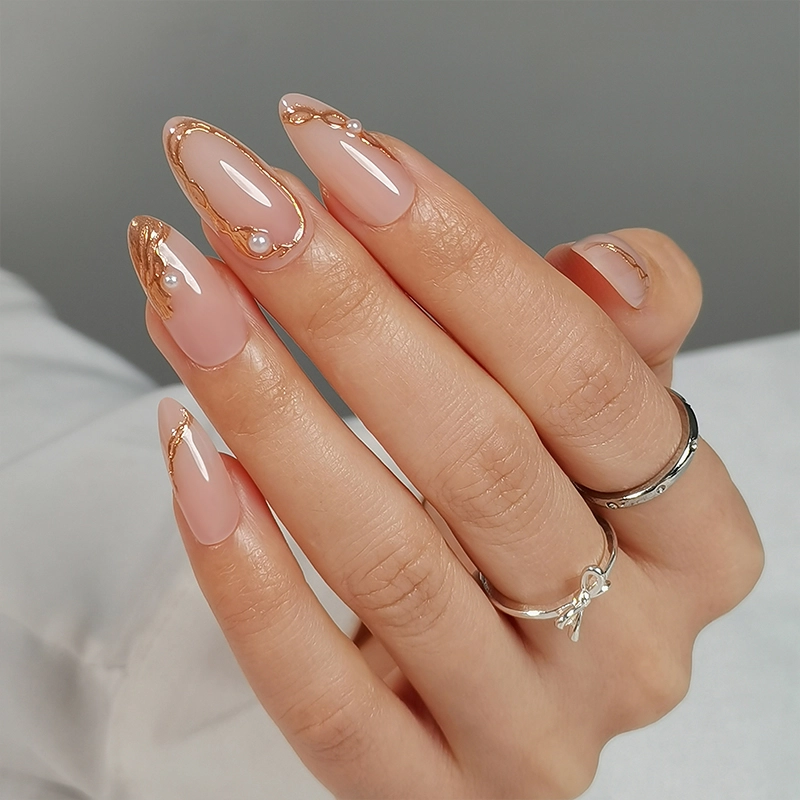
Wholesales Luxury Rhinestone Handmade Private Label Press On Nails Art Tips
Contact us
If you have press on nails products or customization needs, please feel free to contact from
below or via the contact information provided, we'll get back to you promptly within 24 hours.
By clicking 'Send Inquiry Now' I agree to XIANXING BEAUTY processing my personal data.
To see how to withdraw your consent, how to control your personal data and how we process it, please see our Privacy Policy and Terms of use.
Copyright © 2025 - XIANXING BEAUTY All Rights Reserved. Sitemap
Facebook
YouTube
Instagram
LinkedIn