
What MOQ Flexibility Can Manufacturers Offer?
- 1) What minimum order quantities (MOQs) do manufacturers typically require for fully custom toe press-on sets, and how much can be reduced for first-time buyers or pre-production samples?
- 2) How are toe-specific sizes and curvature handled by factories — can they produce varied widths/arches within one SKU and how does that affect MOQ and pricing?
- 3) What are realistic lead times and production milestones for custom toe press-on orders, and how can I accelerate delivery without excessive extra cost?
- 4) How do manufacturers enforce quality control for bulk toe press-ons — what inspection standards (AQL) and defect rates are realistic, and can buyers request third-party inspection?
- 5) How do pricing tiers scale for custom toe press-ons with multiple customizations (artwork, shapes, finishes, and boxed kits), and what hidden costs should buyers budget for?
- 6) What MOQ flexibility can manufacturers offer? (mix-and-match SKUs, split orders, pre-order models, and co-packing) — realistic negotiation tactics?
1) What minimum order quantities (MOQs) do manufacturers typically require for fully custom toe press-on sets, and how much can be reduced for first-time buyers or pre-production samples?
Short answer: MOQs vary widely by factory capability and degree of customization. For fully custom press on toe nails (custom-shape tooling, custom printed art, private-label packaging) many contract manufacturers set MOQs in the 500–1,000 sets range per SKU. However, flexible options often exist:
- Sample/pre-production runs: Most factories will produce pre-production samples or a small trial batch at a higher per-unit cost — commonly 20–200 sets — to prove fit, print, and finish before committing to full MOQ.
- Mix-and-match: You can often meet a factory MOQ by mixing multiple designs or sizes within the same order (e.g., 10 SKUs with 50 sets each to meet a 500-set MOQ). This is a common way to test multiple styles while satisfying factory minimums.
- Stock-blank approach: Choosing standard toe nail blanks (pre-made shapes/curvatures) and only adding custom printing or stickers dramatically lowers MOQ — some factories accept 100–300 sets when using in-stock blanks.
- Fees vs MOQ: Expect setup/tooling/art-plate fees if your art is custom-printed (digital or pad-print). Paying these fees upfront sometimes lets a factory reduce the strict MOQ for the first order.
What to do as a beginner: ask suppliers for (a) a sample policy and fees, (b) mix-and-match options, and (c) whether they’ll waive full tooling fees in exchange for a higher second order. Request a written MOQ breakdown that separates unit MOQ, packaging MOQ, and artwork/tooling fees so you know where flexibility exists.
2) How are toe-specific sizes and curvature handled by factories — can they produce varied widths/arches within one SKU and how does that affect MOQ and pricing?
Toe anatomy differs from finger nails; proper toe press-ons must consider width, arch depth, and inner edge curve. Factories use several approaches:
- Multi-size packs: Most retail toe press-on sets include a 10-piece distribution (sizes 0–9) tailored to toe widths. Producing multiple sizes in one retail pack is normal, but each size is still produced from a particular mold/blank. If you request new molds for each size, expect higher tooling costs and higher MOQ per size.
- Standard toe blanks: Many manufacturers stock standard toe blanks (multiple width families). Using these stock blanks allows you to mix sizes per pack without new tooling and keeps costs and MOQs lower.
- Custom curvature: For brands demanding exceptional fit (e.g., deep-arch pediatric or orthopedic-fit), factories can create custom toe molds based on measurements or digital scans. This adds lead time and tooling fees and usually increases MOQ for that SKU because a dedicated run is required.
Impact on cost/MOQ: asking for multiple distinct curvatures within a single SKU normally forces factories to treat each curvature as a sub-SKU — raising the effective MOQ or requiring batching. To minimize cost, specify a target size distribution (e.g., two small sizes, five medium widths, three large) and accept a stock blank family whenever possible.
3) What are realistic lead times and production milestones for custom toe press-on orders, and how can I accelerate delivery without excessive extra cost?
Typical timeline (conservative, for fully custom orders):
- Initial inquiry & quote: 1–3 days
- Artwork prep and approvals: 3–10 days (depends on revisions)
- Pre-production sample (PP sample) creation: 7–14 days
- Sample review and adjustments: 3–7 days
- Bulk production: 10–30 days (volume-dependent; complex finishes like chrome or layering add time)
- Packing, internal QC: 2–7 days
- Shipping (sea): 14–45 days; air: 3–10 days (plus customs clearance)
Total: 4–10+ weeks from order confirmation to door for a typical custom kit using sea freight. Ways to accelerate without huge cost increases:
- Approve artwork upfront or use a one-time reusable art plate.
- Choose in-stock toe blanks and standard finishes instead of custom molds or specialty chrome plating.
- Split orders: produce a partial quantity earlier and ship by air as a sample/proof, with the remainder by sea.
- Accept straightforward packaging (no bespoke dielines) to save production and proofing time.
4) How do manufacturers enforce quality control for bulk toe press-ons — what inspection standards (AQL) and defect rates are realistic, and can buyers request third-party inspection?
Quality control in pressing-on nails covers fit (curvature and size), surface finish (print quality, bubbles, chips), adhesion (glue/adhesive tabs), and packaging integrity. Industry practices include:
- AQL sampling: Many cosmetics/accessory factories use AQL 2.5 or 4.0 levels for finished goods inspection. AQL (Acceptable Quality Limit) defines the number of units inspected and allowable defects from a lot; 2.5 is common for retail-bound goods, stricter for High Quality brands. Ask your supplier which AQL they use and get the sampling plan in writing.
- Common defect issues: uneven print registration, edge chipping during packing, improper curvature leading to fit issues, adhesive strip failure, and finish inconsistencies (e.g., glitter fallout or dull chrome).
- QC checkpoints: incoming material checks (blanks and adhesives), in-process checks (print registration, curing), final inspection (appearance and packaging), and random pull-tests for adhesion if requested.
- Third-party inspection: you can contract third-party inspection bodies (SGS, Bureau Veritas, Intertek) to perform pre-shipment inspections (PSI). This is standard for higher-value orders and is recommended when you do not have a long relationship with the supplier.
Regulatory notes: press-on nails and adhesives fall under different regulatory frameworks by market. For example, adhesives and cosmetic coatings may need MSDS and compliance checks; in the EU, some chemical substances in coatings are restricted under REACH and toy/nail articles may need to avoid certain phthalates or heavy metals. Ask suppliers for material declarations, MSDS, and any lab test certificates they can provide.
5) How do pricing tiers scale for custom toe press-ons with multiple customizations (artwork, shapes, finishes, and boxed kits), and what hidden costs should buyers budget for?
Pricing components to expect:
- Base unit cost: material + blank production per set. Bulk volumes reduce this most dramatically; simple printed designs on stock blanks are the lowest-cost path.
- Artwork/setup fees: initial design-to-print plate or digital file setup often charged once per design. More complex prints (multi-layer, foil, chrome) increase setup and per-unit costs.
- Tooling/mold fees: required for custom-shaped toe blanks or custom tray dies. These are usually one-time but can be several hundred dollars or more depending on complexity.
- Special finishes: chrome/mirror, holographic, hand-applied embellishments, or gradient airbrush increase labor and per-unit cost. Many such finishes also cause slower production rates.
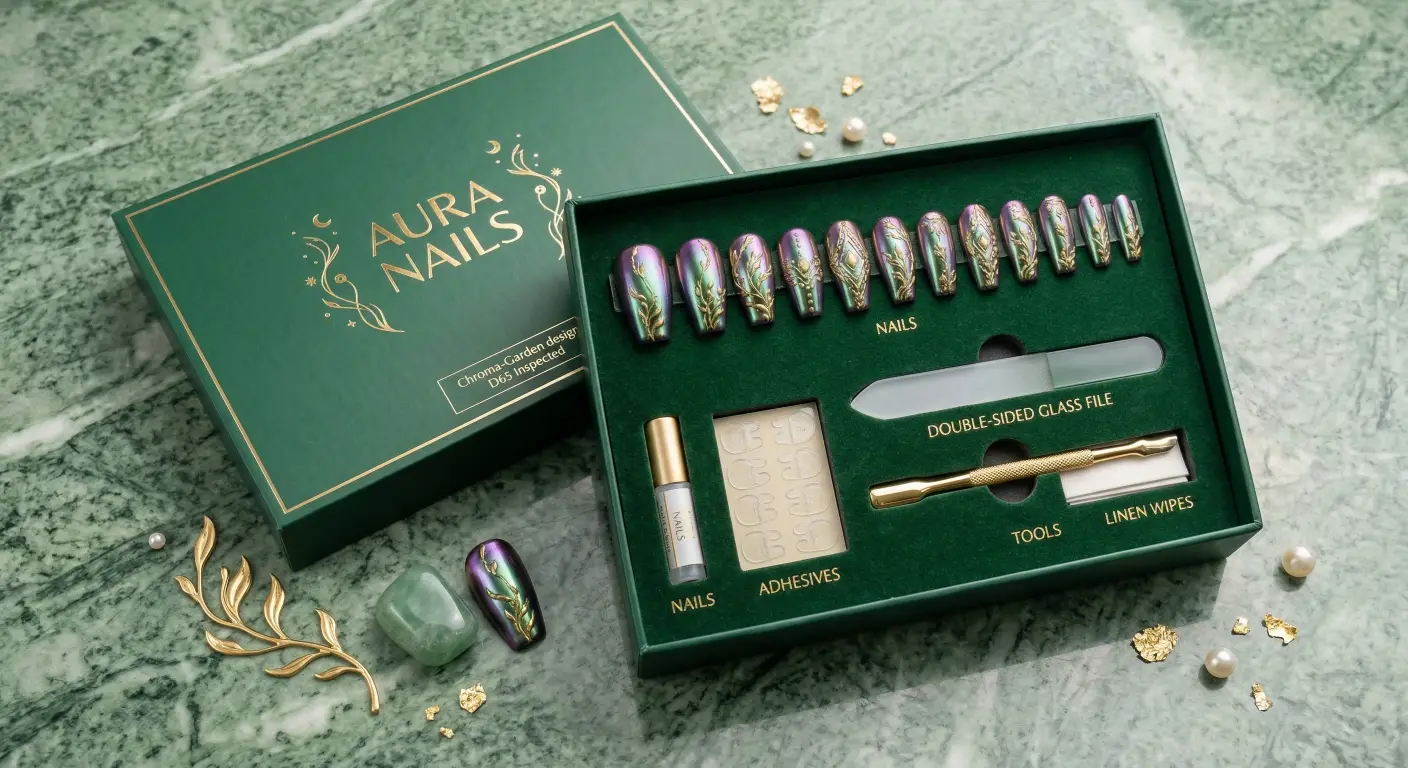
- Packaging and inserts: branded boxes, foam inserts, printed instructions, barcodes, and UPC registration all add to per-unit cost and packaging MOQ.
- Logistics and duties: freight, insurance, customs duties, and local VAT/GST can add significantly to landed cost — account for 5–15%+ depending on your origin/destination and incoterm.
- Samples and revisions: sample fees, extra revisions, and remakes if specs change mid-run.
Estimated scaling behavior (industry-typical): per-set unit price drops significantly after you cross key volume bands (e.g., 500, 1,000, 5,000 sets). However, the relative impact of customization fees (tooling, artwork) dilutes as volume increases — meaning large orders justify higher upfront fees but lower long-term unit cost.
6) What MOQ flexibility can manufacturers offer? (mix-and-match SKUs, split orders, pre-order models, and co-packing) — realistic negotiation tactics?
Manufacturers commonly provide several flexibility levers to reduce effective MOQ or financial burden. Examples and tactics:
- Mix-and-match SKUs: Combine several designs/sizes to meet the factory MOQ. Negotiate whether the factory will accept a minimum per-sub-SKU (e.g., 50–100 sets) and aggregate to the overall MOQ.
- Split production runs: Ask to split a large MOQ across two shipments (e.g., 60% now, 40% in 30 days). This helps cash flow and inventory risk. Be aware there may be re-run setup costs.
- Pre-order/crowd-funded model: Use pre-orders to aggregate customer demand and present the forecast to the factory. Many suppliers are more willing to reduce MOQ when you commit to a known future volume and provide a deposit schedule.
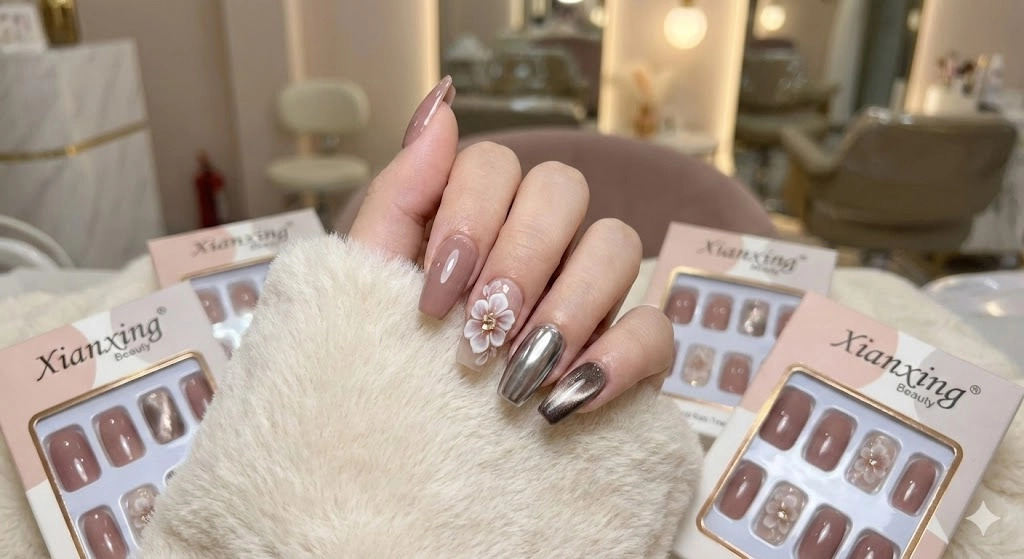
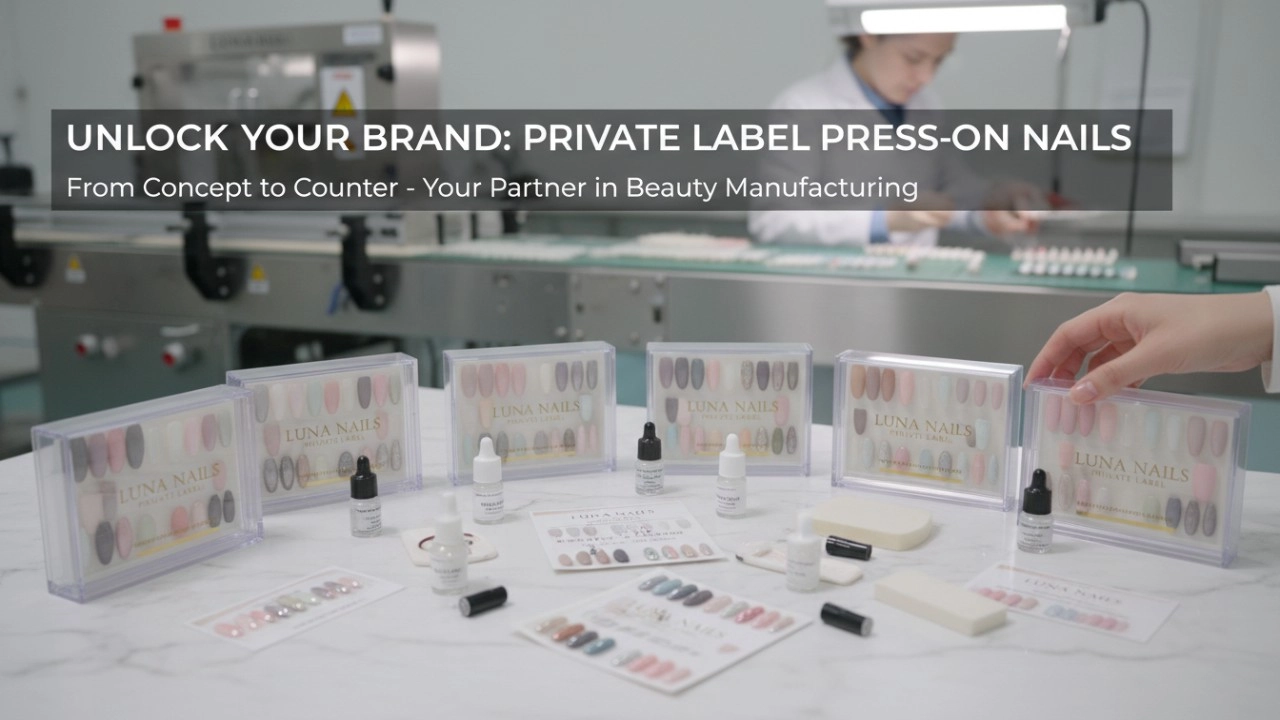
- Private-label/co-packing: Use the factory’s stock blanks and co-pack their generic sets in Xianxing Beautyed box. This lowers MOQ because the production run is minimal but you still get private-label packaging.
- Annual commitment or forecast: Offer an annual purchase forecast and cash deposit. Vendors will usually reduce MOQs or waive certain fees in exchange for predictable volume.
- Accept simpler packaging: Agree to ship in neutral bulk cartons and add branding later locally — this reduces packing MOQ constraints and setup time.
Practical negotiation steps for beginners:
- Request a detailed MOQ worksheet that separates unit MOQ, packaging MOQ, and setup fees.
- Offer concessions (longer lead time, higher deposit, or forecast) in exchange for MOQ reduction.
- Ask about stock-blank alternatives and whether they can digital-print rather than tooling new molds.
- Get written confirmation of any negotiated deviations from standard MOQ (e-mail or contract).
Working with an experienced supplier who already produces toe-specific press-ons (OEM/ODM) will reduce friction. If you’re testing new designs, accept higher unit costs for small trial batches first and once validated, scale into larger runs to amortize tooling and artwork fees.
Conclusion — Advantages of Wholesale Custom Toe Press-Ons
Choosing wholesale custom press on toe nails gives brands control over fit, design, and branding while enabling cost efficiencies at scale. Using stock toe blanks and digital print options accelerates time-to-market and lowers MOQs for beginners. Careful planning — sizing distribution, AQL inspections, and transparent negotiation on packaging and tooling — reduces risk and total landed cost. For brands prioritizing fit and finish, investing in a proper sample phase and third-party QC pays dividends in fewer returns and stronger customer satisfaction.
Contact us for a customized quote and production timeline: www.xianxingbeauty.com or [email protected]
7 Red Flags to Avoid When Selecting a Wholesale Press On Nails Manufacturer
Quality Control: What to Expect from a Top-Tier Wholesale Press On Nails Manufacturer
The Ultimate Guide to Choosing the Best Wholesale Press On Nails Manufacturer in 2026
How to Scale Your Beauty Brand: Why Private Label Press On Nails Are the Highest-Margin Entry Point in 2026
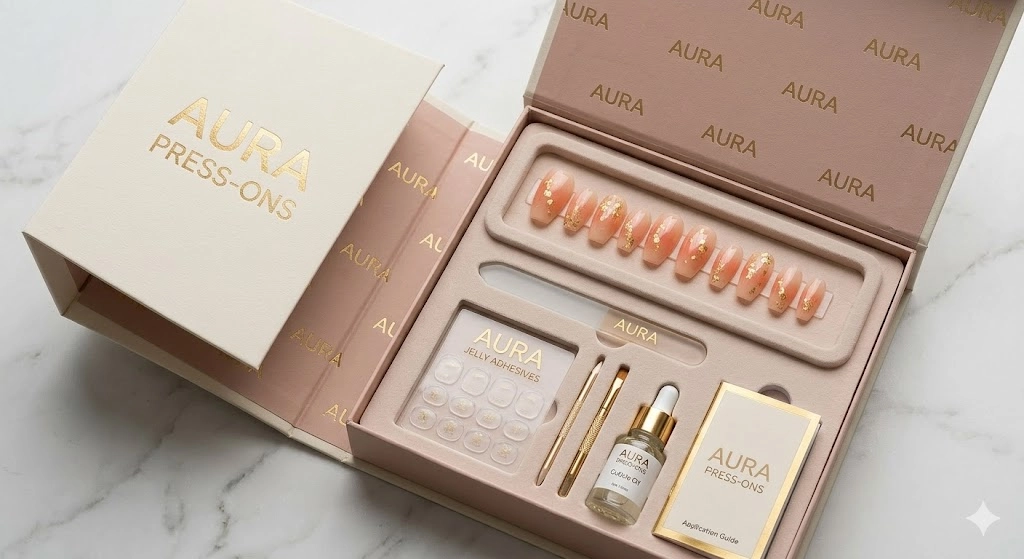
Why Partnering with Professional Press On Nails Manufacturers Boosts Your Brand Growth
About Product
Can I customize special specifications or packaging?
Yes, we provide customized services, you can customize special specifications, packaging and private label etc. according to your needs.
About Christmas Nails
What are the trending Christmas nail designs this year?
Trends vary, but popular themes always include:
Glitter Everything: Full glitter nails or glitter French tips.
Classic Red & Green: Often with gold accents
Nail file
How do I clean my nail file?
For emery boards or sapphire files, wipe them down with a damp cloth after use.
For glass or crystal files, you can rinse them under water, and some can be sterilized with alcohol.
Soft Gel Nails
Do soft gel press-on nails come in different designs?
Yes, they are available in a wide variety of colors, patterns, finishes (e.g., matte, glossy, glitter), and nail shapes to suit personal preferences and styles.
Brand Client
What customization options are available for products and packaging?
We provide multiple customization options such as product color, nail shape, Logo printing, packaging design, etc. to meet the personalized needs of different brands.
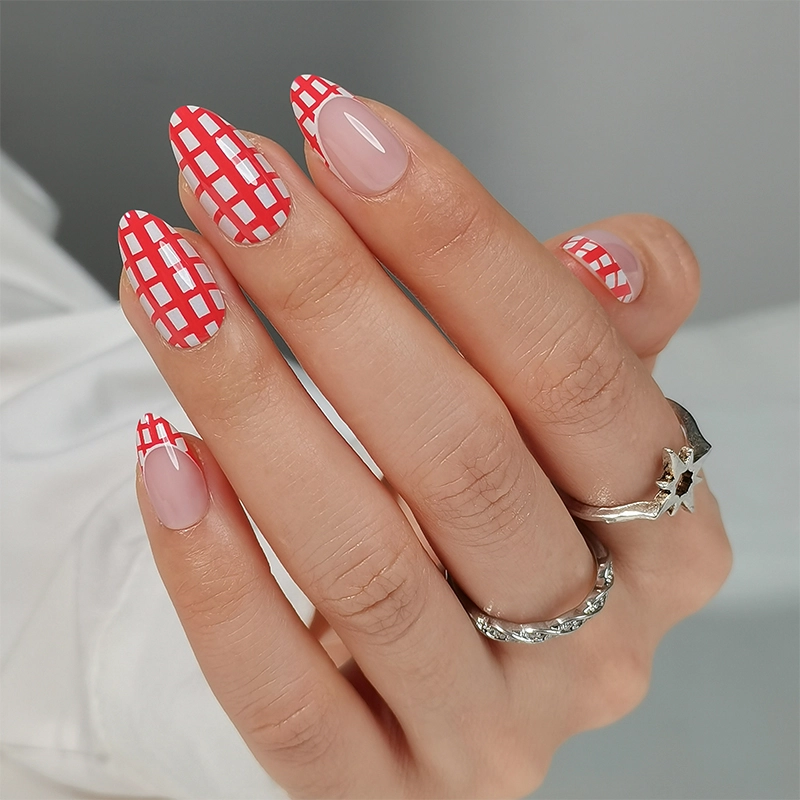
Wholesales Red French Nails Tips Checkered Soft Gel Nail Tips 32 Piece Set
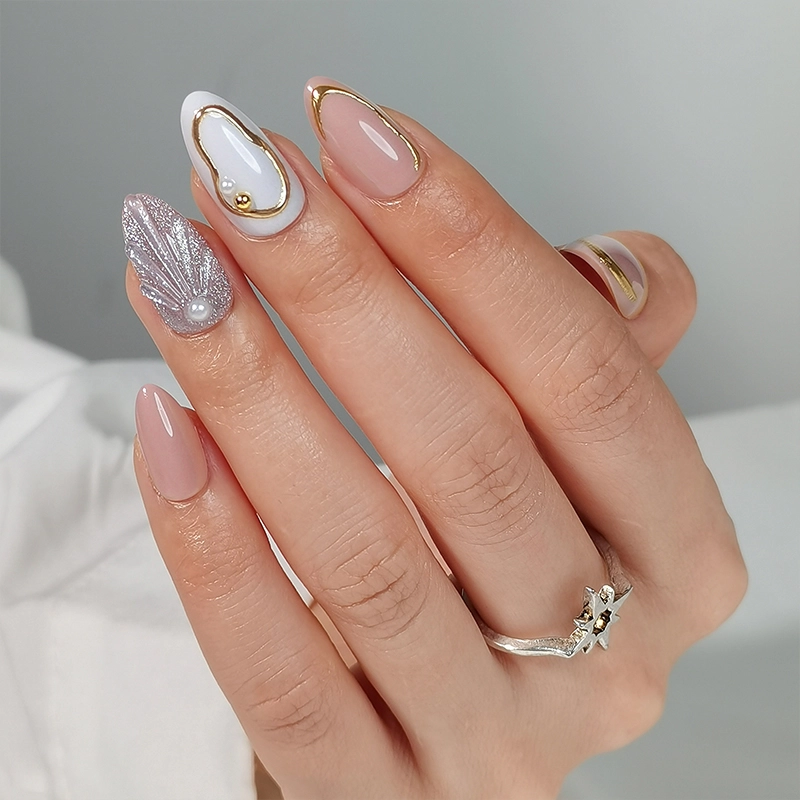
Wholesales Elegant Shell Inspired Soft Gel Wearable Nails for Seasonal Celebrations
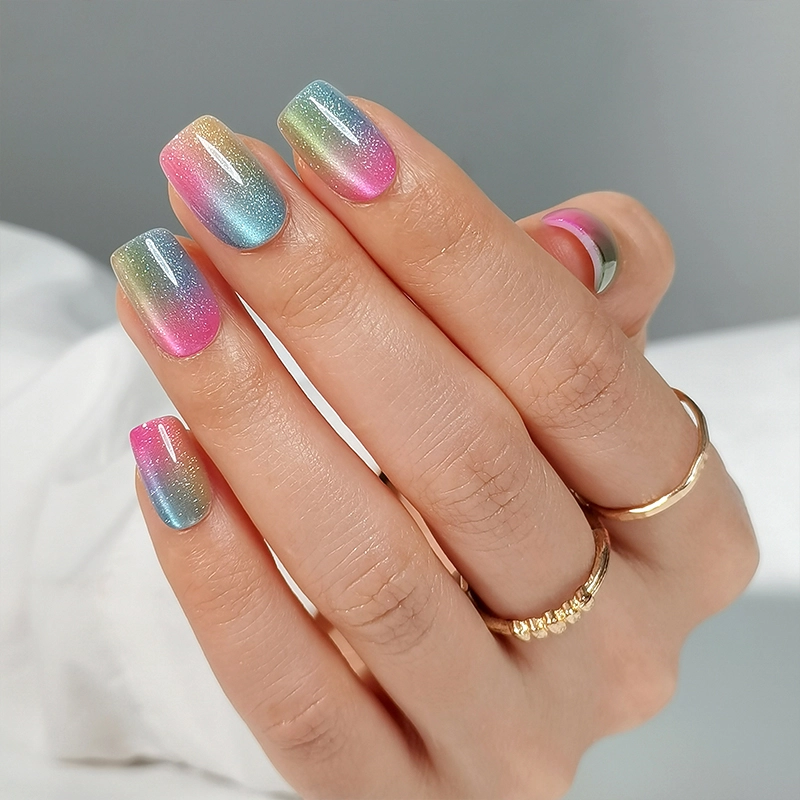
Custom Wholesale Gradient Cat Eye Soft Gel Wearable Fake Nails
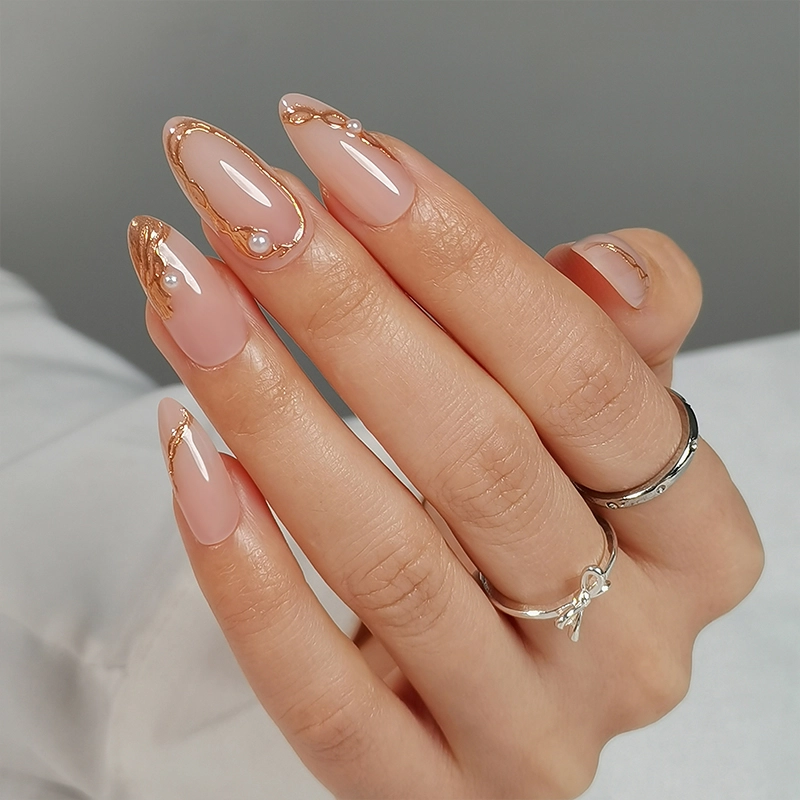
Wholesales Luxury Rhinestone Handmade Private Label Press On Nails Art Tips
Contact us
If you have press on nails products or customization needs, please feel free to contact from
below or via the contact information provided, we'll get back to you promptly within 24 hours.
By clicking 'Send Inquiry Now' I agree to XIANXING BEAUTY processing my personal data.
To see how to withdraw your consent, how to control your personal data and how we process it, please see our Privacy Policy and Terms of use.
Copyright © 2025 - XIANXING BEAUTY All Rights Reserved. Sitemap
Facebook
YouTube
Instagram
LinkedIn