
Can Manufacturers Create Exclusive Designs for Retailers?
- 1. What is a realistic MOQ and total per-set landed cost for wholesale custom press on toe nails when I want full-color inserts, custom sizes, and printed boxes?
- 2. What is the end-to-end timeline—from artwork to retail-ready custom press-on toe nails—factoring in sample revisions, QC, and sea freight?
- 3. Can manufacturers create exclusive designs for retailers and how do I protect exclusivity across markets?
- 4. What material and safety certifications should I ask for when buying wholesale custom press on toe nails—especially since toe nails touch skin and are used in footwear?
- 5. How do I size and SKU my toe-nail product line to minimize dead stock while still covering most customers' foot sizes?
- 6. What realistic custom branding & packaging upgrades should I budget for (eco options, barcodes, glue sachets), and what are the typical extra costs?
Wholesale Custom Press On Toe Nails: 6 Deep Questions Beginners Aren't Getting Answered
When sourcing wholesale custom press-on toe nails (custom press-on toe nails, toe nail press-ons, OEM/ODM press on nails), beginners are often stuck on very specific, risk-focused issues—MOQs, timeline surprises, exclusivity, safety testing, inventory planning, and branding costs. Below are six long-tail, pain-point-oriented questions rarely answered in depth online, plus practical, vendor-ready answers based on industry averages and manufacturer practices (2021–2024 industry benchmarks).
1. What is a realistic MOQ and total per-set landed cost for wholesale custom press on toe nails when I want full-color inserts, custom sizes, and printed boxes?
What to expect: Minimum order quantities (MOQ) and price-per-set depend on three levers: base unit complexity (plain vs shaped/3D), level of finishing (hand-paint, chrome, glitter encapsulation), and packaging complexity (blister tray, window box, full-color sleeve). Typical ranges you should plan for:
- MOQ: 200–1,000 sets for most factories on full custom work. Some OEMs accept 50–199 sets for simple reworks but charge a High Quality.
- Sample fees: $30–$200 depending on hand-decor vs printed designs; tooling or custom mould setup can add $100–$600 one-time.
- Per-set FOB manufacturing cost (custom sizes, printed box, adhesive tabs included): roughly $1.20–$5.00 per set. Hand-painted or 3D accents push cost to $4–$8+ per set.
- Packaging add-on: $0.12–$1.50 per set depending on box quality, inner trays, and inserts. Custom glue sachets add $0.05–$0.15 each.
- Estimated landed cost to US/EU (including sea freight, duties, and basic import fees): add $0.20–$1.50 per set for large sea LCL/FCL shipments (varies by volume, incoterm and port). Air shipping drastically increases per-unit landed cost.
How to negotiate: combine SKUs into a single production bed to meet MQOs without over-committing to one design (e.g., 5 SKUs × 200 sets = 1,000-set run). Ask suppliers for a cost-breakdown worksheet (materials, labor, packaging, setup) and request tiered pricing to see how small MOQ increases reduce unit price.
2. What is the end-to-end timeline—from artwork to retail-ready custom press-on toe nails—factoring in sample revisions, QC, and sea freight?
Realistic timeline windows (typical OEM/ODM factories):
- Initial quote & technical spec exchange: 2–5 business days.
- Digital mockup & artwork proof: 3–7 business days.
- Physical sample production (printing, shape tooling, hand-finished): 7–21 days depending on complexity.
- Sample revision cycles: 3–10 days per round — plan for 1–2 rounds on average.
- Mass production: 10–30 days depending on capacity, finishing processes, and order size.
- Packing & QC: 2–5 days (factory quality checks, inner packing).
- Sea freight to main markets: 20–40 days (Asia→US/EU), air freight 3–7 days but much costlier.
Therefore, from first contact to arrival at your dock by sea expect 6–12 weeks for fully custom press-on toenails with printed packaging. To shorten lead time, lock down artwork and sizes before sampling, request expedited samples (air at extra cost), or use manufacturer’s standard shapes and packaging templates to reduce tooling and setup time.
3. Can manufacturers create exclusive designs for retailers and how do I protect exclusivity across markets?
Yes—but exclusivity is contractual, not automatic. By default many factories can and will produce similar aesthetics for multiple clients unless prohibited. To secure exclusivity you need a clear commercial agreement covering three elements:
- Exclusive terms: state geography (country-specific or global), product scope (specific SKUs or entire collections), duration (6–36 months), and minimum purchase commitments. Manufacturers will typically only accept exclusivity in exchange for higher MOQ or price protections.
- Tooling and design ownership: specify who owns molds, custom files, and printing plates. If you pay for tooling, negotiate ownership transfer or an exclusive use clause while tooling remains in the factory.
- IP protection & enforcement: register designs in priority markets (US design patents, EU registered/community designs, China registered designs) where practical. Add NDA, non-compete and liquidated-damage clauses to the manufacturing agreement. Include audit rights and require the supplier to provide production logs if infringement is suspected.
Practical steps for retailers: use an NDA before sending original artwork, retain raw design files with clear timestamps, and request serialized marks or unique packaging features (emboss, hologram, QR label) that can help prove ownership. Expect suppliers to negotiate exclusivity fees or higher MOQs; plan contractual protections rather than relying solely on verbal assurances.
4. What material and safety certifications should I ask for when buying wholesale custom press on toe nails—especially since toe nails touch skin and are used in footwear?
Press-on toenails are consumer products that contact skin. At minimum, request the following from manufacturers and include them in your procurement checklist:
- Material declaration and MSDS (Material Safety Data Sheet) for plastics and adhesives. Most press-on nails are made from ABS or similar nail-grade plastics; adhesives require MSDS for skin contact safety.
- RoHS declaration (limits for certain hazardous substances) and REACH/SVHC statement for the EU market—this addresses heavy metals and phthalates often of concern with small consumer items.
- Testing reports from accredited labs (SGS, Intertek or TÜV) for heavy metals, phthalates, and colorfastness. Ask for recent batch test reports, not generic certificates.
- Biocompatibility guidance for adhesives: while most nail glues are regulated as cosmetics or consumer adhesives, request adhesion safety, skin-irritation tests, and MSDS for any glue you plan to include (single-use sachets or bulk tubes).
- Quality management: ISO 9001 or factory audit reports (BSCI/SMETA) help show consistent manufacturing practices but are not a substitute for product-level testing.
Tip: Ask your supplier for a 'conformity pack' for each production batch including MSDS, sample test results, and a declaration of conformity for your target markets. If you target children’s products or have unique market claims, obtain additional certification tailored to those regulations.
5. How do I size and SKU my toe-nail product line to minimize dead stock while still covering most customers' foot sizes?
Inventory mistakes cost more than just storage. For toe nails, sizing and SKU planning should be data-driven and modular:
- Design basic shapes in modular form: produce a core set of base shapes in higher volumes (e.g., standard-fit wide, standard-fit narrow) and create decorative overlays or printed tips in smaller batches to capture trends.
- SKU strategy: start with a core 10-piece toe set (covers one foot) and offer 4–6 size options (S, M, L, XL or numeric equivalents). Many retailers see >70% of sales from two or three core sizes—use a sell-through test via pre-orders or small pilot runs.
- Refill model: sell refill/topper packs (decor-only) separately so customers can repurchase designs without buying a full set—this dramatically reduces dead stock for fast-moving designs.
- Demand forecasting formula: Reorder point = (Average daily sales × Lead time in days) + Safety stock. Safety stock should be set using your desired service level (e.g., 95% service level = higher safety stock). For small brands, a rule-of-thumb is 2–3 weeks' stock as safety for sea shipments.
- Use pre-sales & limited drops: validate trend designs with small, time-limited pre-orders before committing to large MOQ runs.
Work with your supplier to standardize a sizing template and request a sizing chart (often factories supply width mm charts for each numbered size). If in doubt, run a 200–500 set pilot using the most common shapes and collect size-data to inform future larger runs.
6. What realistic custom branding & packaging upgrades should I budget for (eco options, barcodes, glue sachets), and what are the typical extra costs?
Branding choices affect perceived value and your margin. Common options and typical incremental costs:
- Artwork setup: $50–$250 (one-time) for dielines, print color-proofing, and prepress files.
- Custom printed boxes (full-color CMYK, coated stock): add $0.12–$1.20 per set depending on run size and box quality. Windowed blister packs tend to be cheaper but less High Quality.
- Inner trays/inserts (vacuum form or cardboard): $0.05–$0.60 per set.
- Custom glue sachets or single-use adhesives: $0.05–$0.15 per sachet; branded mini glue tubes cost more and may require specific labeling compliance.
- Sustainable options: recycled paper or FSC-certified boxes are ~10–30% costlier; compostable bioplastic windows are pricier and may have MOQ constraints.
- Barcodes/UPC printing and label services: $0.01–$0.10 per label plus registration fees for a GTIN/UPC if not already purchased.
- Security & anti-counterfeit: holographic stickers or serialized QR codes cost $0.02–$0.20 per unit depending on volume and tech sophistication.
Packaging compliance: include market-specific labeling (manufacturer/importer address, warnings for adhesives, lot/batch code) in your artwork specs. Always budget a design-proof and pre-production approval run to avoid expensive reprints.
Closing summary: Custom wholesale press-on toe nails provide retailers with rapid trend response and attractive margins—but only when you manage MOQ, timelines, exclusivity, quality testing, SKU mix, and packaging costs strategically. Balancing a larger core production run for base sizes with small-batch runs for trend pieces, insisting on test reports (MSDS, RoHS/REACH statements, lab tests), and locking exclusivity with clear contracts are the fastest paths to scaling without costly dead stock or IP leakage.
Advantages of working with a trusted OEM/ODM for wholesale custom press on toe nails include predictable unit economics through volume pricing, faster turnaround using shared tooling, stronger brand protection when exclusivity is contractually enforced, better QC and compliance documentation, and lower inventory risk through modular SKUs and refill packaging.
Contact us for a tailored quote and MOQ breakdown: www.xianxingbeauty.com • [email protected]
7 Red Flags to Avoid When Selecting a Wholesale Press On Nails Manufacturer
Quality Control: What to Expect from a Top-Tier Wholesale Press On Nails Manufacturer
The Ultimate Guide to Choosing the Best Wholesale Press On Nails Manufacturer in 2026
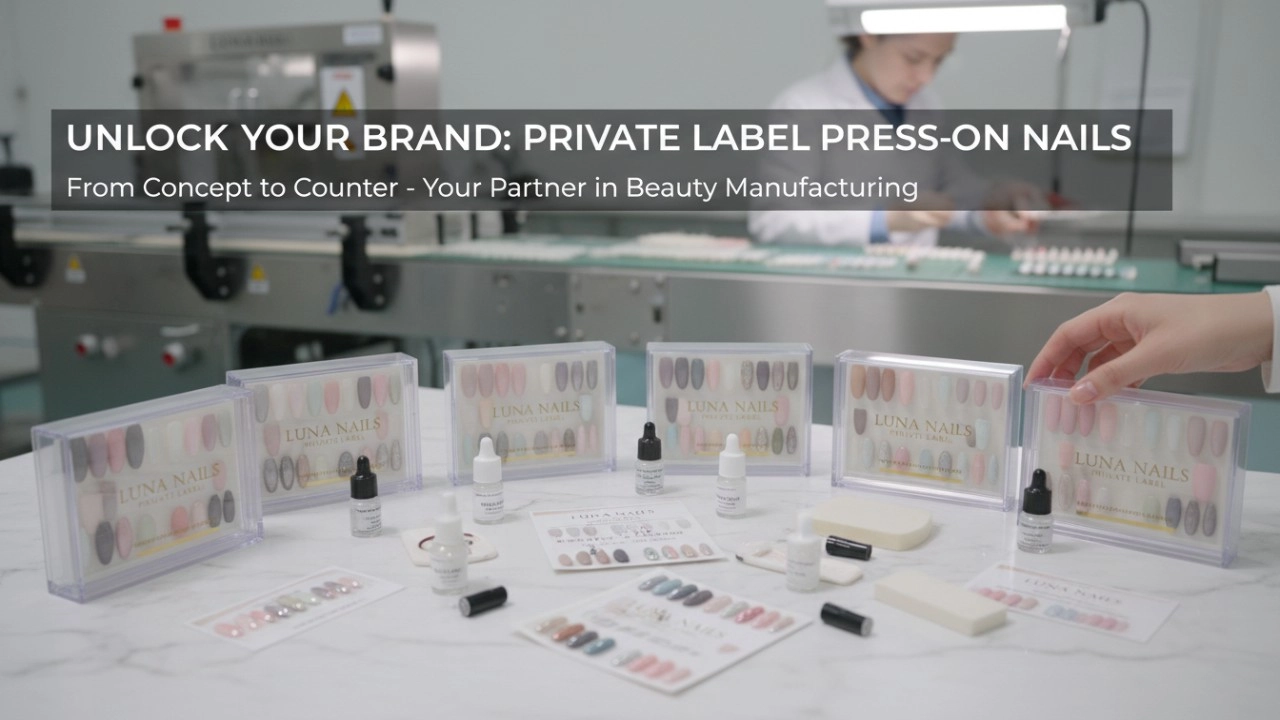
How to Scale Your Beauty Brand: Why Private Label Press On Nails Are the Highest-Margin Entry Point in 2026
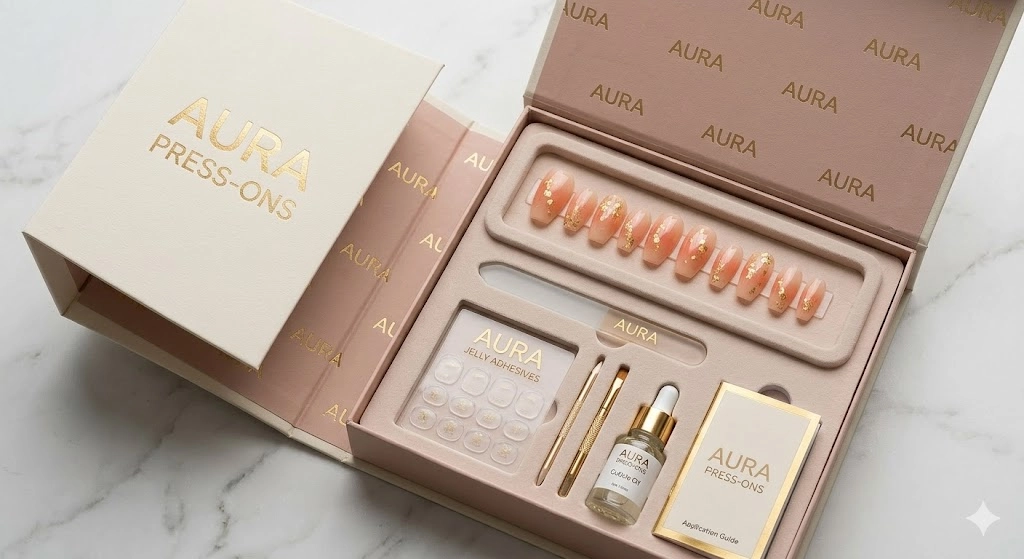
Why Partnering with Professional Press On Nails Manufacturers Boosts Your Brand Growth
Startup Client
Do you provide global delivery services?
Yes, we offer global logistics services to ensure products are delivered on time to destinations worldwide, helping you quickly enter the market.
Wholesaler Distributor
What is the minimum order quantity?
The minimum order quantity of different products will vary. Generally speaking, we will determine a reasonable minimum order quantity according to the product type and production requirements. In the cooperation negotiation, we can adjust according to your actual situation.
How is the transportation cost calculated?
The transportation cost is calculated based on factors such as the weight, volume, transportation distance, and transportation mode of the goods. We will cooperate with reliable logistics partners to ensure that we can provide safe and fast transportation services at a reasonable price.
Drying Nail Glue
How do I use press-on nails glue?
1. Prep your nails: Clean and trim your nails, pushing back cuticles and removing any oils with an alcohol pad or nail prep wipe.
2. Apply glue: Apply a small amount of glue to your natural nail or the back of the press-on nail. Be careful not to use too much, as excess glue can spill over.
3. Press the nail on: Align the press-on nail with your natural nail and press it firmly for about 10–20 seconds to ensure a strong bond.
4. Repeat for all nails: Apply glue and press on each nail one by one, following the same process.
Salon Client
What is the minimum order quantity (MOQ)?
Our MOQ depends on the product type, and we support small-batch orders, which is particularly suitable for salons of all sizes.
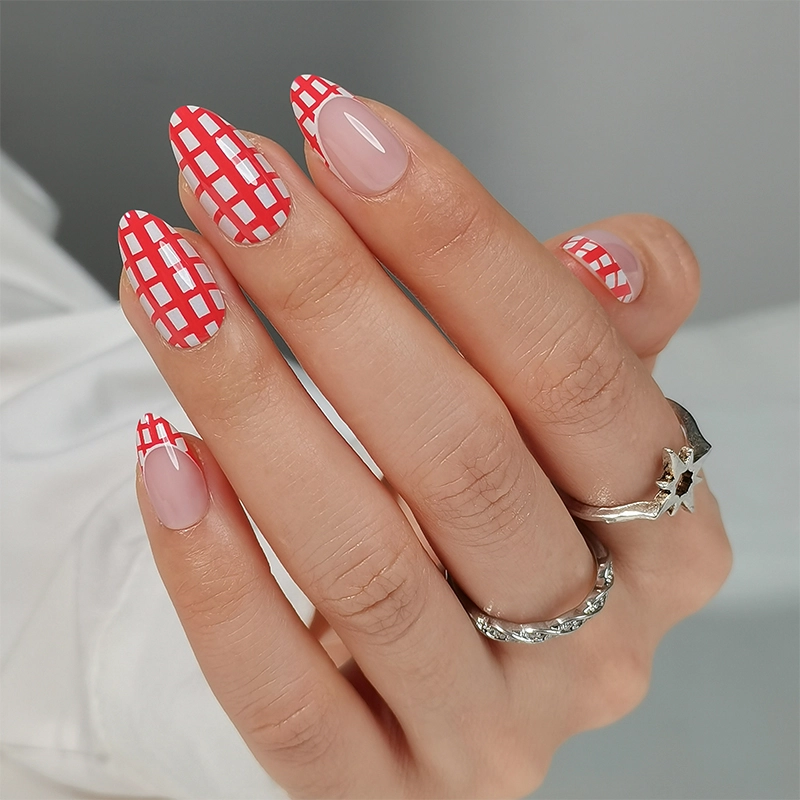
Wholesales Red French Nails Tips Checkered Soft Gel Nail Tips 32 Piece Set
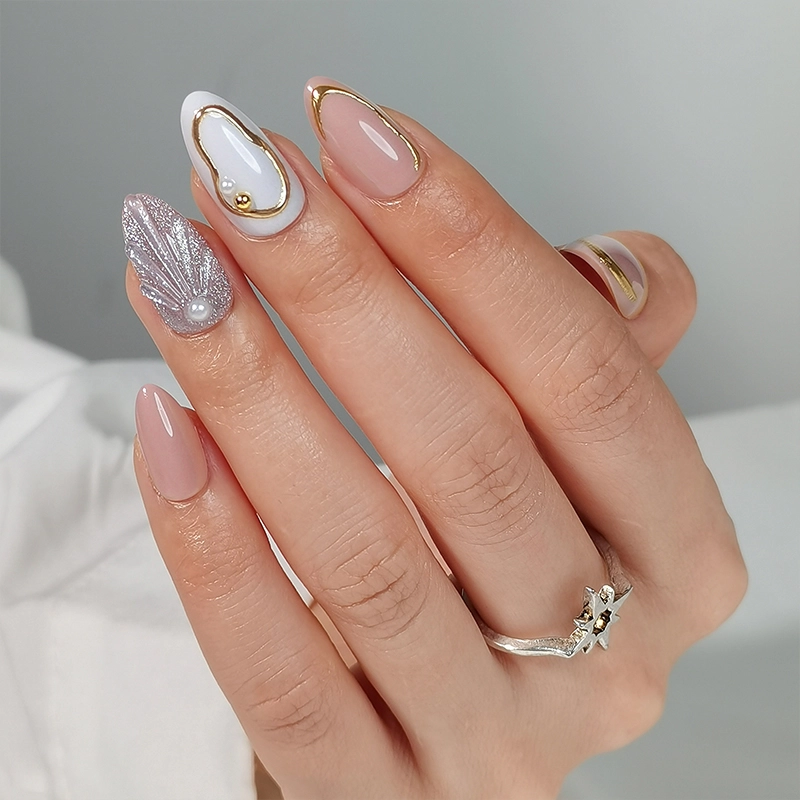
Wholesales Elegant Shell Inspired Soft Gel Wearable Nails for Seasonal Celebrations
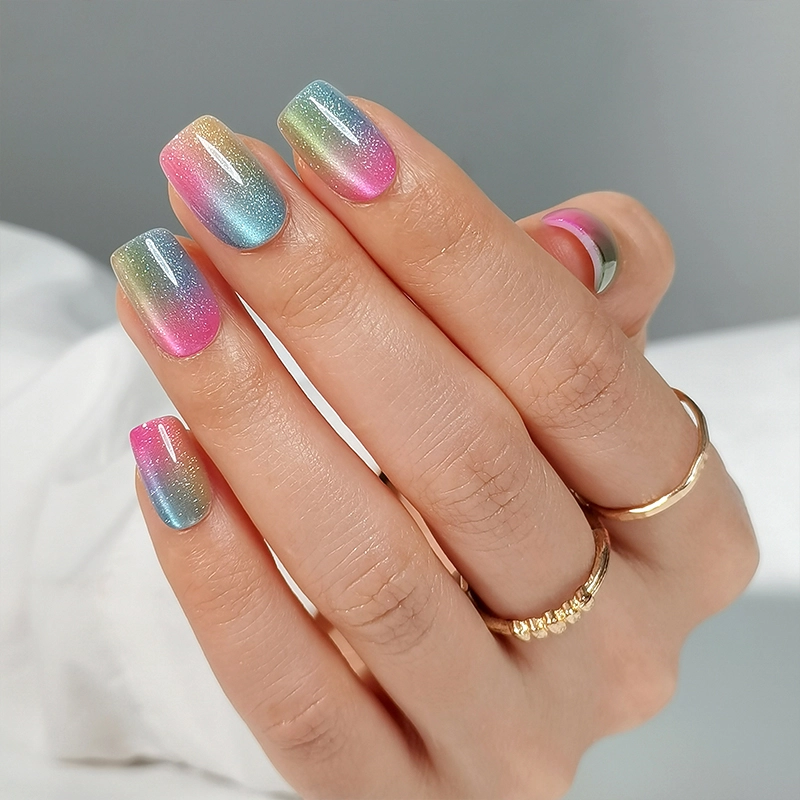
Custom Wholesale Gradient Cat Eye Soft Gel Wearable Fake Nails
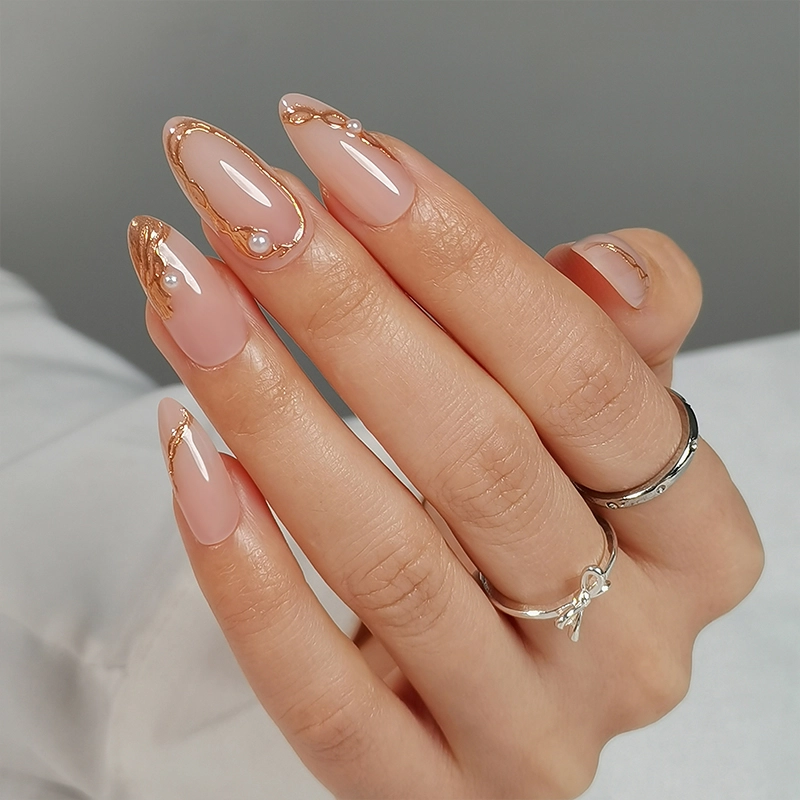
Wholesales Luxury Rhinestone Handmade Private Label Press On Nails Art Tips
Contact us
If you have press on nails products or customization needs, please feel free to contact from
below or via the contact information provided, we'll get back to you promptly within 24 hours.
By clicking 'Send Inquiry Now' I agree to XIANXING BEAUTY processing my personal data.
To see how to withdraw your consent, how to control your personal data and how we process it, please see our Privacy Policy and Terms of use.
Copyright © 2025 - XIANXING BEAUTY All Rights Reserved. Sitemap
Facebook
YouTube
Instagram
LinkedIn