
How to set up B2B accounts for salon wholesale nail orders?
- 1) How do I calculate accurate per-set pricing for a first custom press-on collection so wholesale buyers and salons are profitable and I don't undercut the product?
- 2) What exact sample, proofing and approval process should I require to avoid expensive reworks or color mismatches for custom nail art prints?
- 3) What artwork specifications and delivery formats do factories need for flawless custom nail art (size templates, DPI, color profiles, placement maps)?
- 4) How do I set up a B2B account for salon wholesale nail orders—what documentation, payment terms, and tech integrations should I prepare to get net terms and bulk pricing?
- 5) Which Incoterms, shipping methods and labeling practices minimize delays and unexpected duty for international salon wholesale press-on orders?
- 6) How should salons and small brands manage inventory, replenishment cadence, and barcode/UPC setup for private label press-on lines without overstocking?
- Concluding summary: Why structured processes and B2B readiness speed success
How to Start Custom Press on Nails & How to Set Up B2B Accounts for Salon Wholesale Nail Orders
This guide answers six specific, pain-point-focused questions beginners in the custom press-on nails industry and salon wholesale face. It uses industry best practices for custom press-on manufacturing (ABS/gel press-ons, UV-curable gel, adhesive options), packaging, and B2B account setup (resale certificates, payment terms, MOQs, Incoterms). The content integrates terms buyers and manufacturers search for—custom press on nails, private label press ons, OEM/ODM press on nails, salon wholesale, MOQ, lead time, sample approval, net30, reseller certificate, UPC/GTIN—and is intended to help you make confident purchasing and operational decisions.
1) How do I calculate accurate per-set pricing for a first custom press-on collection so wholesale buyers and salons are profitable and I don't undercut the product?
Why this question matters: Beginners often underprice because they only consider raw materials or a target retail price. Real pricing needs direct costs, overhead, packaging, shipping, minimum order pricing distortions and wholesale margin math.
Step-by-step pricing model (actionable):
- List direct unit costs: nail blanks (ABS or gel) or tooling amortization, artwork printing/transfer (sublimation/UV print), adhesives (single-use glue tabs or liquid glue), finishing (topcoat, gel curing), labor per set. Use per-set or per-batch calculations.
- Include packaging cost per set: retail blister, tray, card, branded box, instruction insert, adhesive sachet. Packaging can add $0.30–$2.00 per set depending on custom boxes and inserts; factor in design and one-time tooling costs amortized across MOQ.
- Amortize one-time costs across first production run: molds, custom nail shape tooling, custom sample plates, packaging dielines and tooling. Example: $800 tooling / 800 sets = $1.00 tooling per set.
- Add overhead and QC: factory quality checks, sample runs, wasted sets. Recommend adding 8–15% of direct costs to cover QC and scrap.
- Add inbound logistics per set: domestic or international freight, duties, insurance, and warehousing. For small runs expect higher per-set freight; estimate landed cost using freight quotes.
- Apply a wholesale margin: salons typically expect 40–60% markup on their cost; B2B pricing often targets a price that allows a salon to resell retail or include in service menus. For instance, set a wholesale price that allows the salon at least a 50% gross margin when they price at your recommended retail price.
- Cross-check market comparables: research competing private-label and branded press-on wholesale price ranges for similar quality (material, finish, adhesive system) and adjust.
Concrete example (illustrative, not prescriptive): if materials + labor = $1.20, packaging $0.60, tooling amortization $0.80, overhead 10% = $0.26, shipping & duty per set $0.40 → total landed cost ≈ $3.26. To enable a salon 50% gross margin, target wholesale ≈ $6.50 and recommended retail ≈ $12–14. Always validate with your specific costs and minimum order quantities (MOQs).
Key tips:
- Request multiple supplier quotes and ask for BOM (bill of materials) breakdowns to validate what’s included in per-set pricing.
- For first runs, present pricing with and without custom packaging to see true product cost vs brand packaging cost.
- Negotiate pricing bands by volume—unit price should fall as order size increases.
2) What exact sample, proofing and approval process should I require to avoid expensive reworks or color mismatches for custom nail art prints?
Why this question matters: Poor sample practices lead to mismatched colors, wrong sizes, and expensive remakes. Many online answers are vague about acceptable sample deliverables and sign-off steps.
Required sample stages and deliverables (must-haves):
- Digital Preflight: receive printable artwork proofs in required file types (TIFF/PNG for raster at 300–600 dpi for small art, PDF/AI/EPS for vector). Proof must include Pantone references or an agreed color profile (sRGB or CMYK with ICC profile) and exact nail shape/size templates (width x height in mm).
- Physical Printed Color Proof (if color-critical): a small printed sheet or sample transfer to verify color. Request a calibrated print on the same substrate (transfer film or decal) and include a color-control patch for visual comparison.
- Prototype Press-On Set: one full assembled set (all sizes) – not just a flat decal. This shows true fit, curvature, and adhesive performance. For shaped or sculpted nails (stiletto, coffin), request the exact shape/form used in production.
- Adhesive Compatibility Test: a small test of adhered press-ons to natural nail tips or provided nail tips, documenting peel strength and wear (recommend a 72-hour wear test under normal activity and a 7-day extended report for salons).
- Finish & Gloss Check: sample should include final topcoat, any glitter/embossing, or 3D elements. If a UV gel finish is used, ensure the sample is fully cured and show curing time and lamp specs.
- Sign-off Document: a digital approval sheet with photos of the approved prototype from multiple angles and a list of accepted tolerances (color ∆E tolerance, size ±mm, curvature tolerance). Only proceed to production after written approval (email or signed PDF).
Turnaround and iterations: expect 1–3 iterations. Build sample cost and time into your schedule: physical prototypes typically take 5–14 business days depending on complexity and factory workload.
3) What artwork specifications and delivery formats do factories need for flawless custom nail art (size templates, DPI, color profiles, placement maps)?
Why this question matters: Many artists supply high-resolution phone images and receive mismatched prints. Factories need precise, technical files to reproduce designs on curved nail blanks.
p>Accepted artwork specs (best practice):
- File format: vector (AI, EPS, PDF) for line art and scalable elements; high-resolution raster (PNG, TIFF) at 300–600 dpi for photographic art sized to the largest nail template. Avoid low-res JPGs.
- Color management: provide Pantone spot colors if exact matching is critical; otherwise specify ICC profile (sRGB for digital/online, CMYK for print with a converted color proof). Provide reference swatches and describe acceptable ∆E tolerance if needed.
- Templates: use supplier nail templates in mm. Provide individual nail art placement maps—how the design sits across sizes (left-to-right orientation) and any mirrored designs for left/right sets. Indicate cut lines and safe bleed area (3–5 mm beyond edge depending on print method).
- Special effects: if you have metallic foils, chrome powder, or 3D elements, include process notes: foil type, stamping, heat/pressure specs, and placement map for raised elements. Indicate whether glitter is loose, encapsulated, or printed.
- Font and licensing: convert fonts to outlines or include font files; confirm artwork licensing for any third-party images, patterns or copyrighted characters—many manufacturers will refuse copyrighted designs without documentation.
Delivery workflow: upload a single zipped folder containing the artwork files, a PDF proof with placement maps, and a plain-text spec sheet listing substrate type, nail form, and finish. This reduces back-and-forth and speeds approval.
4) How do I set up a B2B account for salon wholesale nail orders—what documentation, payment terms, and tech integrations should I prepare to get net terms and bulk pricing?
Why this question matters: Salons and small distributors often don’t know the precise documents suppliers require for wholesale accounts, causing delays and higher initial costs (no net terms, higher freight). Answers online are scattered or out-of-date.
Documents and steps to open a B2B account:
- Business registration: a scanned business license or company registration document showing legal name and address (required almost universally).
- Tax/resale certificate (reseller permit): for US sellers, a state resale certificate; for other regions, equivalent VAT/GST registration to confirm tax-exempt resale purchases. This avoids being charged retail sales tax at purchase.
- Tax ID/EIN: supplier will often request a tax ID or VAT number for invoicing.
- Payment setup: bank details for wire transfer, corporate credit card, or payment platform (Stripe, PayPal, Payoneer). To apply for net terms (Net30/Net60) suppliers commonly require trade references or 2–3 months of purchase history. New businesses can request COD or prepay for first orders.
- Credit application: for Net terms, fill a supplier credit application with bank references and trade references. Expect approval lead time of 7–21 days.
- Compliance & labeling needs: share expected market (country) so supplier can advise on labeling, barcode (UPC/GTIN) requirements, and any regulatory documentation.
- Technical integrations: for recurring bulk orders, discuss EDI or portal login for PO submission; for smaller accounts, CSV-based PO/email orders are typical. Large salons or distributors may request API or EDI for automated replenishment.
Negotiation tips:
- Ask for tiered pricing by annual volume; lock in pricing for 6–12 months if possible.
- Negotiate lower MOQs for initial orders in exchange for a longer-term purchase commitment or a higher per-set price on the first run.
- Consider a small initial paid sample order to establish trust, then apply for net terms on subsequent orders once you have purchase history.
5) Which Incoterms, shipping methods and labeling practices minimize delays and unexpected duty for international salon wholesale press-on orders?
Why this question matters: Beginners often take the cheapest shipping option and then absorb delays, fines or misdeclared duties. Correct Incoterms and labeling can prevent costly surprises.
Practical recommendations:
- Choose Incoterm based on your logistics capability:
- EXW or FOB (Factory/Port) if you manage freight forwarder and customs. You control shipping but take on more operational work.
- CIF/FOB to buyer for standard arrangements; DDP (Delivered Duty Paid) can be requested for predictable landed cost for salon customers but costs more and shifts responsibility to supplier for customs clearance. - Packaging & labeling: ensure each carton has a commercial invoice, packing list with SKU, quantity per SKU, net/net weight, and country of origin. Use clear labelling on cartons indicating ‘Fragile—Cosmetic Accessories’ where applicable.
- HS codes & duties: work with a freight forwarder or customs broker to assign the correct customs classification for press-on nails and adhesives. Duties vary by country—don’t estimate; request a harmonized system (HS) code quote and duty rate before shipping to calculate landed cost accurately.
- Shipping methods & lead times: for small replenishments use express couriers (3–7 days) to avoid stockouts; for bulk pallets use ocean freight (20–45 days) for lower per-unit cost. Balance inventory holding cost vs freight cost.
- Insurance & Incoterm checklist: always insure international shipments for cargo loss. If you accept FOB, insure once goods are on board; for DDP, supplier typically insures through delivery.
Operational tip: provide suppliers with your preferred freight forwarder and agreed-upon Incoterm upfront. This reduces confusion and ensures accurate costing and timelines.
6) How should salons and small brands manage inventory, replenishment cadence, and barcode/UPC setup for private label press-on lines without overstocking?
Why this matters: Press-on nails are SKUs-heavy (many art designs x many sizes/colors). Poor SKU management creates dead stock and cashflow problems.
Inventory and SKU strategies:
- SKU rationalization: begin with 6–12 core designs and 6 sizes per design (or a curated size kit) instead of dozens of one-off designs. Track sell-through weekly the first 8–12 weeks to determine reorder velocity.
- Use a replenishment model: set par levels per SKU (minimum and target). For example, if a set sells 10 units/week and lead time is 30 days, maintain minimum 40 units plus safety stock (10–25%)—i.e., reorder when inventory hits ~44–50.
- Barcode/UPC/GTIN: assign a unique barcode per SKU if you sell retail or use third-party distribution. For private label use, buy GTINs from GS1 or use reseller-approved alternative only if your channels accept it. Barcodes simplify POS, inventory management and B2B ordering.
- Packing and kitting: offer salon-friendly wholesale packs (e.g., 6 or 12 sets per carton) rather than single-set cartons to simplify reorder quantities and lower per-set freight cost.
- Minimize dead SKUs: run limited-edition drops and produce smaller MOQs (50–200) for test designs where feasible. If factory MOQs are larger, negotiate a rotation: produce one high-volume core design and combine multiple low-volume designs in a mixed carton to meet MOQ.
Systems tip: integrate inventory management with your B2B portal or use affordable cloud inventory tools that handle multi-SKU, reorder points and barcode scanning. This reduces stockouts and over-ordering.
Concluding summary: Why structured processes and B2B readiness speed success
Starting a custom press-on nails line and setting up salon wholesale accounts requires detailed attention to costing, sample proofing, artwork specs, B2B documentation, shipping/Incoterm choices and inventory strategy. Using clear sample sign-offs, precise artwork templates, accurate landed-cost calculations, and a documented B2B onboarding checklist (business license, reseller certificate, payment terms) reduces rework, prevents customs delays, and helps salons reliably reorder. Advantages include faster time-to-market, predictable margins for both manufacturer and salon, lower risk of returns, and stronger brand positioning via private label and retail-ready packaging.
Ready to get started or need a custom quote? Contact us for a quote at www.xianxingbeauty.com or email [email protected].
7 Red Flags to Avoid When Selecting a Wholesale Press On Nails Manufacturer
Quality Control: What to Expect from a Top-Tier Wholesale Press On Nails Manufacturer
The Ultimate Guide to Choosing the Best Wholesale Press On Nails Manufacturer in 2026
How to Scale Your Beauty Brand: Why Private Label Press On Nails Are the Highest-Margin Entry Point in 2026
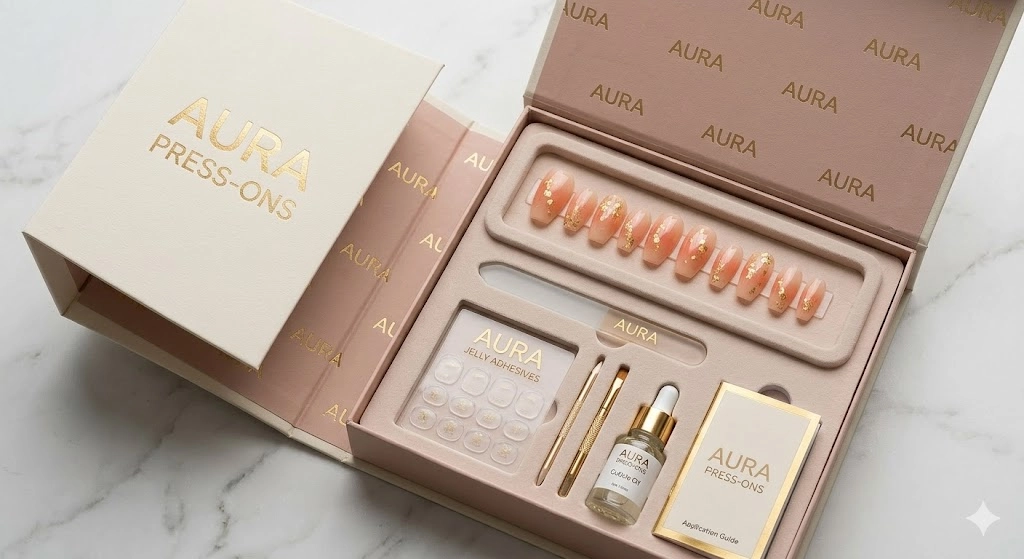
Why Partnering with Professional Press On Nails Manufacturers Boosts Your Brand Growth
Remove armor
What are remover pads used for?
Remover pads are pre-soaked pads used for easy and convenient removal of makeup, nail polish, or other substances. They’re often used for travel or quick applications.
Nail Dust Removal Brush
What is a nail dust cleaning brush used for?
A nail dust cleaning brush is designed to remove fine dust particles from nails and the surrounding skin after filing, buffing, or other nail procedures. It helps in keeping the nails clean and free of debris, which is essential for applying nail polish or gel.
Drying Nail Glue
How can I make press-on nails last longer?
10 Proper prep: Clean your nails well before applying.
2. Avoid moisture: Try to keep your nails dry for the first few hours after application.
3. Reinforce the glue: For extra hold, you can apply a small amount of glue to both your natural nail and the press-on nail.
4. Use a topcoat: Applying a clear topcoat can help protect the nails and glue bond.
How much glue should I use for press-on nails?
Wholesaler Distributor
What is the update frequency of your products?
We have a professional design team that always pays attention to the trends in the nail art industry and can respond quickly to market changes. The update frequency of our products is relatively high, and we will continuously introduce new products according to the trends and customer requirements.
About Kid Nails
Are they suitable for all ages?
They are usually recommended for kids aged 3 and up, but always check the product packaging for age guidelines.
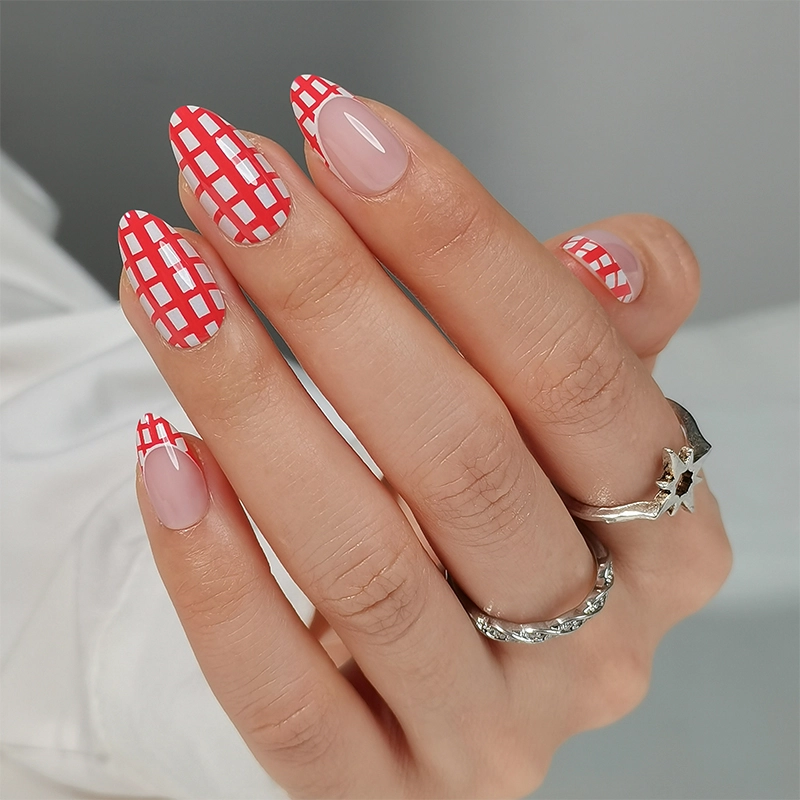
Wholesales Red French Nails Tips Checkered Soft Gel Nail Tips 32 Piece Set
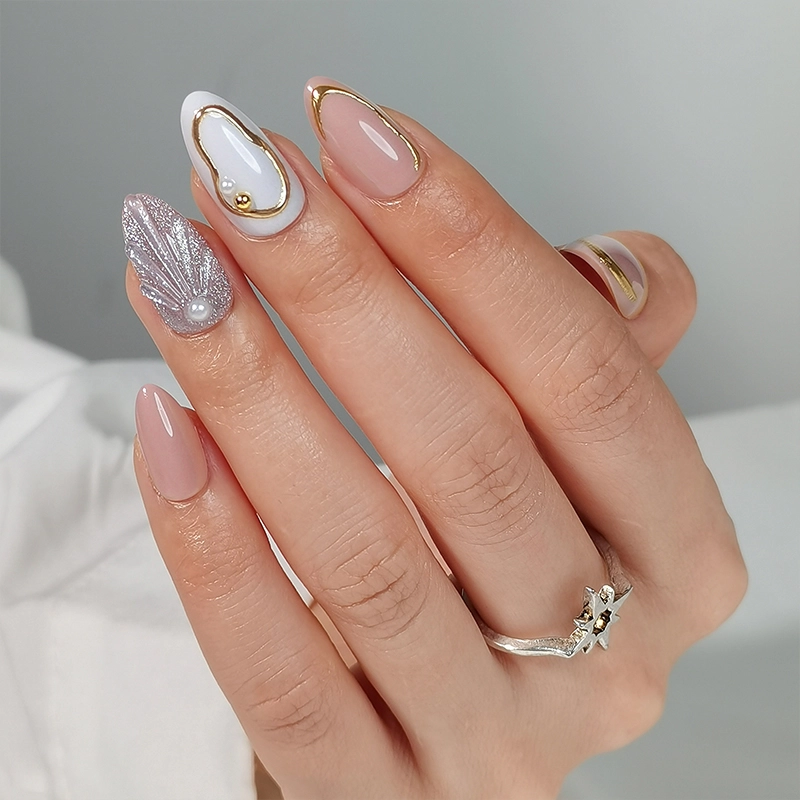
Wholesales Elegant Shell Inspired Soft Gel Wearable Nails for Seasonal Celebrations
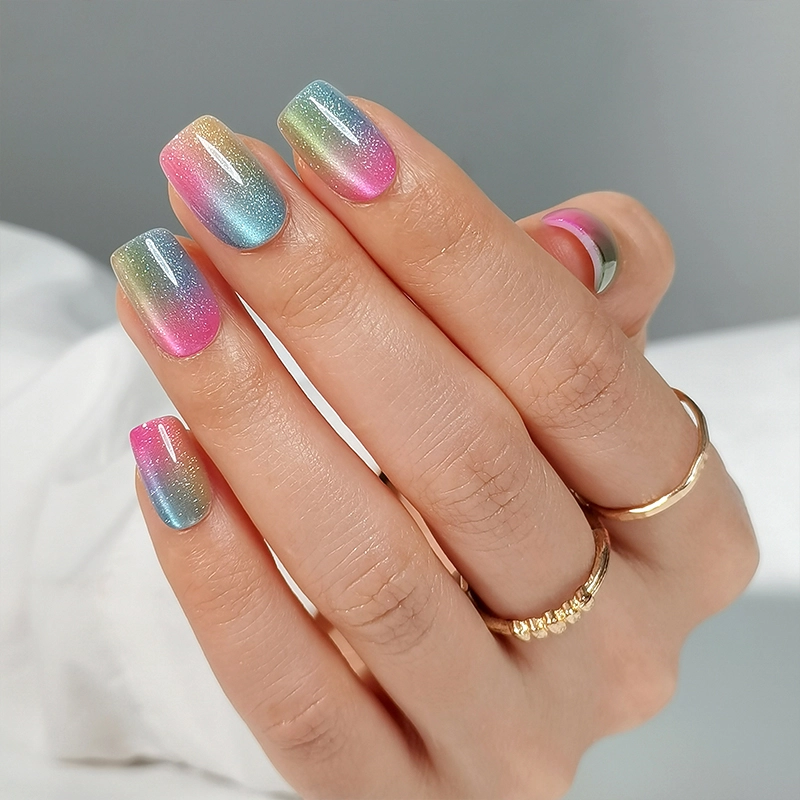
Custom Wholesale Gradient Cat Eye Soft Gel Wearable Fake Nails
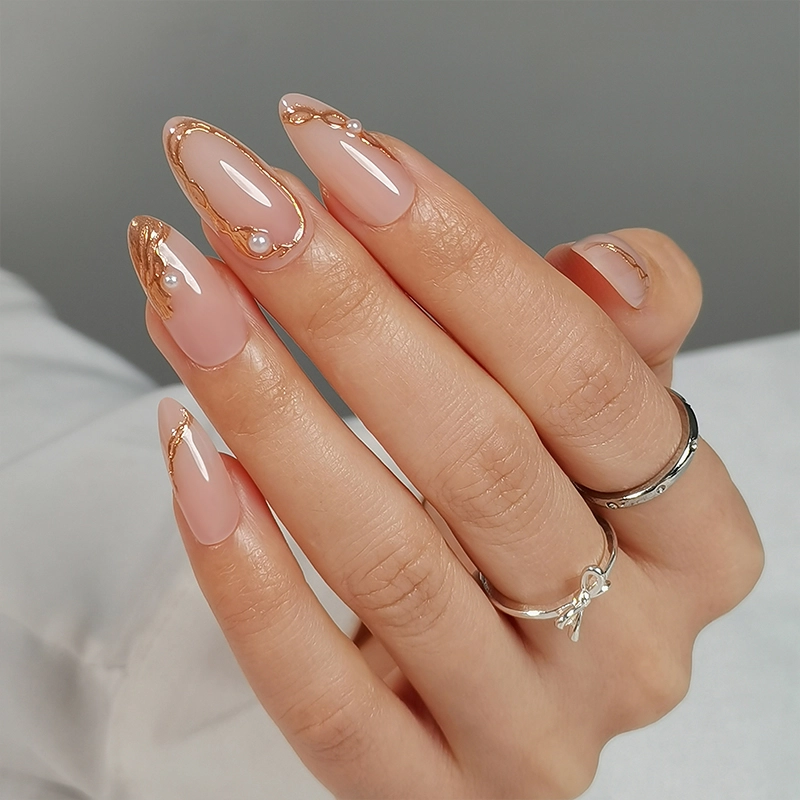
Wholesales Luxury Rhinestone Handmade Private Label Press On Nails Art Tips
Contact us
If you have press on nails products or customization needs, please feel free to contact from
below or via the contact information provided, we'll get back to you promptly within 24 hours.
By clicking 'Send Inquiry Now' I agree to XIANXING BEAUTY processing my personal data.
To see how to withdraw your consent, how to control your personal data and how we process it, please see our Privacy Policy and Terms of use.
Copyright © 2025 - XIANXING BEAUTY All Rights Reserved. Sitemap
Facebook
YouTube
Instagram
LinkedIn