
How to create custom sizes for press on nail sets?
- How to start Custom Press-On Nails: 7 specific beginner questions you won't find answered deeply elsewhere
- 1) How can I create and verify 12–20 truly custom press-on sizes that reduce customer returns?
- 2) What low-cost tooling and production strategies let me offer custom sizes without high factory MOQs?
- 3) Which adhesive system should I include with custom kits to balance sticking power, nail health and reusability?
- 4) How do I build a reliable virtual-fit or low-cost try-before-you-buy system to reduce returns?
- 5) What are the sanitation, labeling and regulatory checkpoints I must address when sourcing internationally?
- 6) How should I price custom-sized press-on sets to cover material, labor, tooling amortization, and returns?
- 7) How can I scale custom press-on production while maintaining design consistency and quality control?
- Bonus: Practical template to include in your supplier brief (copy–paste)
- Conclusion — Why choose Xianxing Beauty for custom press-on procurement?
- Sources
How to start Custom Press-On Nails: 7 specific beginner questions you won't find answered deeply elsewhere
Below are 7 highly practical, pain-point–focused questions beginners in the press-on nail business commonly ask but which are often answered only at a surface level online. Each section explains not only the “what” but the exact “how” to implement solutions when sourcing, manufacturing, or selling custom press-on sets.
1) How can I create and verify 12–20 truly custom press-on sizes that reduce customer returns?
Problem: Most shops offer a fixed 10–12 size set. Buyers with narrow/wide or asymmetrical nail beds get returns. You need a system to create more granular sizes without exploding SKUs.
Solution (step-by-step):
- Measure in millimeters at the nail root (widest point of the natural nail) rather than relying on US/UK numeric sizes. Use a simple digital caliper for sample creation and record widths by mm (e.g., 7 mm, 7.5 mm, 8 mm).
- Start with a sizing matrix: pick 12 core widths that cover 90% of customers (e.g., an even progression across typical adult widths). Then add smaller “in-between” widths (+/- 0.5 mm) for narrow/wide variants. That gives you 12 core + 6 infill = 18 sizes with controlled complexity.
- Create progressive shape profiles. Keep the length and curvature consistent across sizes by scaling a base template instead of designing each size from scratch. This preserves aesthetics and fit across the range.
- Verify fit with a 100-sample customer test panel before full launch. Ask testers to send photos with a coin or ruler for scale and record the width in mm of the nail root. Aggregate results to refine gaps in your size matrix.
- Offer a printable sizing chart and a simple “measure with a ruler or credit card” method for customers to self-measure in mm—this reduces returns significantly.
Why it works: Millimeter-based sizing eliminates ambiguity from vague numbering systems and lets factories reproduce exact widths reliably.
2) What low-cost tooling and production strategies let me offer custom sizes without high factory MOQs?
Problem: Factories and pressing houses often require high minimum order quantities (MOQs), which is hard for new brands wanting many sizes or frequent design changes.
Practical approaches:
- Use modular molds or single-cavity molds that can be reconfigured rather than full fixed plates. Some small manufacturers and local pressing labs offer low-run services using interchangeable molds.
- Leverage 3D-printing for initial tooling and low-run production. High-temperature resin molds or 3D-printed masters can be used to make silicone production molds for short runs (do a test run to ensure durability).
- Partner with white-label/ODM partners that offer graduated MOQs per SKU (e.g., reduced MOQ when you buy a size range rather than one design). Negotiate a pilot production run to validate demand.
- Batch SKUs logically: produce the same design across multiple sizes in one run to reduce set-up costs; keep design complexity (embellishments, chrome powders, rhinestones) consistent across that batch.
Why it works: Technologies such as 3D-printing and modular molds stabilize unit costs for low runs and let small brands iterate designs quickly without large upfront tooling spend.
3) Which adhesive system should I include with custom kits to balance sticking power, nail health and reusability?
Problem: Customers expect long wear but also want an easy, non-damaging removal option. Glue failures cause negative reviews; overly strong glue causes damage.
Recommendation matrix:
- Offer a two-option system in each kit: single-use cyanoacrylate nail glue for longer wear, plus adhesive tabs for customers prioritizing ease of removal and reusability.
- Glue: use cosmetic-grade cyanoacrylate formulated for nails. Provide clear written safety instructions (patch test for allergies, avoid skin contact). Include a small 3–5 g tube for single-set application.
- Adhesive tabs: use double-sided foam or polymer tabs rated for nail application; they generally hold for 3–7 days depending on activity and are non-damaging. Provide sizing guidance so tabs align with nail bed width—mismatch causes gaps and failure.
- Instructions: include step-by-step application and removal guidance for both systems; for glue removal include oil soak guidance and acetone safety tips.
Why it matters: Giving buyers the choice reduces returns and expands your market (customers who want long wear vs. those who want reorderable sets).
4) How do I build a reliable virtual-fit or low-cost try-before-you-buy system to reduce returns?
Problem: Returns/drop rates spike when buyers get poor fit. Full sample sets are expensive to ship as “try-ons.”
Effective low-cost options:
- Printable sizing sheet: Provide a downloadable, print-at-home sizing ruler and clear instructions for scaling the PDF to real size (include a 25-mm calibration box or coin image for verification).
- Single-nail sample packs: Offer a low-cost “size-sample” pack with 10–12 single nails representing your size range. Customers pay little to check fit before buying a full set.
- Mobile AR or photo-fit: Implement a simple photo upload widget for customers to upload photos of their nails next to a coin; use that to recommend size sets. Even manual review by your team reduces returns; automate later.
- Video tutorial: Show exactly how to measure, pick a size, and trim edges—visuals reduce sizing errors more than text alone.
Why it works: Low-friction sample systems and clear visual guidance reduce uncertainty and returns while increasing conversions.
5) What are the sanitation, labeling and regulatory checkpoints I must address when sourcing internationally?
Problem: Cosmetics laws vary by market and press-on nails cross between cosmetics and consumer durable product categories. Improper claims or labeling can block sales or trigger recalls.
Checklist (procurement and compliance):
- Material safety: request material specifications from suppliers (ABS, acrylic, gel resin). Keep records for each batch—material type, MSDS (Material Safety Data Sheet), and curing protocol if using UV gels.
- Allergy and safety labeling: include warnings about cyanoacrylate glue allergies, recommend patch tests, and include safe removal instructions.
- Cosmetic vs. medical claims: avoid medical claims (e.g., “treats fungus” or “fixes nail disorders”). Keep marketing within cosmetic claims (appearance, wearability).
- Regulatory compliance: check local cosmetics/consumer goods rules—EU cosmetics regulation requires ingredient listing for cosmetic products; press-on nails themselves are often classified as consumer accessories but adhesives/primers may be regulated as cosmetics. Keep supplier MSDS and ingredient lists accessible for market entry.
- Sanitation: require suppliers to follow basic cleaning protocols for reusable packaging or sample nails; request a factory sanitation statement and photo documentation if possible. For salon use, recommend disinfection protocols aligned with local public-health guidance.
Why it matters: Early documentation avoids blocked shipments and protects Xianxing Beauty from safety complaints.
6) How should I price custom-sized press-on sets to cover material, labor, tooling amortization, and returns?
Problem: New sellers underprice or overprice because they omit hidden costs (sizing inventory complexity, returns, and samples).
Pricing framework (build your cost model):
- Calculate per-set direct costs: materials (nails, adhesive, packaging), direct labor (production and QC), and shipping into your warehouse.
- Allocate tooling amortization: amortize any mold/tool costs across the expected life (units per design). For small-run molds, amortize across the planned short-run volume to see real cost impact.
- Include overhead and customer acquisition: marketing, return handling, customer service, sizing sample costs.
- Estimate returns based on your sizing accuracy (use your pilot test results). Include a buffer for refunds, replacement sets, and customer support time.
- Set margin targets: choose a gross margin that supports reinvestment in design/test iterations—many small beauty brands target healthy gross margins to fund growth and samples, but your exact target depends on channels (DTC vs. wholesale). Test price elasticity with limited offers.
Why it works: A transparent cost model prevents surprise losses and helps you decide whether to reduce SKU complexity, increase price, or absorb sample costs to improve conversion.
7) How can I scale custom press-on production while maintaining design consistency and quality control?
Problem: Scaling introduces variability in fit, curvature, thickness, and finish—leading to higher return rates.
Quality-control program:
- Create a master spec sheet for every SKU that includes mm width at root, curvature radius, length, thickness, and finish instructions (topcoat type, opacity, chrome powder steps). Share this with suppliers and require sign-off before production.
- Use photographic QC checklists at several production stages: post-mold, post-decoration, and post-packaging. Require supplier photos of each production batch for your approval before shipping.
- Institute a small pilot run (e.g., 1–5% of planned volume) for every new size or surface finish. Approve the pilot before full production.
- Keep serialized or lot-coded packaging so you can trace batches if complaints arise; this enables targeted remediation and reduces large-scale recalls.
Why it matters: Clear specs, photo-based QC, and pilots prevent costly scale-up mistakes and maintain brand reputation.
Bonus: Practical template to include in your supplier brief (copy–paste)
Use this short checklist in every RFQ (Request for Quotation):
- Product type: Press-on nails (ABS / acrylic / gel overlay) — specify material and MSDS attached.
- Size matrix: list widths in mm for each size included in the SKU.
- Curvature radius: specify mm or attach a base-file (SVG/AI) for scaling.
- Thickness tolerance: +/- 0.1 mm.
- Finish: glossy topcoat / matte / chrome—list exact process steps.
- Decoration: charms/rhinestones—specify glue type and placement tolerance.
- Packaging: single set blister or box, include adhesive type (tabs + 3 g glue), instruction card with sizing chart included.
- QC: request pre-shipment photos from at least 3 random samples per batch and assign a lot code.
This standardizes expectations and speeds up supplier evaluation.
Conclusion — Why choose Xianxing Beauty for custom press-on procurement?
Xianxing Beauty combines small-batch flexibility with production discipline: we deliver millimeter-accurate sizing matrices, modular tooling options for low MOQs, and dual-adhesive kits that address both wear and reusability. Our production process uses pilot-run validation, photographic QC checkpoints, and full material documentation (MSDS) to ensure compliance and consistent fit. For brands and boutiques launching custom press-on lines, Xianxing Beauty offers tailored sampling programs, AR-ready sizing assets, and clear supplier briefs so you can launch faster with fewer returns.
Sources
- Allure — coverage and buyer guidance on press-on nail trends and fit considerations (accessed May 2024).
- Byrdie — application and adhesive guidance for press-on nails (accessed May 2024).
- Centers for Disease Control and Prevention (CDC) — guidance on fungal nail infections and safe practices for nail care (accessed June 2023).
- Nail industry trade articles (NailPro / professional trade coverage) — small-shop production techniques and low-run tooling guidance (accessed April 2024).
- Packaging and small manufacturing best practices — industry whitepapers on low-MOQ production and 3D-printed tooling for cosmetics (accessed March 2024).
7 Red Flags to Avoid When Selecting a Wholesale Press On Nails Manufacturer
Quality Control: What to Expect from a Top-Tier Wholesale Press On Nails Manufacturer
The Ultimate Guide to Choosing the Best Wholesale Press On Nails Manufacturer in 2026
How to Scale Your Beauty Brand: Why Private Label Press On Nails Are the Highest-Margin Entry Point in 2026
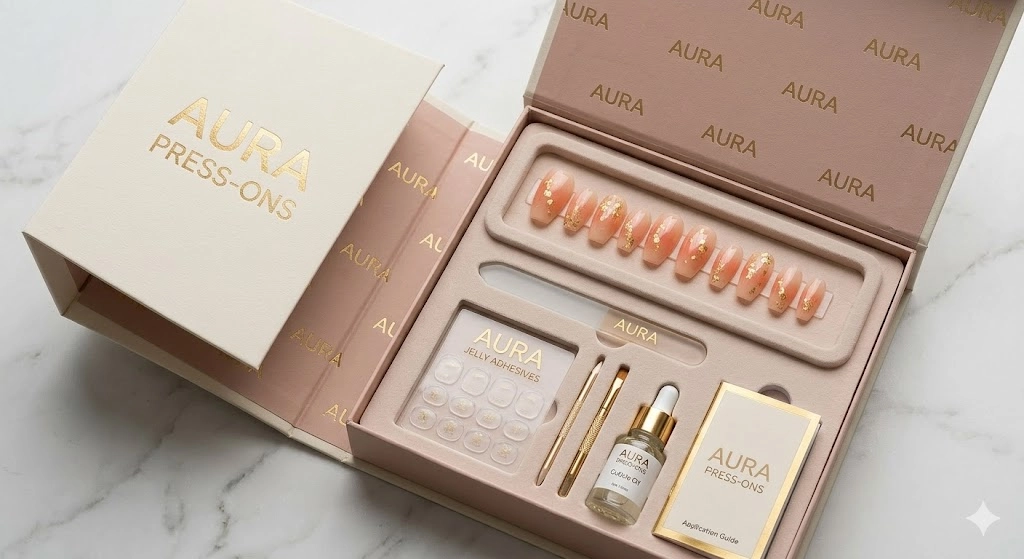
Why Partnering with Professional Press On Nails Manufacturers Boosts Your Brand Growth
Dead Skin Remover
Can a dead skin fork hurt the skin?
If used incorrectly, yes. If you press too hard or use it too frequently, you might irritate or damage the skin. Always follow the manufacturer's instructions and be gentle with your technique.
About Toe Nails
What are toe press-on nails?
Toe press-on nails are pre-designed artificial nails that are applied to your toenails using adhesive. They come in various shapes, colors, and designs, allowing you to temporarily enhance the look of your feet. They typically last for a few days to a week, depending on wear and care.
Supermarket chains
In addition to press on nails, what other supporting manicure tools you can provide.
Besides press on nails, we also provide nail related products like nail strips, glue, nail file, remover, lamp, cuticle oil, stickers, etc.
Is your material safe and vegan?
Material we used for press on nails and products are safe, vegan, have passed related test.
About 3D Nails
Can I reuse 3D press on nails?
Some 3D press on nails can be reused if removed carefully and stored properly.
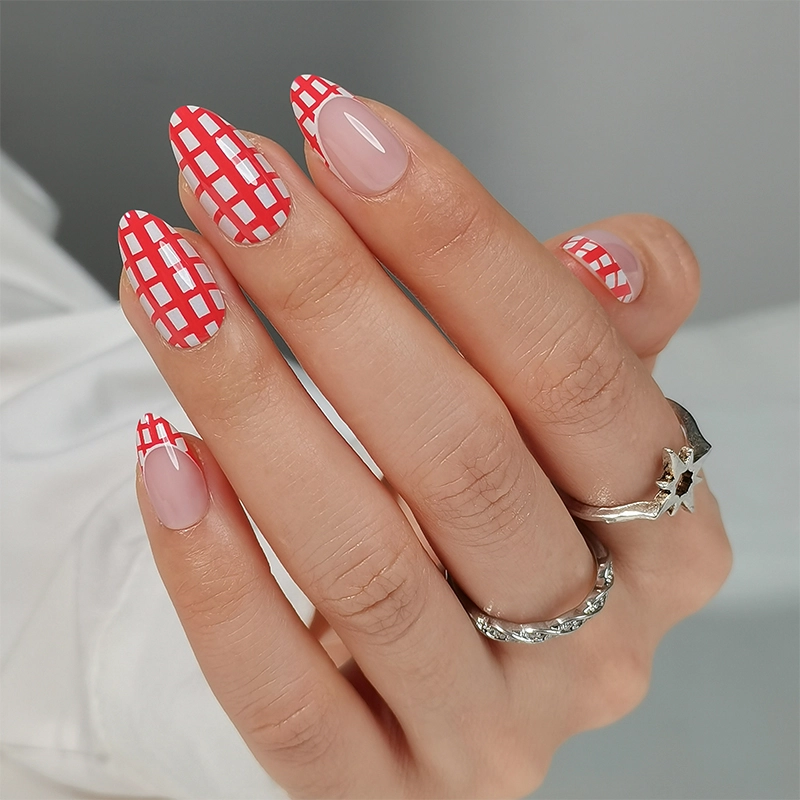
Wholesales Red French Nails Tips Checkered Soft Gel Nail Tips 32 Piece Set
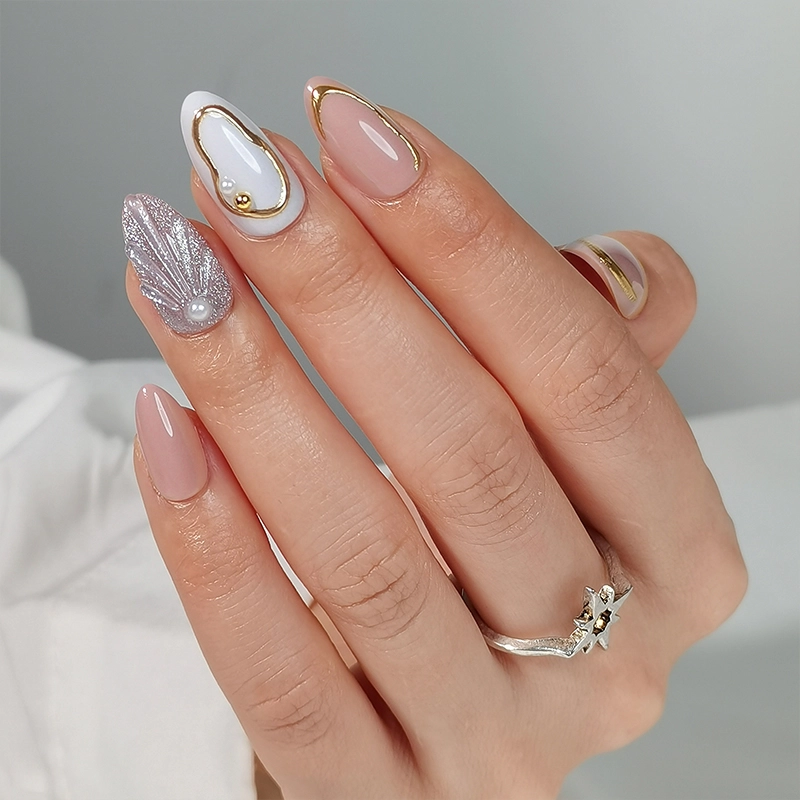
Wholesales Elegant Shell Inspired Soft Gel Wearable Nails for Seasonal Celebrations
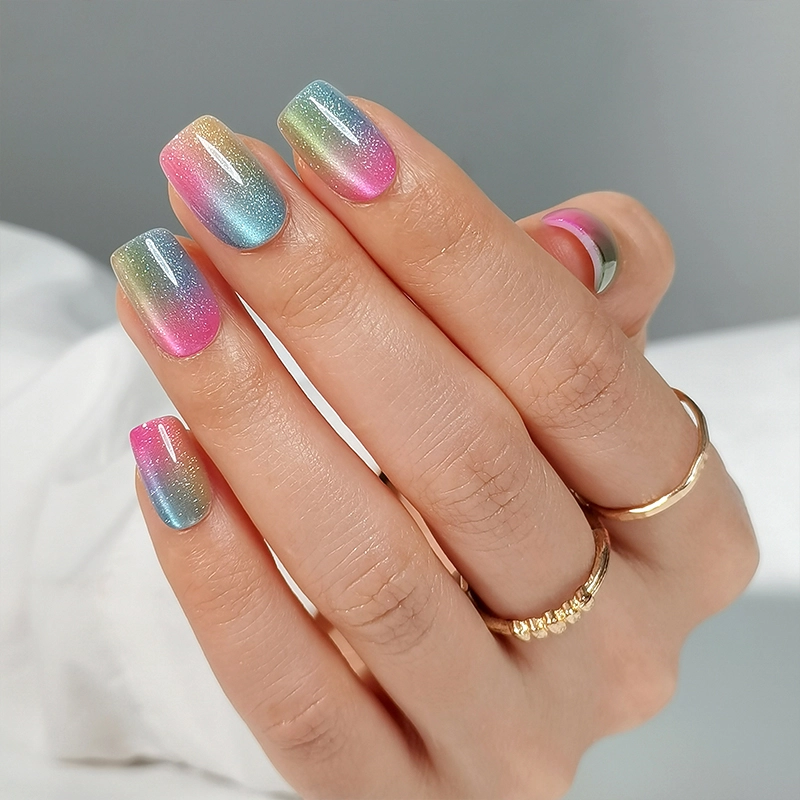
Custom Wholesale Gradient Cat Eye Soft Gel Wearable Fake Nails
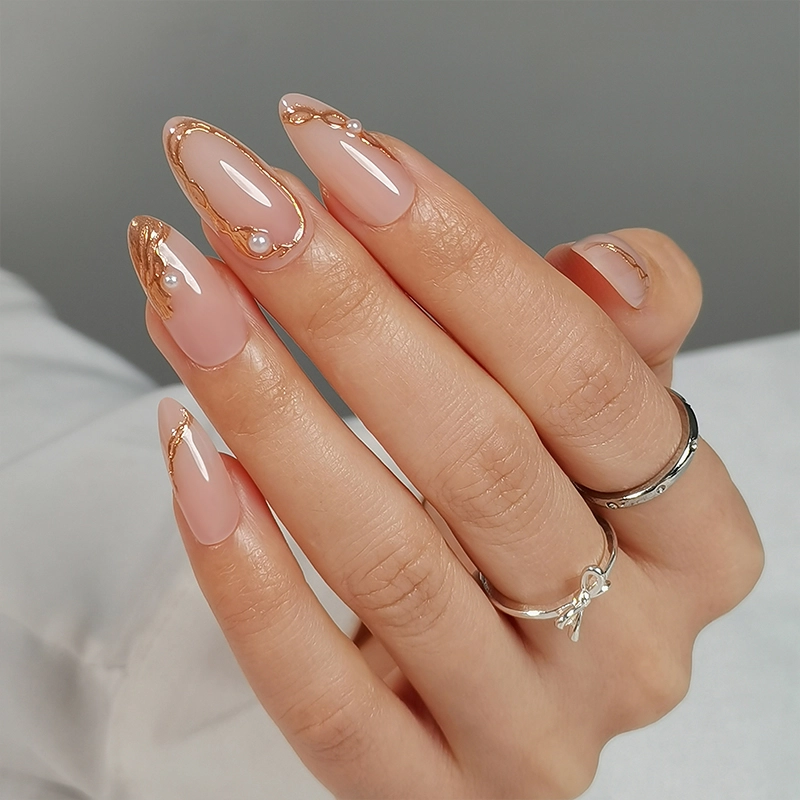
Wholesales Luxury Rhinestone Handmade Private Label Press On Nails Art Tips
Contact us
If you have press on nails products or customization needs, please feel free to contact from
below or via the contact information provided, we'll get back to you promptly within 24 hours.
By clicking 'Send Inquiry Now' I agree to XIANXING BEAUTY processing my personal data.
To see how to withdraw your consent, how to control your personal data and how we process it, please see our Privacy Policy and Terms of use.
Copyright © 2025 - XIANXING BEAUTY All Rights Reserved. Sitemap
Facebook
YouTube
Instagram
LinkedIn