
How to estimate production time for custom nail orders?
- 1) How to start Custom Press on Nails with a shoestring budget and no factory contacts?
- 2) What are the exact steps and realistic timelines for sample approval on custom press-on nails?
- 3) How to estimate production time for custom nail orders?
- 4) How to quality-control special finishes (chrome, encapsulated glitter, 3D elements) at scale without exploding rework?
- 5) How should I price custom press-on nails, including tooling amortization, labor, and returns?
- 6) What’s the fastest and safest way to scale from handmade production to offshore manufacturing while protecting my brand and IP?
1) How to start Custom Press on Nails with a shoestring budget and no factory contacts?
Many beginners ask “How to start Custom Press on Nails” but stall at cost and supplier access. Start by turning fixed costs into variable ones: order samples and small production runs from suppliers who accept low MOQs (many accept 10–200 sets for samples). Use digital-first channels—Shopify/Etsy and social ads—for pre-orders to validate designs before committing to tooling. Steps:
- Validate product-market fit with 10–30 handmade or printed sets sold as pre-orders.
- Create a simple tech pack (photo of nail shapes, sizes, base material, finish, color codes, embellishment placement). This avoids back-and-forth with factories and reduces sample rounds.
- Use contract manufacturers offering sample services or local nail techs to produce pilot stock; pay per-sample rather than investing in molds initially.
- Bootstrap packaging—use simple branded boxes or cello bags and upgrade packaging when margins improve.
- Negotiate payment terms: deposit + balance on shipment. This keeps initial cash outlay manageable.
Procurement tip: focus first on SKU rationalization—launch 3–6 best-selling shapes/finishes. Each additional SKU multiplies tooling and inventory complexity and materially increases lead time and inventory cost.
2) What are the exact steps and realistic timelines for sample approval on custom press-on nails?
Beginner answers online are often vague. An actionable sample approval workflow and typical durations (ranges are industry common) help you plan:
- Design & Tech Pack Preparation (1–5 days): finalize sizes, artwork, finishes, glue pads and packaging specs.
- Prototype / Sample Production (3–10 days): depends on whether hand-crafted or factory-produced; intricate 3D elements add time.
- Sample Shipping (2–7 days international, 1–3 days domestic): use express couriers for faster approval cycles.
- Internal Testing & Fit Check (1–3 days): test fit on real nails, adhesion, comfort, durability.
- Revision Cycle(s) (3–10 days each): factories typically require iterations—limit rounds by being specific in the tech pack.
- Final Pre-Production Sample / Pre-Run Approval (3–7 days): confirm production-ready sample and QC checklist.
Practical note: expect 2–4 weeks from first brief to pre-production approval for a new custom design if you move quickly and have no tooling lead time. Complex finishes, molds or new tooling extend this by weeks.
3) How to estimate production time for custom nail orders?
This is a core procurement question—How to estimate production time for custom nail orders?—and requires a simple production-time formula plus real-world checks.
Use this production-time model:
Total lead time = Tooling setup time (if required) + Sample approval time + Production run time + Finishing & QC time + Packaging & Shipping time + Buffer (10–20%).
Key inputs you must confirm with any supplier:
- Tooling/mold lead time (if creating new nail molds or stamping plates): commonly 7–21 days.
- Daily production capacity (sets/day) for the SKU and finish (hand-painted finishes are far slower than automated pressing).
- Finishing time/step per set (chrome buffing, sealing, rhinestone application, adhesive pads).
- QC and rework allowance—how many% typically fail final inspection.
Example calculation (illustrative): a 2,000-set order; factory capacity = 500 sets/day; finishing adds 1 day/batch; packaging 0.5 day/batch; batches of 500 sets:
- Production time = 2,000 / 500 = 4 production days
- Finishing & packaging = 4 × 1.5 = 6 days (concurrent or sequential depending on factory)
- Tooling = if new mold, add 14 days
- Shipping (air) = 3–7 days
- Buffer = +10% (2–3 days)
Resulting total: roughly 30–35 days end-to-end with new tooling; under 2 weeks if no new tooling and small order on a fast line. Always get written capacity numbers and sample-turn times from the supplier and lock lead times in your PO.
Practical reduction strategies:
- Pre-approve colors and finishes to cut revision cycles.
- Batch production by finish rather than by design to leverage continuous finishing steps.
- Use decals or pre-printed nail wraps rather than hand painting.
- Order adhesive pads pre-cut from your supplier to save assembly time.
4) How to quality-control special finishes (chrome, encapsulated glitter, 3D elements) at scale without exploding rework?
Special finishes are where lead times and returns hit you. The missing depth online is a practical QC protocol with measurable checks. Use these steps:
- Define objective acceptance criteria: color swatch / Pantone, gloss level (glossmeter readings where possible), rhinestone placement tolerance (mm), chrome uniformity, edge adhesion strength.
- Adopt an AQL sampling plan (industry standard). For High Quality cosmetic items choose AQL 2.5; for lower-cost fast-fashion SKUs AQL 4.0 is common. For critical features (adhesion of 3D parts) use 100% inspection or higher sample rates.
- Tests to require in your QC checklist: adhesion/flex test (bend nails on a jig), abrasion/resistance test (rubbing with standardized cloth), bond check for rhinestones (tensile pull test if possible), UV/yellowing exposure for resins if you sell to sunny markets.
- Pre-shipment photograph report and random sample video of packaging and set-by-set inspection. Require corrective action plans for defects and rework lead times clearly specified in the contract.
Procurement tip: label critical-to-quality (CTQ) features in the spec sheet so the supplier prioritizes them during production runs. Neglecting CTQs is the main cause of high rework rates.
5) How should I price custom press-on nails, including tooling amortization, labor, and returns?
Clear pricing avoids surprises. Use this cost-build formula:
Unit cost = (Tooling cost / Orderable lifetime quantity) + Materials cost per set + Labor & finishing per set + Packaging per set + Shipping per set + Overhead & compliance + Expected returns & rework allowance.
Example framework (replace numbers with quotes you obtain):
- Tooling: $300 for a mold, amortized over first 3,000 sets => $0.10/set
- Materials (plastic tips, glue pad, decals): $0.40/set
- Labor & finishing: $0.60/set
- Packaging: $0.25/set
- Shipping & duties: $0.30/set
- Overhead & profit target: 30–50% markup on landed cost
- Returns allowance: add 2–5% to cover returns/rework depending on SKU complexity
Result: landed cost + margin gives wholesale and retail prices. Always model a conservative scenario (higher returns, slower production) when negotiating MOQs and net terms with suppliers.
6) What’s the fastest and safest way to scale from handmade production to offshore manufacturing while protecting my brand and IP?
Scaling too fast breaks quality and brand trust. Follow a phased, protective approach:
- Create a detailed tech pack and spec book—photos, placement guides, tolerances, adhesive type, and packaging dielines.
- Use NDAs where appropriate and register trademarks/designs in your key markets. For unique molds consider design registration if available in your jurisdiction.
- Start with a pilot production run (1–5% of projected volume) with the chosen factory. Use that run to verify capacity and QC before full-scale orders.
- Hire a third-party QC or local agent for on-site inspection during first runs if you can’t visit. Request real-time photo & video evidence.
- Negotiate clear agreements on quality acceptance criteria, lead times, rework costs, and intellectual property ownership in the contract.
- Scale by SKU groups (finishes first, then expand shapes) to avoid multiplying complexity exponentially.
Compliance reminder: request material safety data (SDS) for resins and adhesives and ensure materials meet your destination market rules. Always verify any ingredient restrictions rather than assuming compliance.
Closing — Why Xianxing Beauty?
Xianxing Beauty combines specialist press-on nail manufacturing knowledge with procurement-first processes: low-MOQ sample services, clear tech-pack guidance, robust QC (AQL-based) and transparent production-time modeling to keep your launches predictable. We support startups through scale-up with pilot runs, on-site QA options and IP protection practices, plus ready-made packaging solutions to accelerate time-to-market.
Contact us for a tailored quote and timeline: visit www.xianxingbeauty.com or email [email protected].
7 Red Flags to Avoid When Selecting a Wholesale Press On Nails Manufacturer
Quality Control: What to Expect from a Top-Tier Wholesale Press On Nails Manufacturer
The Ultimate Guide to Choosing the Best Wholesale Press On Nails Manufacturer in 2026
How to Scale Your Beauty Brand: Why Private Label Press On Nails Are the Highest-Margin Entry Point in 2026
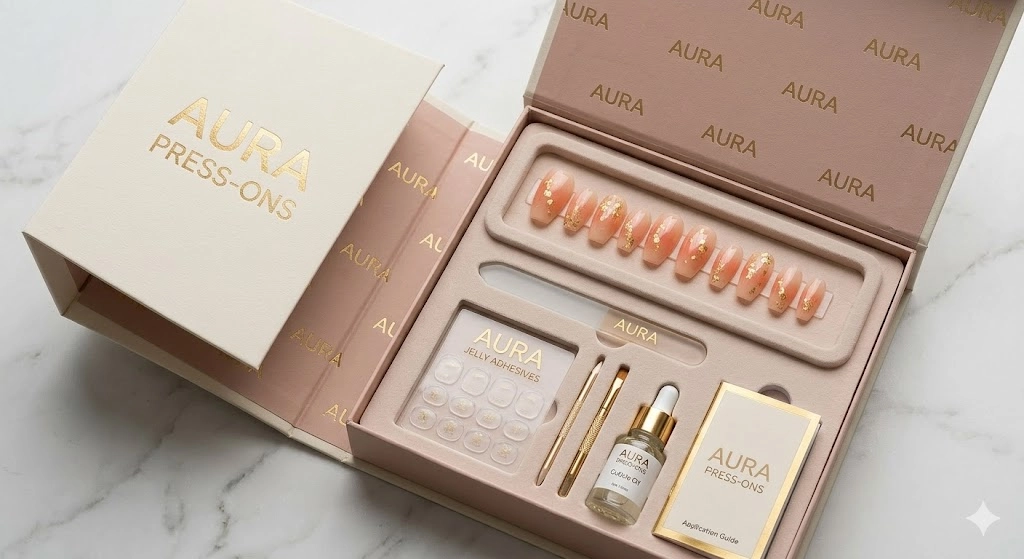
Why Partnering with Professional Press On Nails Manufacturers Boosts Your Brand Growth
75% Alcohol Pad
How long should I wait after using an alcohol pad to apply press-on nails?
You can apply press-on nails immediately after using an alcohol pad. Just ensure your nails are dry before applying to avoid any issues with adhesion.
Can I reuse an alcohol pad for multiple nails?
Alcohol pads are typically single-use, so it's best to use one pad for all your nails. Reusing them can reduce their effectiveness in cleaning.
Agent
What are the levels of Xianxing agents?
At present, we have a total of 4 levels, temporary agent, junior agent, senior agent and regional agent.
Product Customization
What after-sales services does Xianxing Beauty offer?
We provide comprehensive after-sales services, including logistics tracking, quality feedback handling, and product usage training to ensure a worry-free purchasing experience.
Startup Client
Can I return or exchange products if there is a quality issue?
Yes, we offer comprehensive after-sales services. If there is a quality issue, you can apply for a return or exchange. For the specific process, please contact our customer service team.
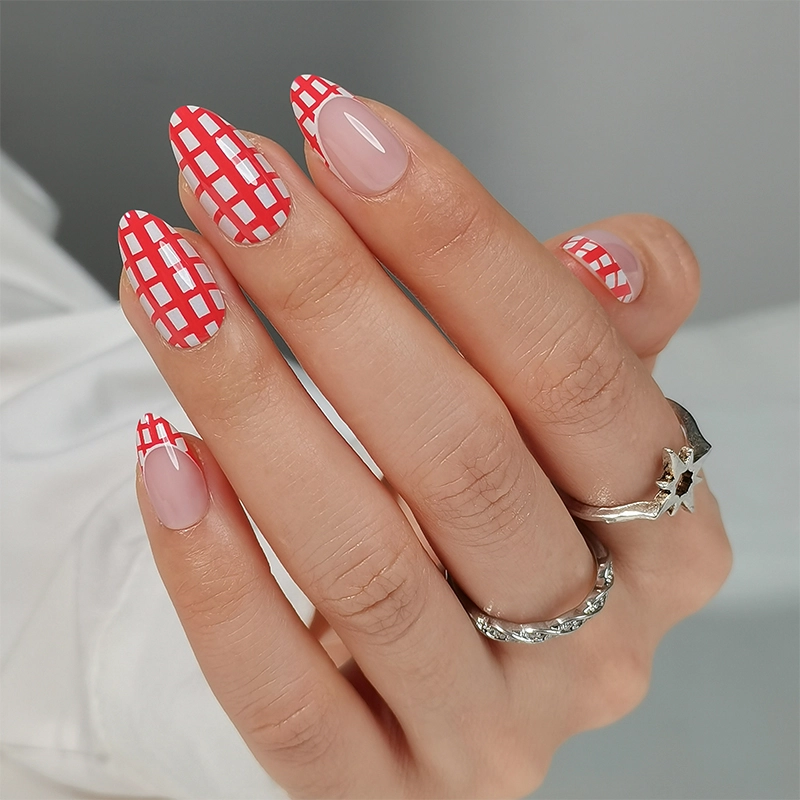
Wholesales Red French Nails Tips Checkered Soft Gel Nail Tips 32 Piece Set
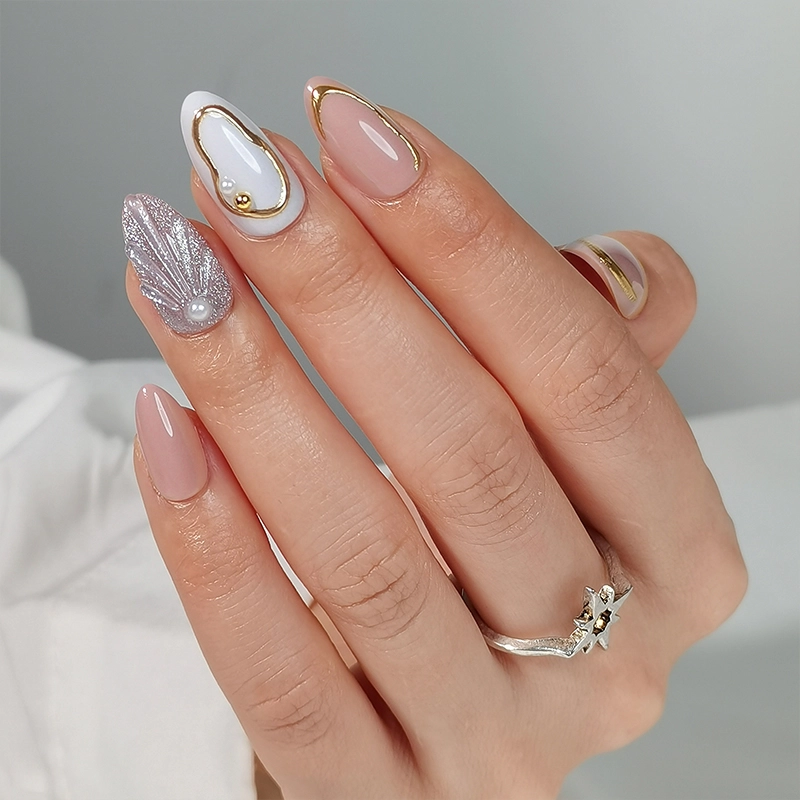
Wholesales Elegant Shell Inspired Soft Gel Wearable Nails for Seasonal Celebrations
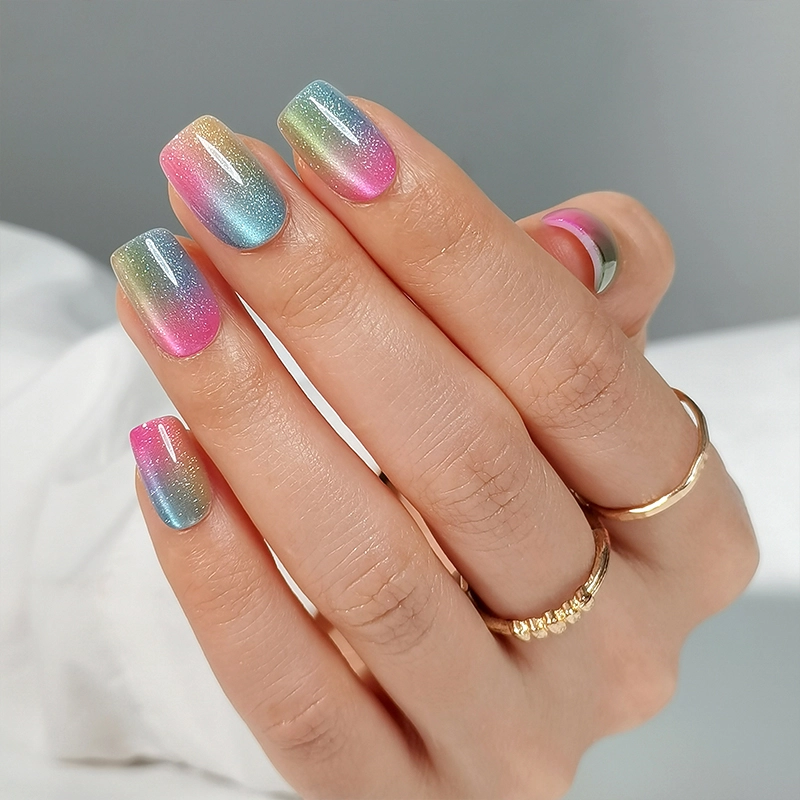
Custom Wholesale Gradient Cat Eye Soft Gel Wearable Fake Nails
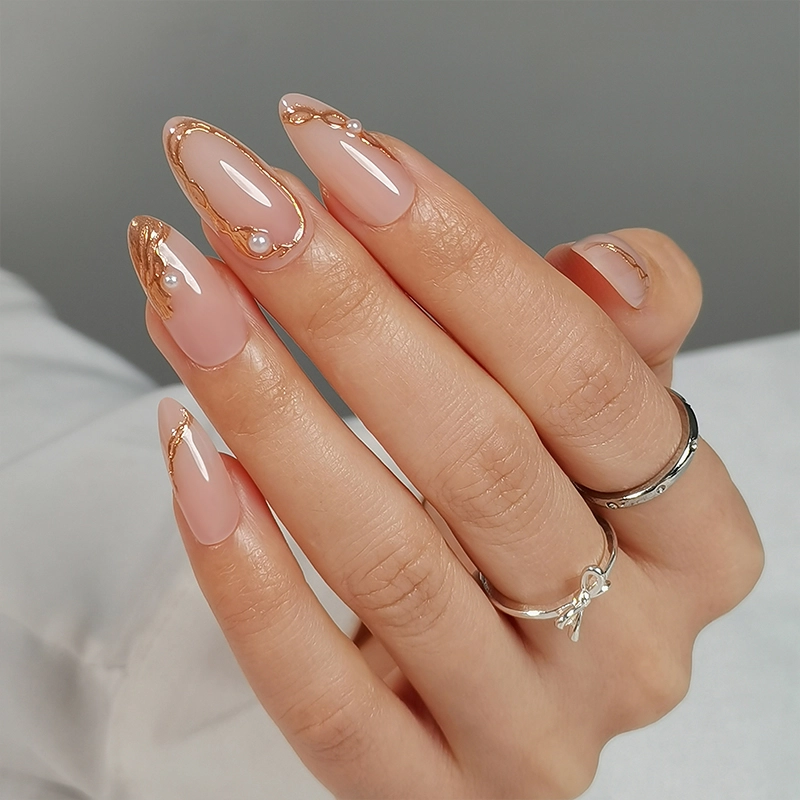
Wholesales Luxury Rhinestone Handmade Private Label Press On Nails Art Tips
Contact us
If you have press on nails products or customization needs, please feel free to contact from
below or via the contact information provided, we'll get back to you promptly within 24 hours.
By clicking 'Send Inquiry Now' I agree to XIANXING BEAUTY processing my personal data.
To see how to withdraw your consent, how to control your personal data and how we process it, please see our Privacy Policy and Terms of use.
Copyright © 2025 - XIANXING BEAUTY All Rights Reserved. Sitemap
Facebook
YouTube
Instagram
LinkedIn