
How to create custom packaging inserts for nail orders?
- 1) How can I legally and safely source materials (ABS, adhesives, topcoats) for custom press-on nails to sell in the US and EU without failing compliance checks?
- 2) What is an accurate, low-friction sizing system that reduces returns for custom press-on nail orders?
- 3) How do I design production-ready nail molds, manage tooling costs, and keep MOQ low for custom shapes or 3D art?
- 4) What pricing model and cost breakdown should I use to price custom press-on nails profitably (materials, labor, packaging, shipping, returns)?
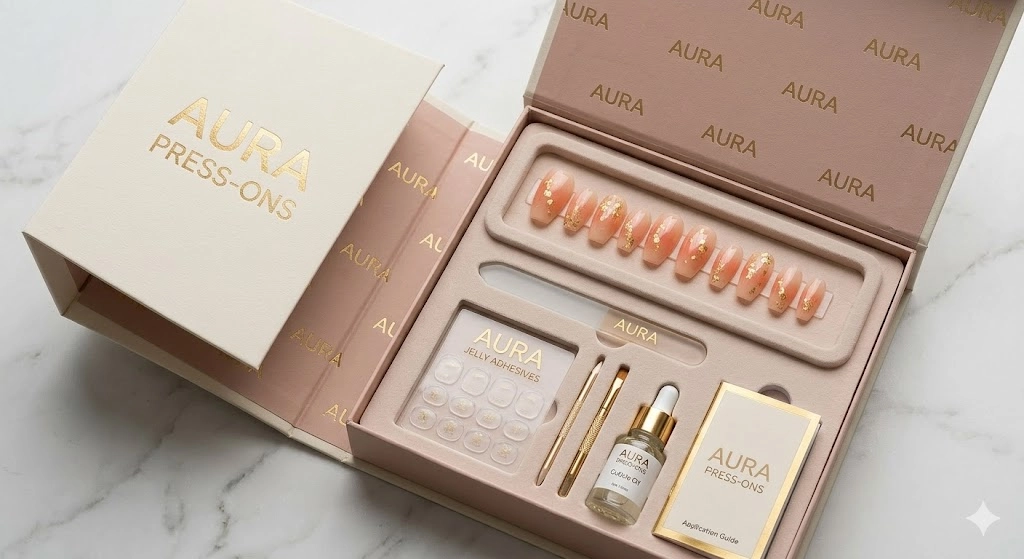
- 5) How to create custom packaging inserts for nail orders that protect nails, reduce damage, and increase perceived value while keeping shipping costs low?
- 6) How can I set up fulfillment and order customization workflows (personalized sets, multiple sizes per order, add-ons) to scale without packing errors?
- Concluding summary
How to Start Custom Press on Nails and Create Custom Packaging Inserts for Nail Orders
Launching a professional custom press-on nails brand requires more than pretty art. You need compliant materials, a reproducible sizing system, predictable manufacturing (and tooling) costs, production-ready nail molds, and packaging inserts that protect nails, decrease returns, and elevate brand perception. Below are six highly specific questions beginners ask that often lack in-depth, practical answers online — with detailed, actionable solutions based on current industry practice.
1) How can I legally and safely source materials (ABS, adhesives, topcoats) for custom press-on nails to sell in the US and EU without failing compliance checks?
Pain point: Many beginners buy attractive products from marketplaces without SDS, ingredient transparency, or regulatory checks. That creates risk for recalls, rejections at customs, or customer harm.
Actionable checklist and steps:
- Know the product classification: Custom press-on nails are cosmetic/accessory products in many jurisdictions — but adhesives and primers can be regulated differently (adhesives often fall under consumer chemical product rules). The US FDA regulates cosmetics (labeling, ingredient listing; color additives require approval) but generally does not pre-approve typical nail plastics. In the EU, REACH and CLP apply to hazardous substances and labeling.
- Require documentation from suppliers: Purchase products only from suppliers who provide a current Safety Data Sheet (SDS/MSDS), Certificate of Analysis (COA) for any chemical finishes, and material ID for plastics (e.g., ABS). For adhesives, request allergen & cyanoacrylate information and recommended usage/warning text.
- Test for restricted substances: For EU/UK/AU sales, screen for phthalates, formaldehyde releasers, and banned colorants. If you plan to export, add third-party lab testing (ICP, GC-MS) for any unknown colorants or additives. Use accredited labs (ISO 17025) to test a representative batch before scale runs.
- Labeling & claims: Avoid medical or treatment claims unless you have the evidence and approvals. Include a clear ingredient statement (or at minimum warnings for adhesives), manufacturer/distributor name and contact, batch code, and country of origin per local laws.
- Allergy and safety copy: Add concise warnings for cyanoacrylate glue, latex, and known allergens. Provide first-aid directions for eye contact or skin bonding incidents and recommend a patch test.
- Supplier audit: For larger production, conduct a remote audit (factory photos, QC reports) and request production QA certificates (e.g., ISO, if applicable). If using a white-label manufacturer, require product traceability and batch number provision.
Why this matters: Proper documentation prevents customs holds, reduces legal exposure, and increases resale trust with retailers. If you need supplier vetting or testing quotes, contact our sourcing team at [email protected].
2) What is an accurate, low-friction sizing system that reduces returns for custom press-on nail orders?
Pain point: Customers choose wrong sizes; companies face high return rates and wasted inventory.
Step-by-step sizing workflow that works in practice:
- Build a 10-size template per finger: Offer 10 incremental sizes (S1–S10 or 0–9) for each finger to cover narrow to wide nail beds; this is the industry standard and reduces perfect-fit failures.
- Create a printable sizing card (300 DPI PDF) with labeled outlines for all 10 sizes per finger. Include instructions: “Print at 100% scale / do not scale to fit.” Add a QR code linking to a video on how to measure.
- Provide a paper/clear plastic sizing strip in each order: The customer places the strip over their nail to determine the best size. This is the single most effective method to cut returns for first-time buyers.
- Offer a one-time sizing kit at low cost (or free over a threshold): The kit includes the printable card, a sticker tab guide, and a quick video — conversion and lifetime value justify the small cost.
- On your storefront, enable size-specific SKUs and a “best fit” tool: Ask for at least one measurement (e.g., index finger width at widest point) to recommend a size. Collect this data to improve future recommendations with machine learning or rule-based logic.
- Document tolerance: Communicate that press-on nails can be filed +/-1 size at the sides and trimmed for length. Show a short how-to clip in product pages to set expectations.
Operational tips: Print sizing guides with Xianxing Beautying and include them in the packaging insert (see section 5). Track returns by reported cause (size, damage, dissatisfaction) — aim to reduce size-related returns below 5% within the first 6 months.
3) How do I design production-ready nail molds, manage tooling costs, and keep MOQ low for custom shapes or 3D art?
Pain point: Beginners are surprised by tooling costs and minimum order quantities when moving from DIY to factory production.
Production options and how to choose:
- Short runs / prototypes: Use 3D-printed master molds or silicone molds. This is ideal for samples and limited drops. Pros: low upfront cost (<$200–$600 typical for prototype tooling depending on complexity). Cons: longer per-piece time and less dimensional consistency.
- Thermoforming / vacuum forming: Good for curved shapes and textured art with moderate volumes. Lower tooling cost than injection molds. MOQ: typically a few hundred sets depending on the supplier.
- Injection molding for scale: Best for high-volume, consistent sets. Tooling cost is the highest (wide range depending on supplier: a single-family mold can be several hundred to a few thousand dollars), but per-piece cost drops considerably. Expect factory MOQs of 500–2,000 sets for bespoke molds in many overseas factories; negotiate if you can absorb additional SKUs.
How to reduce tooling risk and keep MOQ low:
- Start with a shared mold: Ask factory partners if they offer shared-family molds (multiple size cavities in one mold) or existing base shapes you can customize with surface art. Shared molds reduce your tooling fee.
- Design for manufacturability: Keep sidewall drafts consistent, avoid undercuts that require complex tooling, and use common thicknesses to reduce mold complexity and reject rates.
- Request digital prototypes: Get STL / STEP files and ask for a 3D-printed master proof before committing to injection tooling.
- Negotiate pilot runs: Many factories will run a smaller pilot (100–300 sets) for a High Quality per-piece price to validate demand.
- Factor in finishing: Art, chrome, rhinestones, and transfers are often applied in secondary operations. Quote and QC these steps separately — they affect per-piece lead time and MOQ.
Practical checklist before tooling approval: approve material spec (ABS grade), approve a physical sample, get a written defect tolerance (warpage, color variance), agree on QA checkpoints (first article inspection, batch sampling), and lock in lead times and penalties for late delivery.
4) What pricing model and cost breakdown should I use to price custom press-on nails profitably (materials, labor, packaging, shipping, returns)?
Pain point: Incorrect unit economics lead to razor-thin margins or unsustainable ads spend.
Unit cost model (example framework):
- Bill of Materials (BOM): plastic set (ABS) + adhesive (single-use tabs or tube), topcoat, art/decals, rhinestones/embellishments.
- Direct labor: forming, paint/art application, embellishment, QC per set.
- Packaging: box, custom insert (die-cut foam/cardstock), instruction card, polybag — include variable costs per unit and amortized design/tooling cost for inserts/boxes.
- Overhead: warehousing, pick & pack, payment fees, returns processing, customer service.
- Acquisition and fulfillment: expected ad CAC or channel fees, fulfillment cost per order (including shipping labels), and average return rate adjustment.
Sample simplified math (illustrative — adjust to your data):
- BOM & production per set: $1.00–$4.00 (depends on customization and order size)
- Packaging + insert: $0.50–$2.00 (off-the-shelf vs custom printed boxes with inserts)
- Labor & fulfillment: $0.50–$2.00
- Acquisition & overhead target: $3.00–$8.00
- Target wholesale markup or retail price: set retail such that gross margin covers ad/overhead. Example retail ranges: $12–$35 per custom decorated set depending on brand positioning.
How to tune pricing quickly:
- Get accurate per-piece quotes from your manufacturer for 3 quantity tiers (pilot, mid, high). Use those numbers to calculate break-even and target margin at each tier.
- Model a returns scenario (e.g., 6% returns with 50% refund rate) into unit economics.
- Test a direct-to-consumer price in a small ad campaign; measure CAC and adjust the pricing ladder (basic, High Quality, custom add-on) to boost AOV via bundles (e.g., glue + sizing kit upsell).
Note: real-world costs vary widely by geography and finishes. Always run a three-tier quote and build a 90-day cash flow model covering MOQ, tooling amortization, and inventory lead times.
5) How to create custom packaging inserts for nail orders that protect nails, reduce damage, and increase perceived value while keeping shipping costs low?
Pain point: Buyers receive crushed or scuffed press-ons or find them poorly presented, leading to poor reviews and returns.
Design and material specifics (practical guide):
- Function first: The insert must immobilize each nail to prevent contact and movement. Options: die-cut EVA foam (thin profile, shock absorbing), die-cut EPE foam, molded paper pulp trays, or rigid cardstock trays with finger slots. EVA/PUR foam is common for High Quality sets; paper pulp is eco-friendlier but may compress more.
- Thickness and tolerancing: For single-layer sets, 2–3 mm die-cut foam with a snug finger recess usually suffices. For embellished or 3D designs, use 5–8 mm foam or a two-layer tray with a recessed pocket. Provide the factory with the maximum height of embellishments so cavities are deep enough to avoid contact with the lid.
- Fastening method: Secure nails with small adhesive dots or low-tack fabric tabs (so the customer can remove without damage). Avoid too strong adhesives in the insert — they pull art off the nail. Glue tabs or small tuck-in slits in the foam work well.
- Dieline and art specs: Supply dielines in vector (AI, PDF, or SVG) with 3 mm bleed, CMYK colors, and outline fonts. Specify paper stock (e.g., 300–350gsm coated paper for sleeves; 250–300gsm for tuck boxes). For inserts, provide exact cavity measurements in mm with tolerance +/-0.5 mm for die-cut inserts. Provide a physical prototype or 3D model when possible.
- Protective cover: A clear PET window on the box or a separate protective film keeps dust off art. If you use windows, ensure the window does not rest on embellishments — allow clearance.
- Brand & instructions on the insert: Use one side for branding and the other for a mini sizing guide or removal instructions. Include a QR code to a removal/how-to video and a batch code for QC traceability.
- Ecommerce & shipping: Choose mailer sizes that minimize dimensional weight surcharges. Slim profile inserts that allow a flat mailer sleeve are cheaper to ship. If your insert adds bulk, model the dimensional weight before finalizing design.
Costs and MOQs: Custom die-cut foam inserts and printed tuck boxes typically have MOQs from 250 to 1,000 units for most print houses; tooling for die-cut shapes is relatively inexpensive compared to injection molds but is still a fixed cost. If you need an eco option, molded pulp inserts often require larger MOQs but deliver on sustainability claims.
6) How can I set up fulfillment and order customization workflows (personalized sets, multiple sizes per order, add-ons) to scale without packing errors?
Pain point: As orders increase, mix-ups, incorrect sizes, and inventory errors spike, causing refunds and poor customer experience.
Reliable operational setup:
- SKU strategy: Create unique SKUs per style x size family x finish (e.g., STYLE123-SIZEFAM-A). If you allow full custom sizing per order, treat that as configurable item with variant SKUs for each base family and use an attribute row for exact size mapping.
- Pick & pack checklist: Use sub-KC (pick location code) labels for size trays and inserts so packers can quickly match items. Require packers to scan both set SKU and insert SKU (if inserts differ by size) to validate a match before sealing the pack.
- Packing slips and QC photos: For custom or high-value orders, include a small QC checklist (packer initials, photo of set in insert) that is saved to the order record. This reduces disputes and makes staff accountable.
- Use simple automation: A basic WMS (warehouse management system) or Shopify / WooCommerce apps can enforce pick-lists and bundle validation. Integrate barcodes for SKUs and assign a fast handheld scanner to the packing line to stop incorrect combinations before shipment.
- Batching and kitting: Pre-kit common bundles (e.g., sizing kit + glue + 2 sets) at the end of each shift to speed packing. For personalized orders, create a priority lane with double QC checks.
- Returns & remakes policy: Define conditions for free remakes (size misfit vs. customer error). For size-related replacements, include a prepaid return label or a low-cost exchange path and restock returned sets in a quarantine area for inspection before reuse.
Scaling tips: Implement a monthly inventory health report that tracks pick error rate, returns by cause, and time-to-fulfill. Aim to keep pick error rate under 1% for a consumer brand.
Concluding summary
Advantages of building custom press-on nails with professional packaging inserts:
- Higher perceived value and conversion: High Quality inserts and clear sizing materially increase conversion and enable High Quality pricing.
- Lower return and damage rates: Well-designed inserts immobilize nails and protect high-relief art during shipping.
- Compliance & trust: Proper material sourcing, SDS documentation, and clear labeling reduce regulatory risk and speed market entry.
- Operational scalability: SKU discipline, scanning, and simple automation reduce packing errors and support higher volumes without proportional staff increases.
Ready to quote tooling, custom inserts or production runs? Contact Xianxing Beauty for a tailored quote: visit www.xianxingbeauty.com or email [email protected].
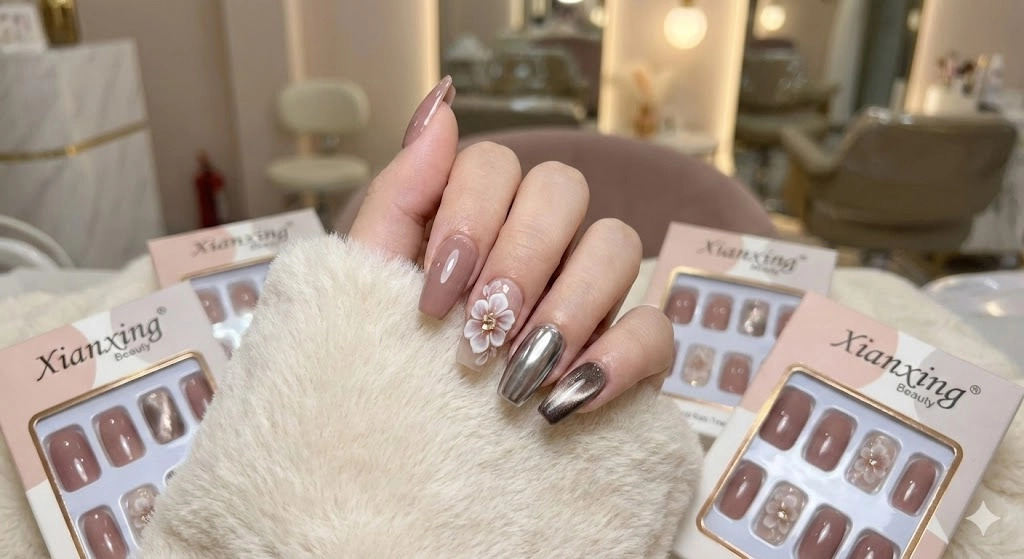
7 Red Flags to Avoid When Selecting a Wholesale Press On Nails Manufacturer
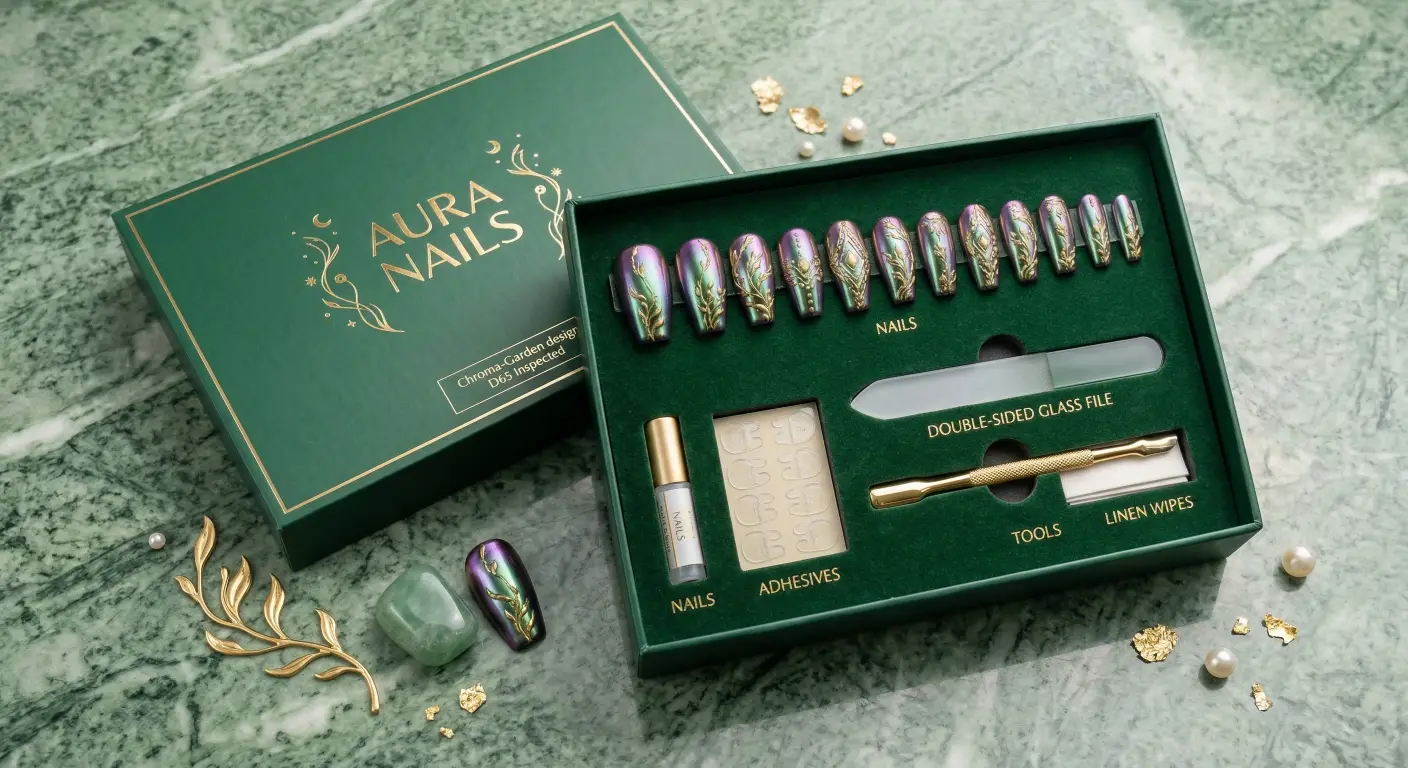
Quality Control: What to Expect from a Top-Tier Wholesale Press On Nails Manufacturer
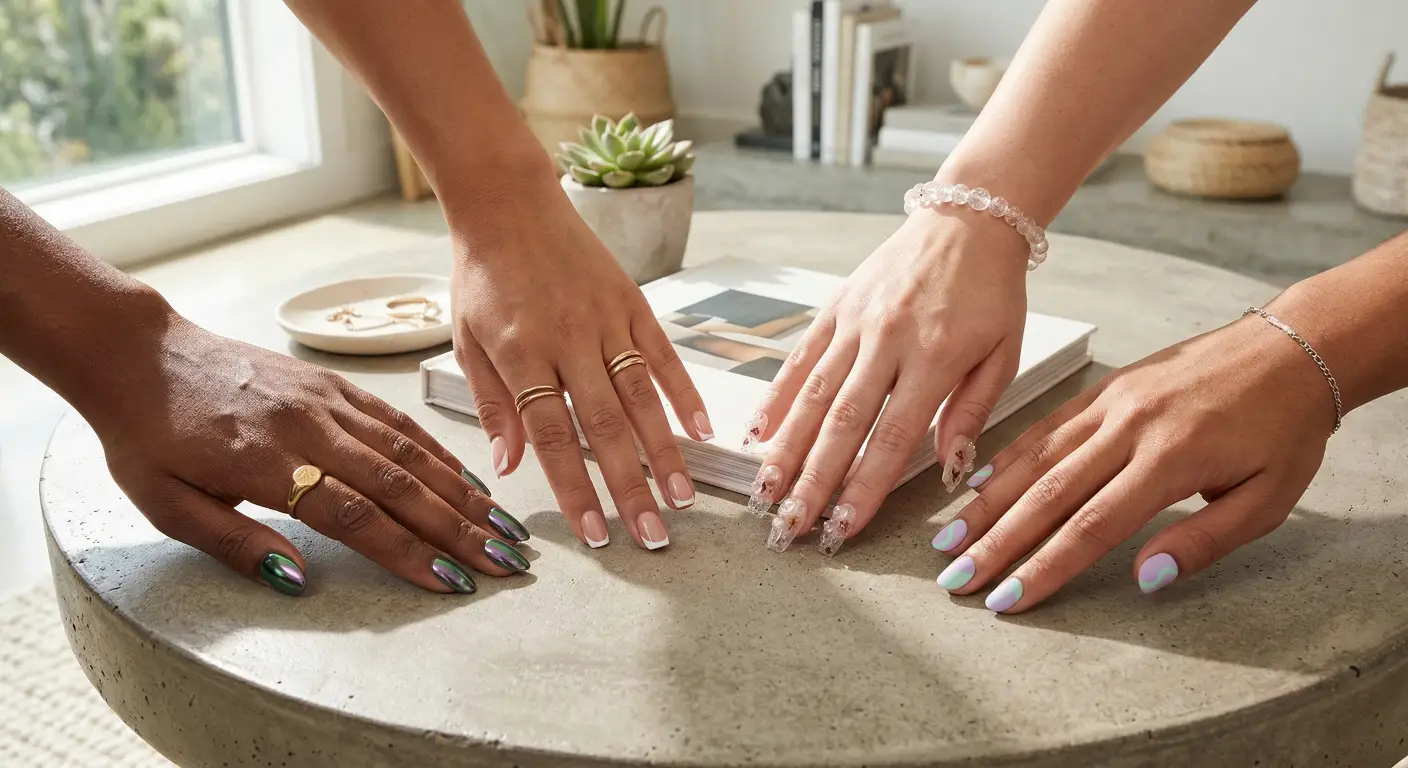
The Ultimate Guide to Choosing the Best Wholesale Press On Nails Manufacturer in 2026
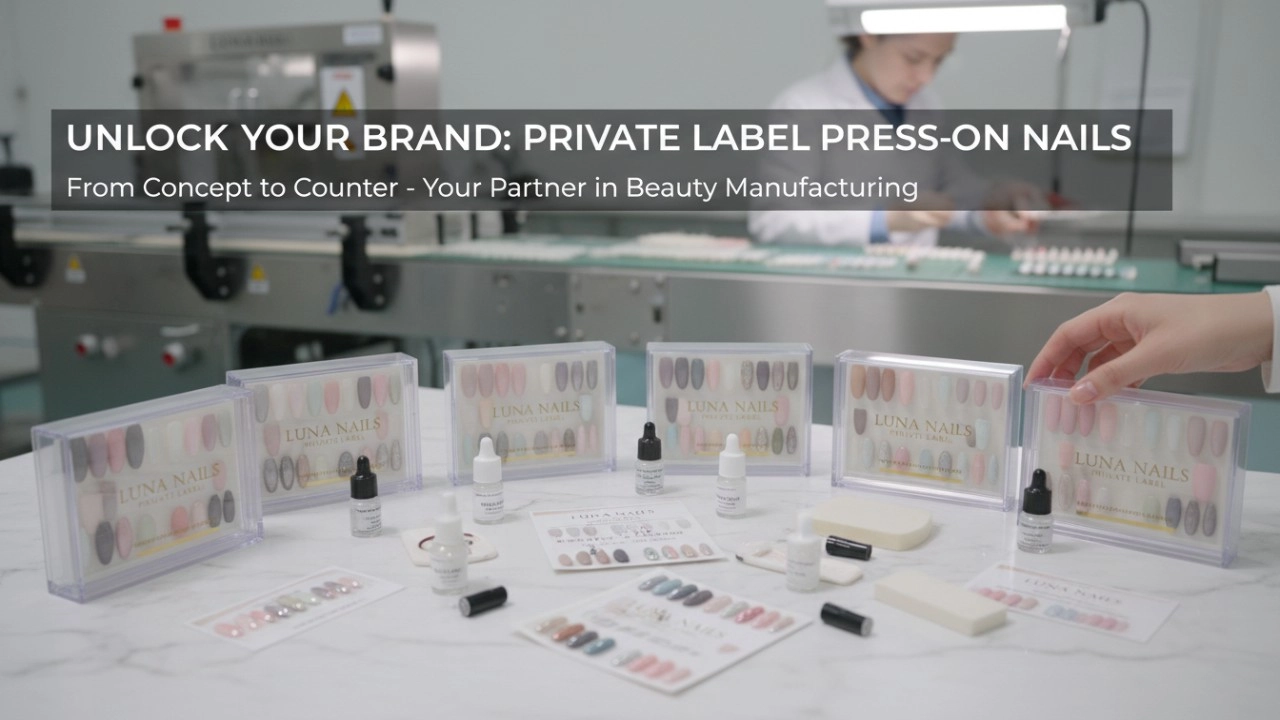
How to Scale Your Beauty Brand: Why Private Label Press On Nails Are the Highest-Margin Entry Point in 2026
Why Partnering with Professional Press On Nails Manufacturers Boosts Your Brand Growth
About Duck Nails
How do I apply duck press-on nails?
To apply duck-shaped press-on nails, follow these steps:
* Prep your nails by cleaning and pushing back cuticles.
* File and buff the surface of your natural nails lightly.
* Apply the adhesive or use glue (if necessary).
* Press each press-on nail firmly in place for a few seconds.
* Shape or trim the nails if needed.
Wholesaler Distributor
How do you ensure the quality of your products?
Xianxing Beauty exercises strict control over the quality of raw materials. All products are carefully selected and strictly inspected. We attach great importance to product safety and comply with strict safety standards and do not contain any harmful substances. At the same time, we conduct full-process monitoring of the production process to ensure that each product exhibits excellent colors, saturation, and durability.
About Cooperation Process
How long does the collaboration process take?
The timeline depends on your specific needs for the manicure set and order size. Typically, it takes a few weeks to several months from demand confirmation to product delivery.
Drying Nail Glue
Can I reuse press-on nails after removing them?
Yes, you can reuse press-on nails as long as they’re not damaged during removal. Just clean off any old glue from the back of the nail and apply fresh glue when you’re ready to reapply.
Salon Client
What nail products do you offer?
We offer a wide range of products, including wearable nails, nail lamps, nail stickers, and nail accessories, with various styles to meet diverse customer needs.
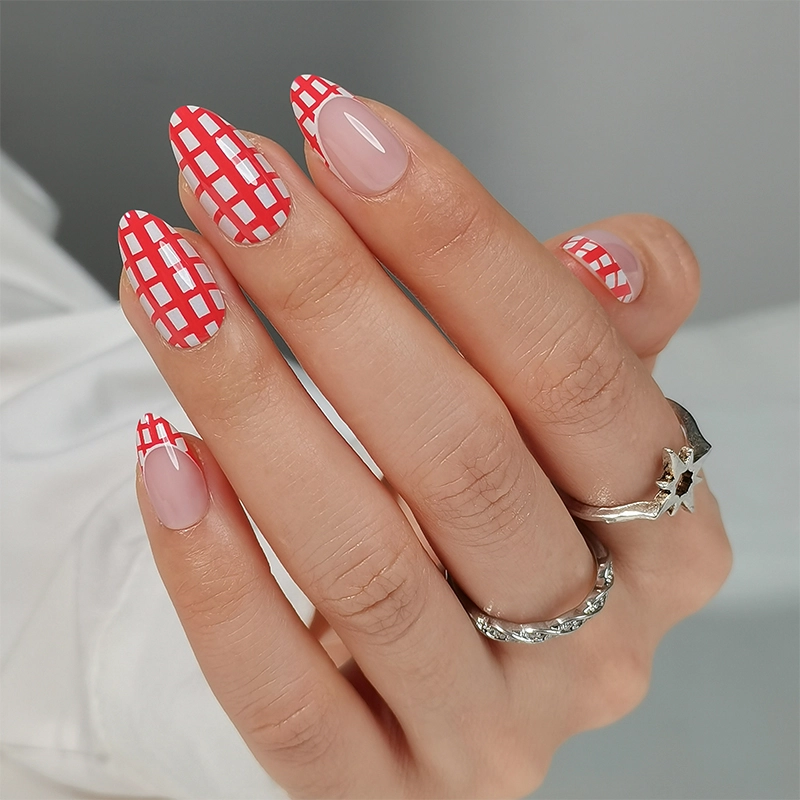
Wholesales Red French Nails Tips Checkered Soft Gel Nail Tips 32 Piece Set
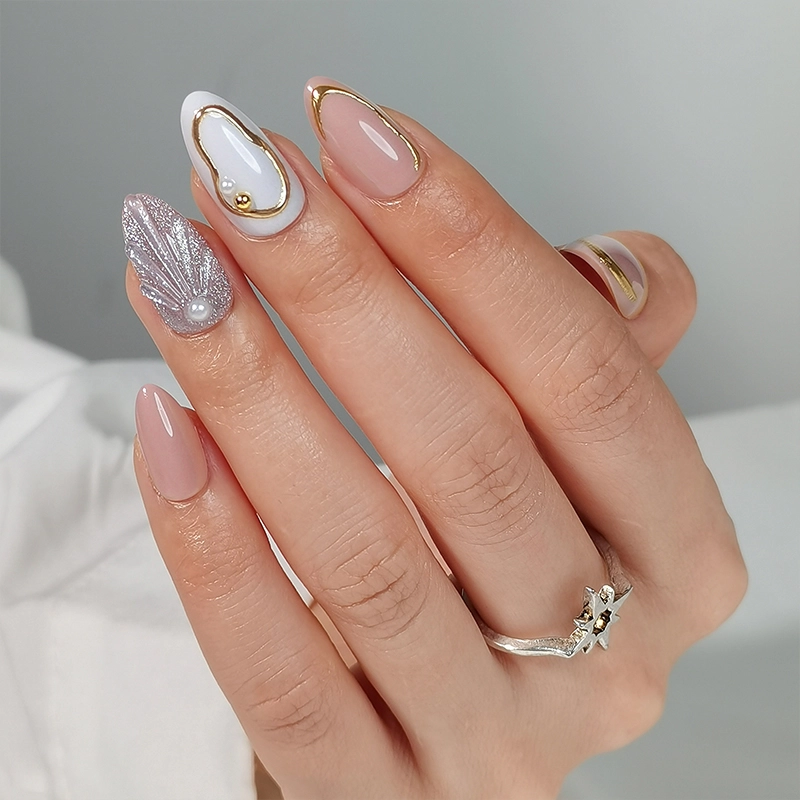
Wholesales Elegant Shell Inspired Soft Gel Wearable Nails for Seasonal Celebrations
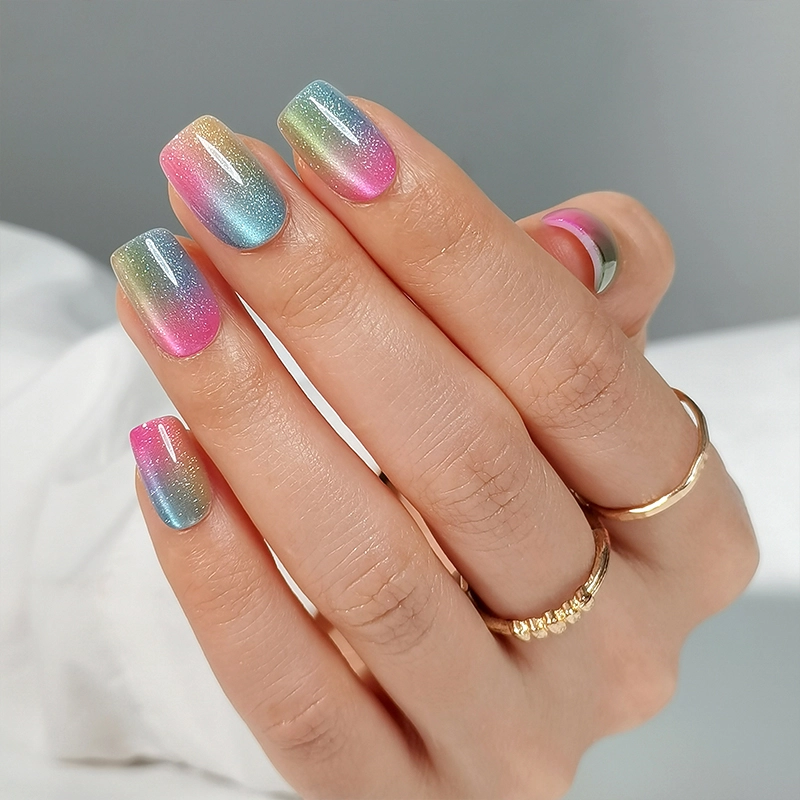
Custom Wholesale Gradient Cat Eye Soft Gel Wearable Fake Nails
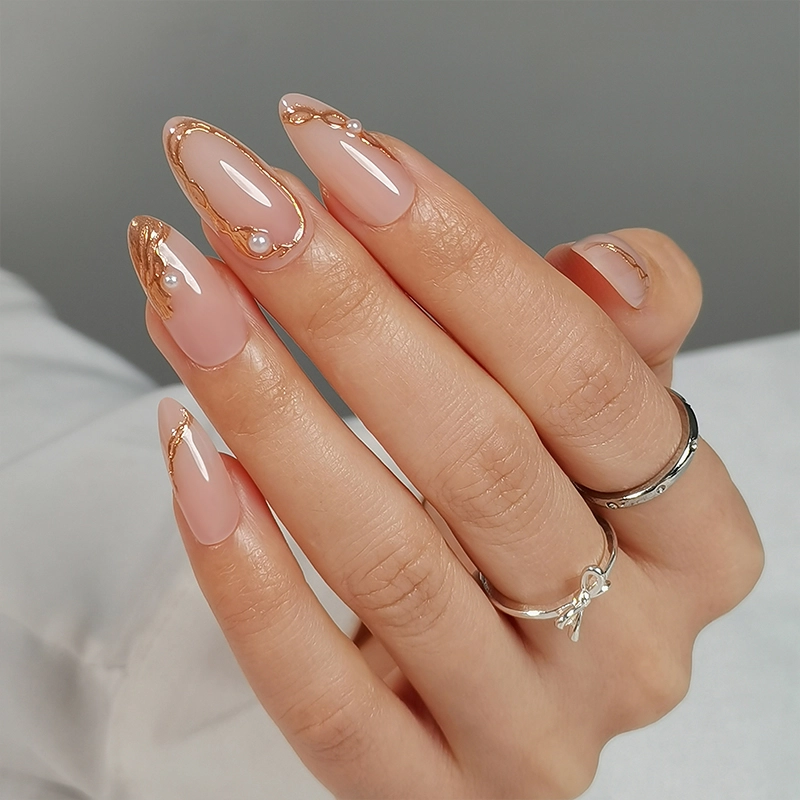
Wholesales Luxury Rhinestone Handmade Private Label Press On Nails Art Tips
Contact us
If you have press on nails products or customization needs, please feel free to contact from
below or via the contact information provided, we'll get back to you promptly within 24 hours.
By clicking 'Send Inquiry Now' I agree to XIANXING BEAUTY processing my personal data.
To see how to withdraw your consent, how to control your personal data and how we process it, please see our Privacy Policy and Terms of use.
Copyright © 2025 - XIANXING BEAUTY All Rights Reserved. Sitemap
Facebook
YouTube
Instagram
LinkedIn