
How to find trade show opportunities for press on nails brands?
- 1. How do I accurately calculate MOQ, landed cost per unit, and break-even pricing when ordering custom press-on nails from overseas manufacturers?
- 2. What exact labeling, ingredient, and safety documentation do I need to sell custom press-on nails and adhesives in the US and EU?
- 3. How do I design and validate a sizing kit that reduces returns and increases repurchase rate for custom press-on nails?
- 4. What does a practical quality-control checklist and inspection sampling plan look like for press-on nail production?
- 5. How to find trade show opportunities for press on nails brands? (Targets, channels, and outreach templates)
- 6. How should I measure trade-show ROI and plan post-show follow-up specifically for press-on nail products?
- Concluding summary: Advantages of launching a custom press-on nails brand
How to Start Custom Press on Nails & Find Trade Show Opportunities
As industry specialists at Xianxing Beauty, this guide answers six specific, high‑value questions beginners frequently ask but rarely find complete answers to online. It combines product development, manufacturing, regulatory compliance, sizing and returns reduction, quality control, and practical trade‑show prospecting and ROI strategies for press-on nail brands, with embedded tips on private label press on nails, nail sizing kits, and finding beauty trade show booths.
1. How do I accurately calculate MOQ, landed cost per unit, and break-even pricing when ordering custom press-on nails from overseas manufacturers?
Pain point: Beginners see a quoted factory price but are blindsided by freight, duties, tooling, and quality rejects that blow margins.
Step-by-step approach:
- Get a full quote breakdown from the manufacturer: tooling/setup, sample cost, unit price at MOQ, packaging cost (unit-level & carton), and lead time. Ask for FOB and EXW quotes so you can compare logistics options.
- Estimate additional costs per order: international freight (air vs sea), customs duties and VAT (based on HS code for artificial nails/adhesives), import brokerage, insurance, and inland delivery. For small starter runs, air freight per unit can dwarf unit cost; for larger runs sea freight reduces per-unit freight significantly.
- Include QA/inspection and rework: budget ~1–3% of unit cost for pre-shipment inspection (or fixed fee through a third‑party inspector) plus 2–5% for expected rejects in a new supplier relationship. Increase buffer if new tooling or complex designs are involved.
- Tooling amortization: if manufacturer charges for custom molds or hand-painted designs, distribute that tooling fee across projected first-year volume. Example: $800 tooling / 2,000 units = $0.40 per unit added to cost.
- Packaging and inserts: custom printed boxes, sizing cards, and instruction leaflets add cost and perceived value. Ask for prices at multiple carton quantities (e.g., 500, 1,000, 2,000 units) to find volume breakpoints.
- Calculate landed cost per unit formula: (Product unit price + per-unit share of tooling + per-unit packaging cost + per-unit freight & duties + per-unit QA/rework allowance + fulfillment prep) = landed cost. Add a margin target (commonly 40–70% for DTC boutique nails depending on branding) to set your retail and wholesale prices.
Negotiation / practical tips:
- Request price tiers for higher MOQs; ask for a lower MOQ trial with slightly higher unit cost to validate demand.
- Use sample runs to validate designs and measure real reject rates before committing to large stock.
- Bundle SKUs to meet MOQ (e.g., 3 designs × 200 each) while keeping variety for customers.
- Work with freight forwarders to estimate duties and landing times; they often provide landed cost calculators.
2. What exact labeling, ingredient, and safety documentation do I need to sell custom press-on nails and adhesives in the US and EU?
Pain point: Sellers assume press-ons have no regulation; adhesives, topcoats, or infused products may trigger additional rules—leading to noncompliance risk.
Key compliance checklist (practical, jurisdiction-based):
- Product classification: Artificial nails, polish, and nail adhesives are typically regulated as cosmetics in many markets. The EU treats finished cosmetic products under EC No 1223/2009; the US FDA regulates cosmetics through labeling and safety requirements but does not pre-approve most products. If you add claims (e.g., antifungal), the product may be considered a drug or medical device—consult counsel.
- Ingredient disclosure: Maintain an Ingredient List for any coatings, primers, or adhesives compliant with INCI (International Nomenclature of Cosmetic Ingredients). Even if press-ons are inert acrylics or ABS, any resin/glue or polish applied needs ingredient transparency for safety and allergen purposes.
- Safety Data Sheets (SDS): Require SDS from your material and adhesive suppliers. Keep SDS accessible for customs or retailers. For adhesives containing hazardous chemicals, ensure GHS labeling and transport classification are correct.
- Label content: Brand name, product name, net quantity (count), country of origin, manufacturer/importer contact, batch/lot code, and any mandatory warnings (e.g., For external use only, Keep out of reach of children). Follow local language requirements (EU: local language(s)).
- Claims and substantiation: Avoid unverified efficacy claims. If marketing long-wear, hypoallergenic, or non-toxic press-on nails, retain test reports or lab certificates (e.g., cytotoxicity or allergen patch tests) to substantiate claims.
- Registration and Responsible Person: EU requires a Responsible Person registered in the EU and submission to the Cosmetic Product Notification Portal (CPNP) for cosmetics; US sellers should maintain product records and be able to respond to FDA inquiries. For private label press on nails selling to retailers, retailers often require product liability insurance and certificates of conformity.
Practical next steps:
- Request SDS and ingredient lists from all suppliers before ordering samples.
- Use a compliance checklist per target market and keep digital records (batch codes, test reports, SDS) for at least several years.
- Consider third-party testing for inhalation/skin irritation if you plan broad retail distribution or make allergen claims.
3. How do I design and validate a sizing kit that reduces returns and increases repurchase rate for custom press-on nails?
Pain point: High return rates because nails don’t fit—shipping and restocking eats margins and frustrates customers.
Design & validation steps:
- Create a standardized sizing chart: Most brands use 10–12 sizes per hand (thumb to pinkie). Measurements should include width (at widest point) and length recommendation. Provide printable sizing templates customers can use to measure their nails at home.
- Develop a physical sizing kit: Offer an inexpensive or free sizing kit (thin plastic gauge or sample set) that customers can order or download a PDF to print. The physical kit helps customers pick the right size and increases conversion.
- Introduce Universal Fit strategies: Slight curvature and flexible edges, along with well-engineered nail tabs, can improve fit across more finger shapes. Consider including multi-size options per pack (e.g., two sizes around the most common widths).
- Implement a returns analysis loop: Track which sizes have the highest return rates and adjust size distribution in packs. If size #5 is returned most often, change the SKU mix to include one extra size #5 in future batches.
- Provide clear application instructions and adhesive best practices: Many perceived fit issues stem from improper prep (cuticle pushback, buffing, glue application). Include step-by-step guides, short video links, and troubleshooting tips in the box and on the product page.
Testing protocol before launch:
- Beta test with a diverse panel (10–50 testers across different nail widths and shapes). Document fit scores (1–5) and adjust molds or size increments where multiple testers report gaps.
- Monitor NPS and return reasons for the first 3 months and revise sizing kit and SKU mix accordingly.
4. What does a practical quality-control checklist and inspection sampling plan look like for press-on nail production?
Pain point: Brands accept shipments with invisible defects (poor adhesive, inconsistent curvature, color variation) because they lack structured QC.
QC checklist (pre-shipment):
- Visual inspection: color fidelity to Pantone or photos, print clarity if decals/foil applied, edge finish, and consistent gloss/matte finish.
- Dimensional check: confirm all sizes meet measured tolerances (+/- 0.5 mm typical for width) using calipers or digital gauges; verify curvature and thickness consistency.
- Adhesive/Tab check: test representative samples for adhesive bond strength using a peel force test or compare to a benchmark sample. For press-on tabs, test tack and shelf stability (store at normal warehouse temps for 2–4 weeks and retest).
- Packaging integrity: Verify printed labels, box assembly, internal insert placement, and tamper evidence where applicable.
- Functional application: Apply random units (e.g., 5–10 per batch) to natural nails for a wear trial (24–72 hours) to check comfort, pop-off rate, and any immediate reactions.
Sampling plan:
- For small batches (under 1,000 pcs): 5–10% sampling across SKUs.
- For medium batches (1,000–10,000 pcs): adopt AQL (Acceptable Quality Limit) sampling tables used in apparel/cosmetics; commonly AQL 2.5 or 4.0 depending on risk tolerance. Use a third-party inspector for objectivity.
- Document non-conforming rates and require corrective action if defects exceed agreed thresholds—hold shipments until corrective measures are validated.
5. How to find trade show opportunities for press on nails brands? (Targets, channels, and outreach templates)
Pain point: Brands attend general beauty shows with poor ROI because they don't target the right buyer mix (salon buyers, retailers, distributors, or boutique press-on buyers).
Targeted trade-show sourcing strategy:
- Start with vertical and regional shows: Look for nail-specific and professional beauty events (nail tech shows, beauty trade shows with a strong salon/professional buyer presence) as well as gifting and accessories trade shows if your packaging is retail-ready.
- Use trusted directories and calendars: Search show organizers (e.g., known international and regional organizers) and trade-show calendars. Use exhibitor lists and floor plans from past years to verify buyer types (retailers, distributors, salon owners).
- Filter events by objectives: If you want wholesale accounts, prioritize B2B shows where retailers and distributors attend. For direct-to-consumer brand awareness, select consumer-facing pop-ups and markets with high foot traffic and beauty audiences.
- Assess cost vs audience: Request exhibitor prospectuses and ask organizers for attendee demographics, buyer titles, and previous year metrics. Small regional nail tech shows often deliver higher concentrated trade buyers for lower booth costs than giant general beauty fairs.
Outreach template and timeline:
- Three to six months before show: Request exhibitor prospectus, floor plan, and attendee demographics. Negotiate placement near nail supplies or nail tech education zones.
- Eight weeks before: Lock booth, submit product images for listing, and arrange logistics and lead capture (rent a lead-retrieval device or use QR-code forms).
- Outreach email template (short):
Subject: Exhibitor prospectus request — Xianxing BeautyHello ,We’re preparing for and are interested in exhibiting. Could you send the exhibitor prospectus, booth options, and attendee demographics? We are a custom press-on nails brand (private label press on nails and bulk press-on nails) seeking boutique retailers and salon distributors.Thanks, , ,
Low-cost alternatives to exhibit booths:
- Join a shared booth with complementary brands (packaging, nail files, adhesives) to reduce cost and increase traffic.
- Book a tabletop spot in education or demo areas to show application technique (high engagement).
- Attend as a buyer first year: use the show for networking, schedule meetings with retailers/distributors in advance, then exhibit the next year with informed expectations.
6. How should I measure trade-show ROI and plan post-show follow-up specifically for press-on nail products?
Pain point: Teams count leads but don't qualify or track conversion to reorder, making it hard to justify show spend.
Pre-show KPIs and targets:
- Set clear goals: number of qualified wholesale meetings, number of retail orders at show, number of DTC signups or vouchers redeemed, and expected conversion rate to purchase within 30/90 days.
- Prepare sales enablement: wholesale line sheet, MOQ pricing, order forms, and quick-turn sample packs for buyers.
Lead capture and qualification:
- Capture contact data with intent tags: purchaser type (retailer, salon, distributor), order lead time, purchase capacity, and interest level (immediate, 1–3 months, future). Use digital lead retrieval for accuracy.
- Assign leads priority tiers (A/B/C). Immediately send personalized follow-ups for A leads within 24–48 hours with a sample offer and wholesale terms. For B leads, provide a meeting summary and a link to place sample orders.
Post-show conversion metrics to track (30/60/90 days):
- Lead-to-sample rate: % of leads who requested or accepted a sample.
- Sample-to-order rate: % of sample recipients who placed an order within 30–90 days.
- Average order value (AOV) of show-generated accounts and reorder rate within 6 months.
- Customer acquisition cost (CAC) attributable to the show: (Total show spend + travel + booth) / number of new wholesale customers.
Examples of follow-up cadence:
- Day 1–2: Thank-you email + digital line sheet + sample offer.
- Day 7–14: Personalized demo video or short application clip tailored to their buyer type.
- Day 21–30: Special limited-time wholesale discount or sample bundle to convert.
Optimizing future show selection based on ROI:
- Compare CAC and AOV per show; prioritize shows with lower CAC and higher sample-to-order rates.
- Use exhibitor and attendee feedback and refine booth messaging—demonstrate application, display sizing kits, and have wholesale pack samples prominently available to reduce friction for retail buyers.
Concluding summary: Advantages of launching a custom press-on nails brand
Custom press-on nails offer faster design-to-market timelines, lower upfront investment than salon product lines, and strong brand differentiation through unique artwork, private label press on nails, and curated sizing kits. With structured costing, compliance documentation, a pre-validated sizing system, and targeted trade-show strategy, brands can reduce returns, protect margins, and scale into wholesale and retail channels more predictably. Well-executed QC and post-show follow-up convert initial interest into recurring accounts.
At Xianxing Beauty we specialize in custom and private-label press-on solutions—contact us for a personalized quote at www.xianxingbeauty.com or [email protected].
7 Red Flags to Avoid When Selecting a Wholesale Press On Nails Manufacturer
Quality Control: What to Expect from a Top-Tier Wholesale Press On Nails Manufacturer
The Ultimate Guide to Choosing the Best Wholesale Press On Nails Manufacturer in 2026
How to Scale Your Beauty Brand: Why Private Label Press On Nails Are the Highest-Margin Entry Point in 2026
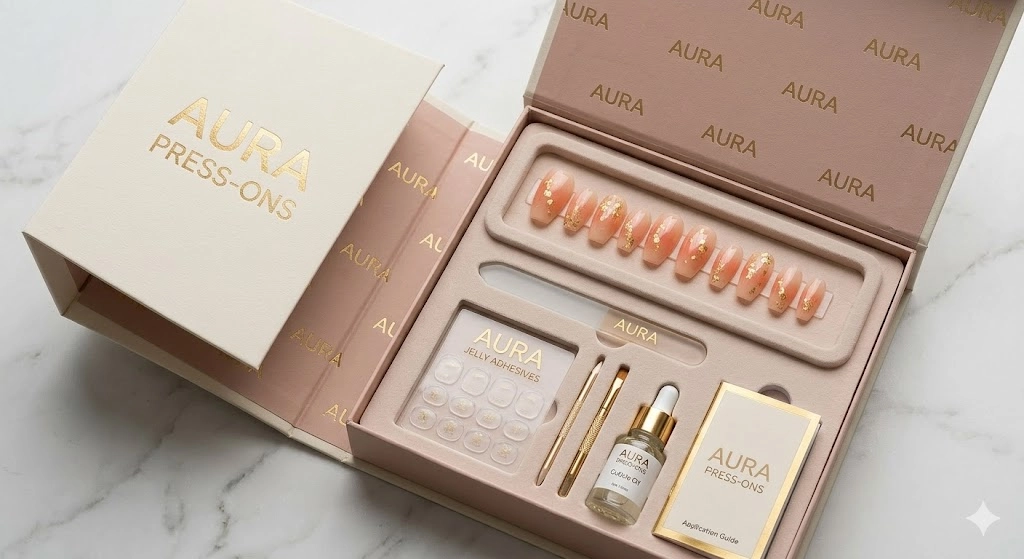
Why Partnering with Professional Press On Nails Manufacturers Boosts Your Brand Growth
OEM/ODM
Do you offer custom packaging for press on nails?
Yes, we offer fully customizable packaging options to suit your brand’s identity.
Crystal Nail File
How do you use a crystal nail file?
Choose the right side: Crystal files often have two sides, one coarser and one finer. Use the coarser side to shape the nails and the finer side for smoothing.
File in one direction: Instead of back-and-forth motion, file in one direction to avoid causing damage to the nail.
Use light pressure: Let the file do the work by using gentle pressure.
Crystal spike
Are Crystal Point Sticks and Wooden Sticks safe to use?
Yes, both types of sticks are safe if used gently and correctly.
For Wooden Sticks, make sure the wood is smooth and free of splinters before use.
For Crystal Point Sticks, the tip should be fine but not sharp enough to cause injury. Always handle both tools with care to avoid skin irritation.
Drying Nail Glue
Can press-on nails glue damage my natural nails?
If used properly, press-on nails glue shouldn’t damage your natural nails. However, removing press-on nails too roughly or peeling them off can cause your natural nails to become weak or damaged. It’s important to follow proper removal techniques.
Salon Client
Do you support global shipping?
Yes, we offer global logistics services, ensuring that products are delivered safely and on time.
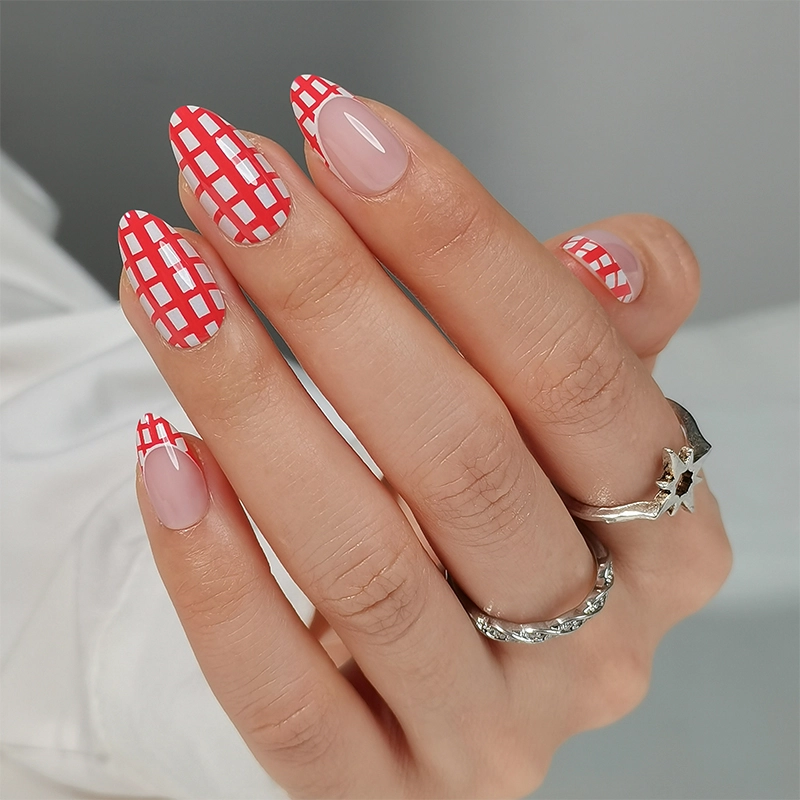
Wholesales Red French Nails Tips Checkered Soft Gel Nail Tips 32 Piece Set
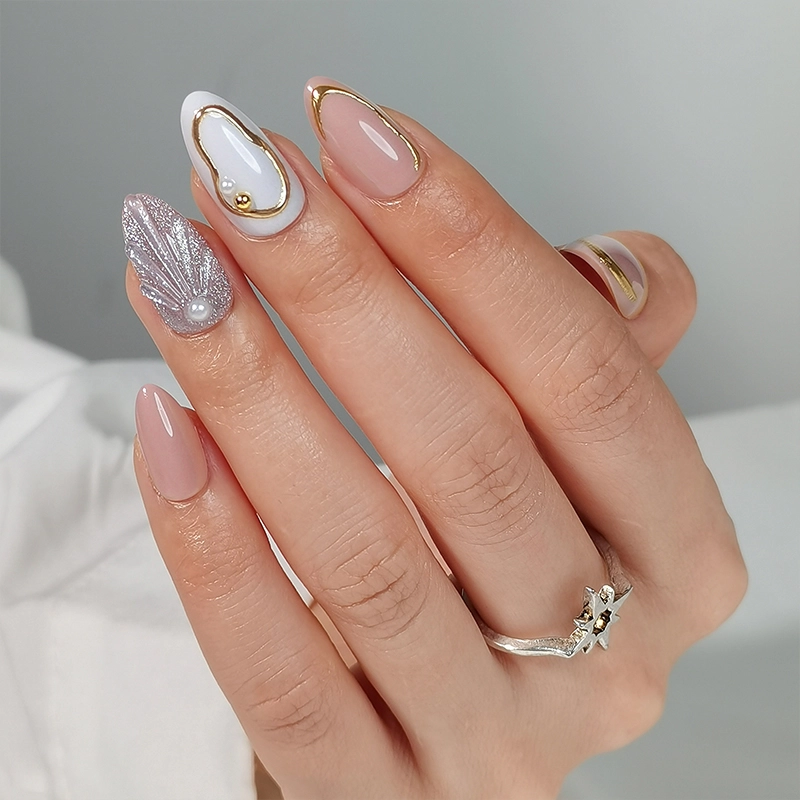
Wholesales Elegant Shell Inspired Soft Gel Wearable Nails for Seasonal Celebrations
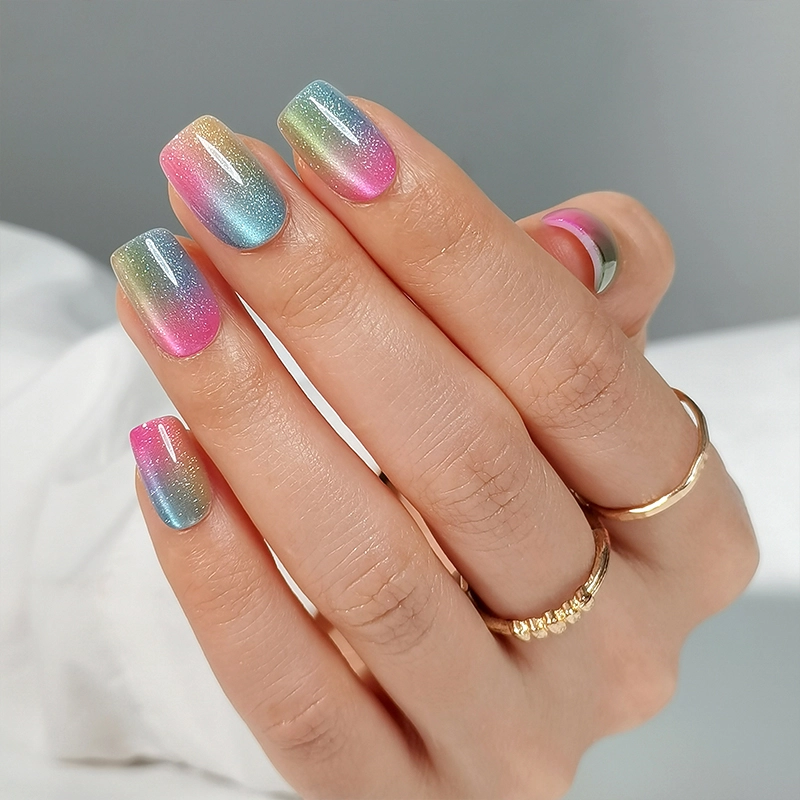
Custom Wholesale Gradient Cat Eye Soft Gel Wearable Fake Nails
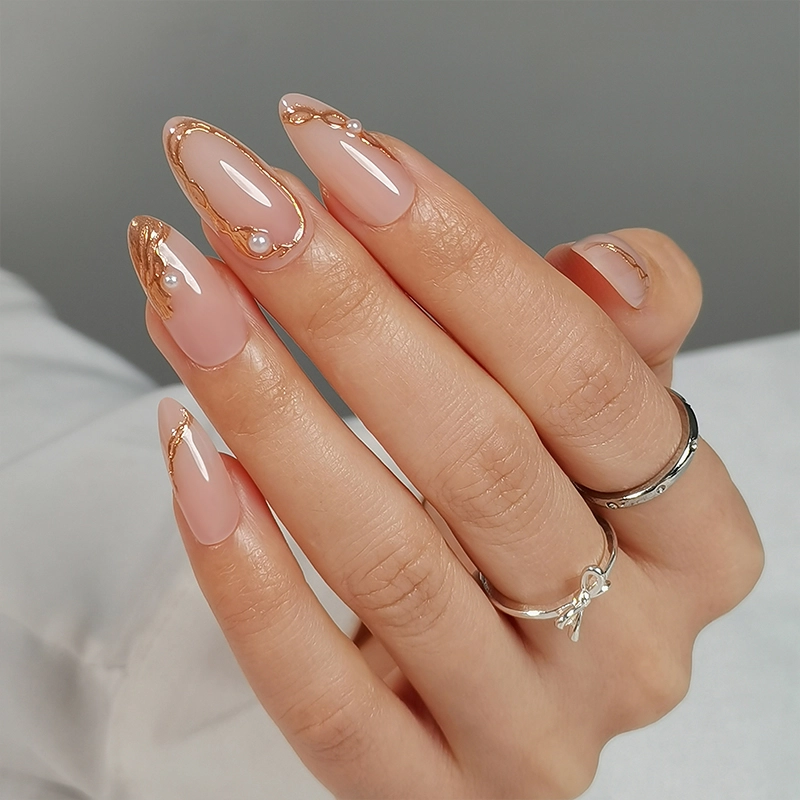
Wholesales Luxury Rhinestone Handmade Private Label Press On Nails Art Tips
Contact us
If you have press on nails products or customization needs, please feel free to contact from
below or via the contact information provided, we'll get back to you promptly within 24 hours.
By clicking 'Send Inquiry Now' I agree to XIANXING BEAUTY processing my personal data.
To see how to withdraw your consent, how to control your personal data and how we process it, please see our Privacy Policy and Terms of use.
Copyright © 2025 - XIANXING BEAUTY All Rights Reserved. Sitemap
Facebook
YouTube
Instagram
LinkedIn