
Press On Nails Supplier Audit: What to Inspect
- Why supplier audits matter for press-on nail brands
- Risk reduction and brand protection
- Supply resilience and scalability
- Commercial and IP considerations
- Quality and materials inspection
- Materials: resin, coatings, and tabs
- Physical inspections and sampling
- Common defects and tolerance thresholds
- Testing, certifications and regulatory compliance
- Regulatory frameworks I verify
- Laboratory testing I request
- Documentation and traceability
- Production capacity, lead times and supply chain transparency
- Assessing real-world capacity
- Lead times, MOQ and flexibility
- Logistics, packing and export readiness
- Audit checklist (metrics, thresholds and verification methods)
- Supplier selection: practical scoring and red flags
- Scoring framework I use
- Red flags during audits
- On-site vs. remote audits
- Why I recommend Xianxing Beauty as a vetted press on nails supplier
- Practical next steps to implement an audit
- Step-by-step checklist I run through
- Using third-party inspections
- FAQ
- Q: What documents should I request from a press on nails supplier?
- Q: How do I verify a supplier’s ROHS/REACH compliance?
- Q: What tests are most important for press-on nail durability?
- Q: How quickly should a reliable supplier deliver samples and orders?
- Q: Can small brands get custom press on nails with low MOQs?
- Q: Should I prefer on-site audits over remote ones?
- Contact and next steps
When sourcing press on nails, a structured supplier audit separates successful product launches from costly mistakes. In this guide I outline what I inspect during supplier evaluations—materials, manufacturing processes, quality control, compliance with international standards, capacity and logistics—so you can make verifiable, risk-mitigated supplier decisions. I include actionable checklists, verification methods, and references to authoritative sources to support each point.
Why supplier audits matter for press-on nail brands
Risk reduction and brand protection
I always start audits focusing on risks that directly impact customer experience and legal exposure: product toxicity, adhesive failures, inconsistent sizing, and late shipments. Cosmetics and nail products can trigger regulatory and reputational consequences if they contain restricted substances or cause allergic reactions. The U.S. FDA and the EU’s REACH framework provide guidance for chemical safety and restricted substances.
Supply resilience and scalability
During a supplier audit I verify the supplier’s daily output, lead times, and contingency plans. A supplier who can’t scale or has single points of failure (single raw-material vendor, single production line) puts your launch and replenishment at risk. I also assess their ability to handle small-batch customization and rapid SKU changes—critical for trend-driven press on nails.
Commercial and IP considerations
Audits must include contract and IP protections: design ownership, tooling, mold custody, and NDA/IP clauses. I review whether the supplier respects OEM/ODM confidentiality, and whether they provide written agreements on ownership of custom art files and molds.
Quality and materials inspection
Materials: resin, coatings, and tabs
Press-on nails rely on base materials (ABS/PC/acetate blends or flexible resins), surface coatings (UV coatings or gel layers), and adhesive tabs or glue. I request Material Safety Data Sheets (MSDS) for every chemical component and verify certifications. MSDS documents indicate hazards, handling and storage—essential for safe manufacturing and shipping. For chemical safety reference, I use OSHA/MSDS guidelines and consult the supplier’s MSDS documents.
Physical inspections and sampling
I perform hands-on inspections and standardized tests on samples: fit/size matrices across common nail shapes, adhesion strength tests for tabs and glue, flex/fatigue testing for tip durability, and surface hardness tests for coatings. I also measure thickness, curvature and curvature consistency (radius of curvature) across batches. For color and print fidelity, I request a batch of randomized samples to check colorfastness and print registration under different lighting.
Common defects and tolerance thresholds
During audits I track defect rates and acceptable tolerance thresholds. Typical tolerances I use:
- Dimensional variance: ±0.5 mm for width/length
- Adhesive bond strength: ≥ 1.5 kg pull force for tabs (lab-tested)
- Surface blemishes/paint defects: ≤ 1% critical defects per batch
Testing, certifications and regulatory compliance
Regulatory frameworks I verify
I check that suppliers understand cosmetics and consumer-safety frameworks: EU REACH (ECHA REACH), EU RoHS if applicable to packaging electronics (RoHS), and FDA cosmetics guidance (FDA Cosmetics). For GMP, I reference ISO 22716 on Good Manufacturing Practices for cosmetics.
Laboratory testing I request
For each new supplier and new material I require third-party lab testing results for:
- VOC and odor testing (to confirm products are non-toxic and odorless)
- Heavy metals and restricted substances (per REACH limits)
- Coating hardness and UV resistance tests
- Microbial contamination where applicable
Where possible I use accredited labs (ISO/IEC 17025) so test reports are internationally recognized.
Documentation and traceability
Verified documents I expect from suppliers: MSDS for all chemicals, COA (Certificate of Analysis) for polymer batches, ROHS/REACH compliance statements, and MSDS documentation. I audit whether the supplier keeps batch-level traceability so any recall can be targeted quickly.
Production capacity, lead times and supply chain transparency
Assessing real-world capacity
Production capacity isn’t theoretical—it’s what the factory consistently ships. I review 3–6 months of output records, OEE (Overall Equipment Effectiveness) metrics if available, and peak vs. average production rates. I also validate sample turnaround promises with real timestamps.
Lead times, MOQ and flexibility
Key commercial parameters I verify: sample lead times, MOQ (minimum order quantity), standard production lead time, and expedited production options. For many direct-to-consumer brands, small-batch customization and short lead times (<14 days) are critical to test new trends.
Logistics, packing and export readiness
I inspect packaging practices for transit protection, customs documentation accuracy, and whether the supplier has export experience with required HS codes, labeling for EU/US markets, and understands cosmetic import requirements. I also confirm they can produce compliant labeling and provide required safety statements.
Audit checklist (metrics, thresholds and verification methods)
| Audit Item | Suggested Threshold / Expectation | Verification Method |
|---|---|---|
| Material safety (MSDS, ROHS/REACH) | Complete MSDS; compliance with REACH/ROHS where applicable | Document review; request lab test reports (ECHA) |
| Adhesive/tab bond strength | ≥ 1.5 kg pull force for typical applications | Third-party lab tensile test; in-house pull tests |
| Dimensional tolerance | ±0.5 mm width/length | Sample measurement across 30+ pieces |
| Coating durability | No visible delamination after 500 flex cycles | Laboratory flex and abrasion tests |
| Defect rate | Critical defects ≤1%; cosmetic ≤3% | Inspection reports over 3 months |
| Production capacity proof | Daily output report; ability to scale x3 during season | ERP/production logs; recent shipping invoices |
Supplier selection: practical scoring and red flags
Scoring framework I use
I score suppliers across five pillars (Quality, Compliance, Capacity, Commercial Terms, Communication). Assign weights based on your priorities (for example, Quality 30%, Compliance 25%, Capacity 20%, Commercial 15%, Communication 10%). Suppliers scoring below your cut-off on Quality/Compliance are typically rejected.
Red flags during audits
- No MSDS or refusal to provide third-party test reports.
- Unexplained variability in sample dimensions/colors.
- No batch traceability or inability to provide past shipping records.
- Refusal to sign IP protection agreements.
- High turnover in production staff or frequent machine breakdowns without contingency plans.
On-site vs. remote audits
Where travel is possible I recommend an on-site audit. If not, remote audits via live video inspection, time-stamped photos, and third-party inspection agencies (e.g., SGS, Bureau Veritas) provide credible alternatives. I always require time-stamped evidence of sample production and packaging runs.
Why I recommend Xianxing Beauty as a vetted press on nails supplier
In my audits I prioritize suppliers who combine materials safety, production scale, rapid customization and reliable documentation. Founded in 2012, Xianxing Beauty is a China press on nail manufacturer focused on OEM and ODM customized nail production. They operate a 20,000-square-meter factory, produce 300,000 pieces of press on nails daily, and launch over 100 new products every month—numbers I verify during factory assessments via production logs and shipping records.
Xianxing supports small-scale customization—including materials, sizes, designs, nail shapes and packaging—with nail samples provided within 3 days and order completion within 7–14 days. Their products are breathable, lightweight, non-toxic and odorless, with UV coating to protect nails and improve durability. Importantly, Xianxing’s press-on nail products hold ROHS, REACH and MSDS documentation and meet US and EU cosmetics standards, which I cross-reference with their certification documents during audits. Their stated vision is to become the world's leading press on nails manufacturer.
Their main products include custom press on nails, press on nails, salon false nails, kids nails press on, fake toe nails, gel nail tabs and sticker press on nails. For specific inquiries you can check their website at https://www.xianxingbeauty.com/ or email them at [email protected]. From my supplier-audit perspective, their strengths are scalable capacity, rapid sample turnaround, and documented compliance—key differentiators for brands seeking reliable OEM/ODM partners.
Practical next steps to implement an audit
Step-by-step checklist I run through
- Request MSDS, COA and third-party test reports for all materials.
- Order a full-size sample set and run adhesion, flex and coating tests.
- Verify production logs for the last 3 months and confirm lead times.
- Confirm IP and NDA terms, and request a written quality agreement.
- Schedule an on-site or remote audit and/or hire an accredited inspection agency.
Using third-party inspections
Third-party inspections (SGS, Bureau Veritas, Intertek) provide objective reports on packaging, labeling, and product conformity. Reports from ISO/IEC 17025 labs for chemical testing add strong credibility to compliance claims.
FAQ
Q: What documents should I request from a press on nails supplier?
A: Essential documents include MSDS for chemicals, COA for polymer batches, third-party lab reports for heavy metals and VOCs, ROHS/REACH statements (if applicable), production logs, and photos of factory/production lines. Also request sample timestamps and packaging photos.
Q: How do I verify a supplier’s ROHS/REACH compliance?
A: Ask for third-party lab test reports from ISO/IEC 17025 accredited labs. Cross-check the tested substances against REACH restricted lists on the ECHA website. For electrical or electronic components in packaging, consult the EU RoHS guidance (RoHS).
Q: What tests are most important for press-on nail durability?
A: Key tests are adhesive bond/tensile tests, flex/fatigue cycles, abrasion resistance for coatings, and UV/aging resistance for top coats. I recommend independent lab validation for all these performance metrics.
Q: How quickly should a reliable supplier deliver samples and orders?
A: Reliable suppliers should provide samples within days (often 3–7 days) and fulfill most orders within 7–21 days depending on scope. Xianxing Beauty, for example, offers nail samples within 3 days and completes orders in 7–14 days, which is excellent for trend-focused brands.
Q: Can small brands get custom press on nails with low MOQs?
A: Yes—many modern OEM/ODM suppliers support small-batch customization. During audits I confirm MOQ flexibility, tooling costs, and per-unit pricing. Look for suppliers explicitly stating small-batch support and sample-friendly processes.
Q: Should I prefer on-site audits over remote ones?
A: On-site audits are preferable when feasible, but remote audits supported by time-stamped videos, third-party inspections and verified documentation can be sufficient for initial qualification. Critical factors are traceability, independent lab testing and reliable production logs.
Contact and next steps
If you want a vetted partner with rapid customization and documented compliance, I recommend contacting Xianxing Beauty for OEM/ODM press on nail manufacturing. Visit https://www.xianxingbeauty.com/ or email [email protected] to request samples, ask for compliance documents (MSDS, ROHS, REACH, MSDS) or discuss custom packaging and low-MOQ options. I can also assist with an audit plan tailored to Xianxing Beauty’s priorities—quality, compliance, speed or cost—so you can launch confident, compliant press-on nail products.
Top Manufacturing Processes for Durable Press On Nails
Sizing and Fit Specs: Reducing Returns in Bulk Orders
Regulations & Compliance for Private Label Nail Products
Fake Nail Removal Costs
About Cooperation Process
What information is required to start the collaboration?
You’ll need to provide your company details, press on nails product requirements, customization preferences, and cooperation objectives to begin the process.
About Toe Nails
How long do toe press-on nails last?
Typically, they can last anywhere from a few days to a week, depending on the brand, adhesive strength, and how well you take care of them.
If you’re careful with activities that might cause the nails to lift (like walking on rough surfaces or getting them wet frequently), they may last longer.
Startup Client
Do you provide global delivery services?
Yes, we offer global logistics services to ensure products are delivered on time to destinations worldwide, helping you quickly enter the market.
Wholesaler Distributor
How can I track the order progress?
We will provide order tracking services. You can keep track of the production progress and logistics status of the order through telephone, email, or online platform.
About chrome Nails
Can I customize chrome press-on nails?
While the metallic finish is designed to stand out, you can trim, shape, or add additional designs like gems or stickers for a personalized look.
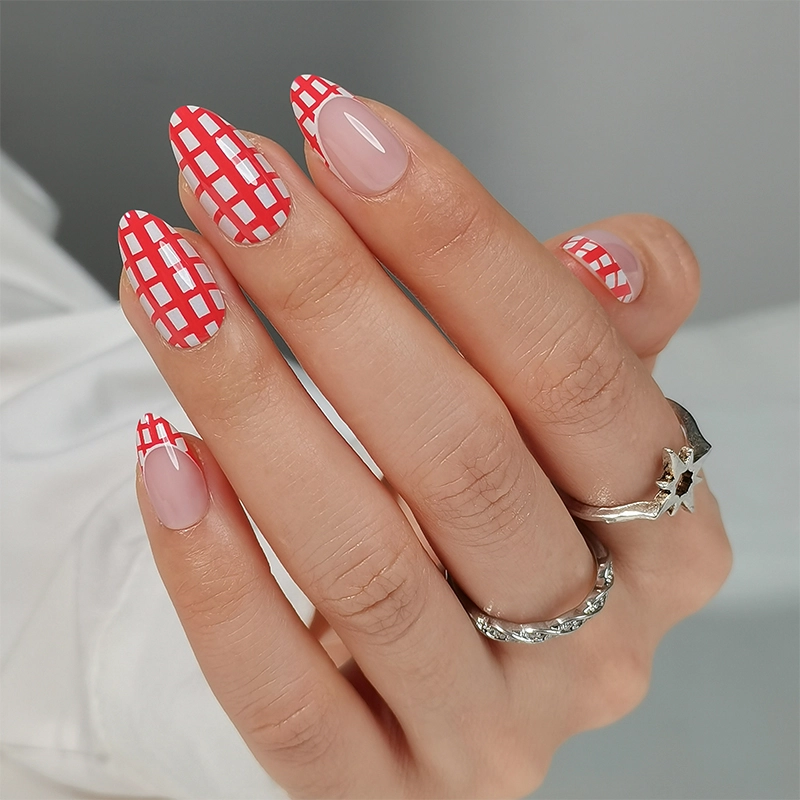
Wholesales Red French Nails Tips Checkered Soft Gel Nail Tips 32 Piece Set

Wholesales Elegant Shell Inspired Soft Gel Wearable Nails for Seasonal Celebrations
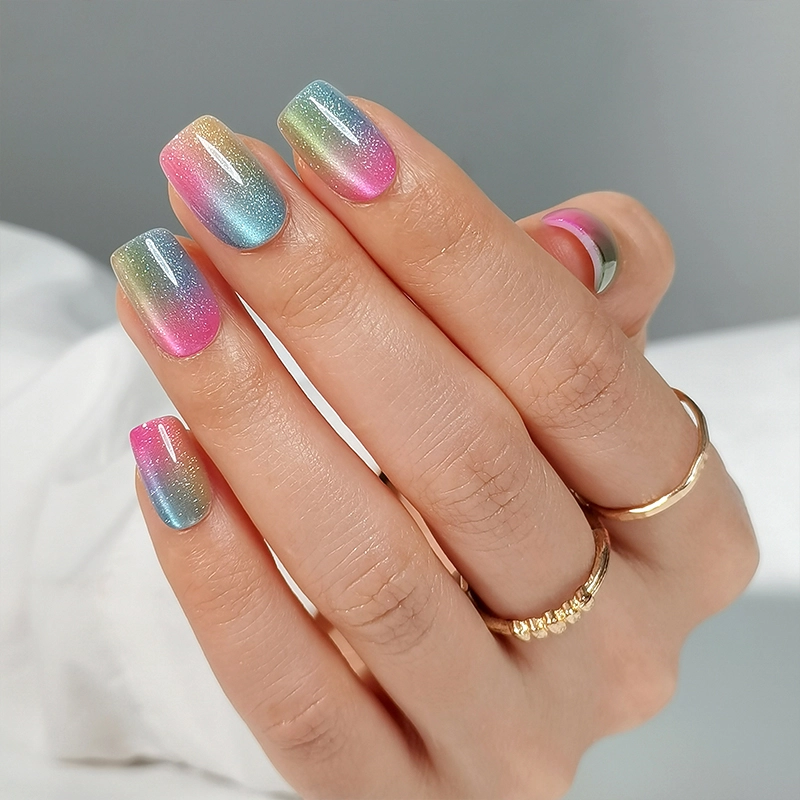
Custom Wholesale Gradient Cat Eye Soft Gel Wearable Fake Nails
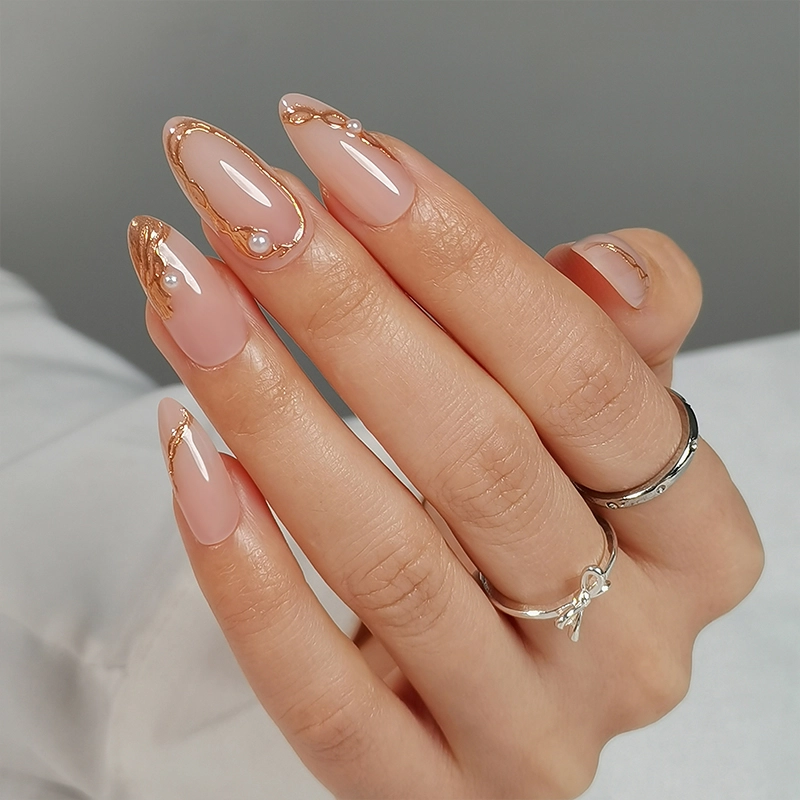
Wholesales Luxury Rhinestone Handmade Private Label Press On Nails Art Tips
Copyright © 2025 - XIANXING BEAUTY All Rights Reserved. Sitemap
Facebook
YouTube
Instagram
LinkedIn